


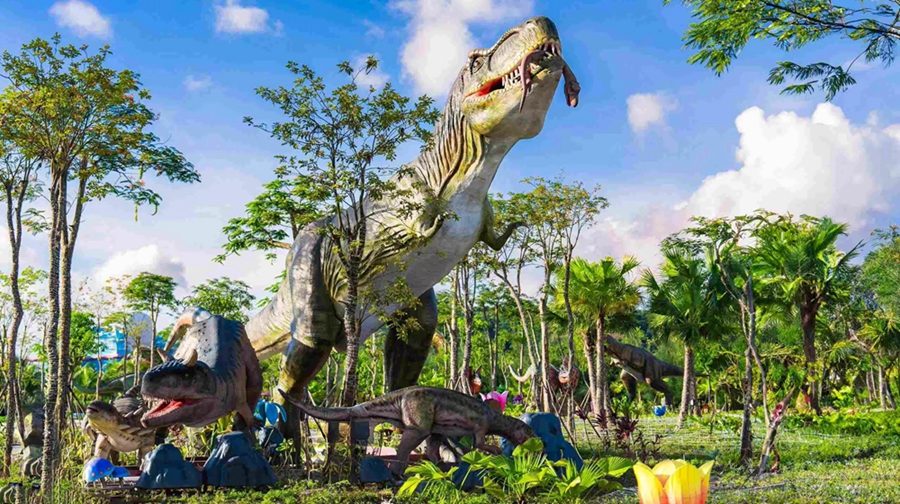
Tyrannosaurus rex is one of the most recognizable dinosaurs in prehistoric history. Its enormous size, powerful jaws, strong legs, and distinctive appearance have made it a favorite subject in museums, theme parks, and educational exhibitions. Today, advances in sculpture, animatronics, and mechanical engineering allow designers to recreate this famous predator in impressive detail.
A Realistic Dinosaur T Rex can transform an ordinary exhibition space into an engaging prehistoric environment. Through carefully designed body proportions, textured skin, lifelike movements, and synchronized sound effects, these models help visitors imagine what encountering a dinosaur might have been like. They also create opportunities to combine entertainment with educational information about prehistoric life.
What Makes a T-Rex Model Look Realistic?
Creating a convincing T-Rex model requires attention to several physical characteristics. Its body proportions, head structure, teeth, limbs, and skin texture all contribute to its recognizable appearance.
Designers often study fossil evidence, scientific illustrations, and paleontological research to develop accurate models. Although some details of dinosaur appearance remain uncertain, scientific references help guide the overall design.
Important visual features include:
- Large skull: The T-Rex had a massive head with powerful jaw muscles.
- Sharp teeth: Its teeth were adapted for gripping and tearing prey.
- Strong hind limbs: Powerful legs supported its large body.
- Small forelimbs: Its relatively short arms are among its most recognizable features.
- Long tail: The tail helped balance the animal’s body during movement.
- Textured skin: Detailed surface patterns create a more natural appearance.
Combining these features helps produce models that are visually recognizable and suitable for educational or entertainment settings.
The Technology Behind Animatronic T-Rex Dinosaurs
Animatronic technology has changed how prehistoric creatures are presented in public attractions. Instead of displaying only stationary sculptures, modern installations can incorporate mechanical systems that produce coordinated movements.
An animatronic T-Rex may move its head, open and close its mouth, blink its eyes, raise its body, or swing its tail. These actions are controlled through motors, mechanical joints, electronic components, and programmed movement sequences.
The main technological elements include:
Mechanical Framework
An internal metal structure provides support for the dinosaur’s body. It also houses mechanical components responsible for controlling movement.
The framework must be designed according to the model’s dimensions, weight, and intended range of motion.
Motion Control Systems
Electronic controllers coordinate different movements to create smooth and consistent performances. Depending on the installation, operators may use programmed sequences or automated controls.
Sound Effects
Roaring and growling sounds can be synchronized with mouth movements to create a more convincing presentation.
Exterior Materials
Fiberglass, silicone, foam, and other specialized materials can be used to produce detailed skin textures and realistic physical features.
Together, these technologies help transform a dinosaur sculpture into an interactive attraction.
Creating Immersive Prehistoric Exhibitions
A realistic T-Rex model becomes even more impressive when placed within a carefully designed environment. Exhibition designers often recreate prehistoric landscapes using artificial vegetation, rocks, trees, and atmospheric lighting.
These surroundings help establish the setting and provide visitors with a stronger sense of immersion.
For example, a forest-themed exhibition might include dense artificial plants, uneven pathways, and natural sound effects. A rocky environment could feature artificial cliffs and open terrain inspired by prehistoric landscapes.
Lighting can also highlight the dinosaur’s physical features and create different visual effects throughout the exhibition.
Combining environmental design with lifelike dinosaur models helps make exhibitions more engaging and memorable.
The Role of T-Rex Dinosaurs in Theme Parks
Theme parks frequently use large dinosaur installations as major attractions. Their impressive size and recognizable appearance make them effective focal points in prehistoric adventure zones.
A moving T-Rex can attract visitors from a distance and encourage them to explore the surrounding area.
Some theme parks incorporate dinosaur models into storytelling experiences. Visitors may follow a designated trail, encounter different prehistoric creatures, and learn about ancient habitats along the way.
T-Rex attractions can also be combined with:
- Dinosaur-themed walking trails.
- Interactive educational displays.
- Photography areas.
- Prehistoric adventure zones.
- Sound and lighting performances.
- Family entertainment activities.
These features create a more complete visitor experience rather than relying on a single display.
Educational Value of Realistic T-Rex Displays
T-Rex exhibitions can introduce visitors to important concepts in paleontology and natural history. They provide visual examples that help explain dinosaur anatomy, feeding behavior, movement, and prehistoric ecosystems.
Museums and educational centers can place information panels near models to explain fossil discoveries and scientific interpretations.
Children may become particularly interested in learning about the dinosaur after seeing a large physical representation. This curiosity can encourage further exploration of subjects such as evolution, extinction, geology, and fossil research.
Educational displays should also reflect current scientific understanding. For example, researchers continue to investigate dinosaur skin coverings, behavior, and physical characteristics using fossil evidence.
Clearly distinguishing scientific findings from artistic interpretations helps visitors understand how knowledge about prehistoric animals develops.
Where Realistic T-Rex Models Can Be Used
Realistic T-Rex installations are suitable for several environments, depending on their construction, dimensions, and movement capabilities.
Museums: Detailed models can support paleontology exhibitions and educational programs.
Theme parks: Large animatronic figures can become central attractions in prehistoric-themed areas.
Shopping centers: Decorative dinosaur installations can create distinctive visual displays for seasonal events.
Educational institutions: Smaller models can support science lessons and classroom activities.
Public exhibitions: Temporary displays can introduce visitors to prehistoric creatures through visual presentations and interactive features.
The intended location should influence the model’s size, materials, installation method, and maintenance requirements.
Important Factors When Selecting a T-Rex Dinosaur Model
Choosing a suitable dinosaur model involves more than comparing appearance and dimensions. Buyers and exhibition planners should evaluate several practical considerations before making a decision.
Size and Available Space
The model should fit comfortably within the installation area. Large figures require sufficient clearance for visitor movement, maintenance access, and any mechanical operations.
Construction Materials
Materials should match the intended environment. Indoor installations may have different requirements from outdoor displays exposed to sunlight, rain, and temperature changes.
Movement Capabilities
For animatronic models, it is important to understand which body parts move, how the movements are controlled, and whether the system is designed for continuous or occasional operation.
Installation Requirements
Large dinosaur models may require specialized transportation, foundations, electrical connections, and professional assembly.
Maintenance and Durability
Mechanical components, surface finishes, and electrical systems should be inspected regularly. A suitable maintenance plan helps preserve the model’s appearance and performance.
Considering these factors can help ensure that the selected installation meets both creative and operational requirements.
How Realistic T-Rex Dinosaurs Improve Visitor Engagement
Visitors are naturally attracted to displays that offer something unusual or memorable. A large T-Rex model can create excitement through its scale, detailed appearance, and impressive presentation.
Animatronic movements add another dimension by giving visitors something to observe beyond the physical structure.
Photography opportunities, interactive displays, and educational information can further increase engagement. Families may spend more time exploring an exhibition when different activities and discoveries are available.
For younger visitors, encountering a lifelike dinosaur can also make prehistoric history feel more interesting and accessible.
Future Developments in Prehistoric Attractions
Technology continues to create new opportunities for dinosaur exhibitions and entertainment environments.
Improved robotics may allow animatronic dinosaurs to perform smoother and more coordinated movements. Advanced sensors could make displays respond to visitor proximity, while digital systems may offer more flexible control over performances.
Augmented reality and virtual reality could also complement physical dinosaur installations. Visitors might use digital devices to explore additional information about T-Rex anatomy, habitats, or prehistoric environments.
Despite these developments, strong design, reliable mechanical construction, and scientific research will remain important elements of successful attractions.
Conclusion
Realistic T-Rex dinosaurs bring prehistoric exhibitions and entertainment environments to life through detailed craftsmanship, animatronic technology, and immersive presentation. Their recognizable appearance and impressive physical features make them valuable additions to museums, theme parks, educational centers, and public exhibitions.
By combining visual accuracy, coordinated movement, engaging surroundings, and informative displays, organizations can create memorable experiences for visitors of different ages. As technology advances, realistic dinosaur attractions will continue to offer exciting ways to explore the fascinating world of prehistoric life.