


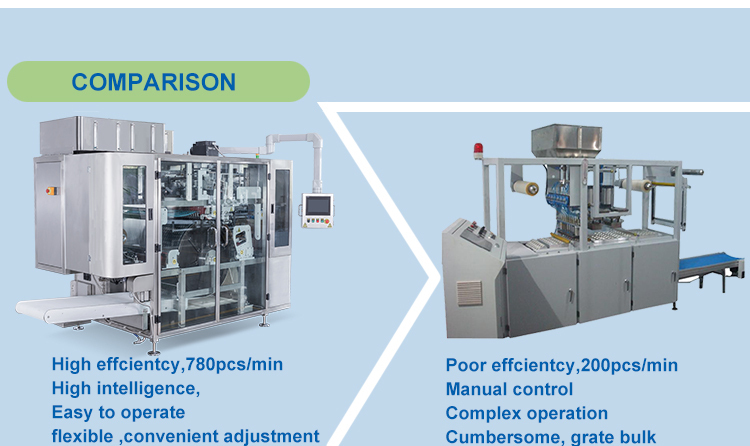
Film thickness is an important variable in water-soluble packaging because it can influence how the material is fed, formed, sealed, and separated during production. Even relatively small differences in film thickness can affect mechanical behavior and processing conditions. A Water Soluble Film Packaging Machine therefore needs to be configured according to the characteristics of the film being used.
Water-soluble films are available in different specifications for different packaging applications. POLYVA provides equipment for water-soluble film packaging, with machine configurations designed around factors such as film properties, product type, pouch dimensions, and production requirements. Understanding the relationship between film thickness and machine performance can help manufacturers establish more consistent operating conditions.
What Does Film Thickness Mean?
Film thickness refers to the distance between the two surfaces of the packaging film. It is normally specified by the film manufacturer and can vary according to the intended application.
Thickness is one of several film properties that affect packaging performance. Tensile strength, flexibility, moisture sensitivity, solubility, and sealing characteristics also need to be considered when evaluating a film for automated production.
Film Feeding and Thickness
The feeding system must move the film through the machine at a controlled rate. Differences in thickness can affect how the film responds to rollers, guides, tension systems, and other feeding components.
A film that is not properly matched to the machine may experience tracking or tension problems. Maintaining appropriate film tension and alignment can help reduce wrinkles, stretching, and feeding interruptions.
Impact on Pouch Forming
Film thickness can influence how easily a soluble film forms into a pouch cavity. The forming process may require specific mechanical conditions depending on the film’s flexibility and strength.
A thicker film may respond differently to forming pressure or vacuum than a thinner film. Consequently, forming parameters should be established using the actual film specification rather than assuming that one setting will work for every thickness.
Effect on Sealing
Sealing is another area where thickness can influence machine performance. The amount of material at the sealing interface affects how the film responds to the selected sealing conditions.
Depending on the film formulation and sealing technology, changes in thickness may require adjustments to parameters such as:
- Sealing temperature
- Pressure
- Contact time
- Machine speed
- Sealing jaw or tool settings
The appropriate values should be determined through testing and the film manufacturer’s technical guidance.
Thicker Film and Mechanical Strength
In some applications, a thicker film may provide greater resistance to mechanical stress. This can be useful when packages need to withstand particular handling or transportation conditions.
However, greater thickness does not automatically mean better overall packaging performance. A film must still be compatible with the machine’s forming, feeding, and sealing systems.
Thinner Film and Material Efficiency
Thinner film can reduce the amount of packaging material used per pouch when the required mechanical and sealing performance can still be achieved.
However, reducing thickness may affect strength, handling, or process stability. The correct choice therefore depends on the complete package design rather than material reduction alone.
Thickness Consistency Is Also Important
Consistent film thickness across a roll can be just as important as the nominal thickness specification. Significant variations may affect forming, sealing, or tension as the material passes through the machine.
Quality control during film production helps maintain more predictable processing characteristics. Manufacturers should check film specifications and tolerances before using a new material in automated packaging equipment.
Relationship Between Thickness and Machine Speed
Machine speed and film thickness can interact during production. Changes in material behavior may affect how quickly the film can be formed, filled, and sealed while maintaining acceptable package quality.
Increasing machine speed can reduce the available time for forming and sealing. If the film requires different processing conditions, the production rate may need to be adjusted accordingly.
Environmental Conditions and Film Thickness
Humidity and temperature can influence water-soluble film performance regardless of thickness. Moisture can affect handling and sealing characteristics, while temperature may influence film flexibility and product properties.
Maintaining appropriate environmental conditions can make machine performance more predictable. Film should also be stored according to the supplier’s recommended conditions before entering production.
Choosing the Right Thickness for an Application
Selecting film thickness involves balancing several requirements. Manufacturers should consider:
- Required package strength.
- Pouch dimensions and design.
- Product weight or volume.
- Forming requirements.
- Sealing method.
- Machine capabilities.
- Environmental conditions.
- Storage and handling requirements.
The thinnest available film is not necessarily the most suitable option, just as the thickest film may not provide the best overall result.
Testing Film on Packaging Equipment
Before introducing a new film specification into full-scale production, manufacturers can conduct controlled trials. Testing allows operators to observe how the material behaves during feeding, forming, filling, sealing, and cutting.
Finished packages can then be evaluated for dimensions, seal integrity, appearance, and mechanical stability. Production settings can be adjusted based on the observed results.
Common Problems Caused by Poor Thickness Compatibility
When film thickness is unsuitable for a particular machine or application, several issues may occur. These can include:
- Film wrinkles during feeding
- Inconsistent pouch formation
- Film stretching or tearing
- Weak or uneven seals
- Changes in package dimensions
- Increased production interruptions
These symptoms do not necessarily indicate that thickness is the only cause. Film formulation, machine settings, humidity, tension, and equipment condition should also be examined during troubleshooting.
Maintaining Stable Machine Performance
Once an appropriate film thickness has been established, production parameters should remain consistent. Operators should monitor film tension, alignment, forming behavior, sealing quality, and package dimensions throughout the production run.
Routine machine maintenance is also important. Worn rollers, guides, sealing components, or other parts can create problems that may initially appear to be related to film thickness.
Conclusion
Film thickness can have a significant effect on the performance of water-soluble film packaging equipment. It influences film feeding, pouch forming, sealing conditions, machine speed, and the mechanical characteristics of the finished package.
For reliable production, film thickness should be evaluated alongside strength, flexibility, moisture sensitivity, sealing behavior, and product requirements. Proper testing and machine adjustment can help manufacturers establish stable operating conditions and produce consistent water-soluble packages.