


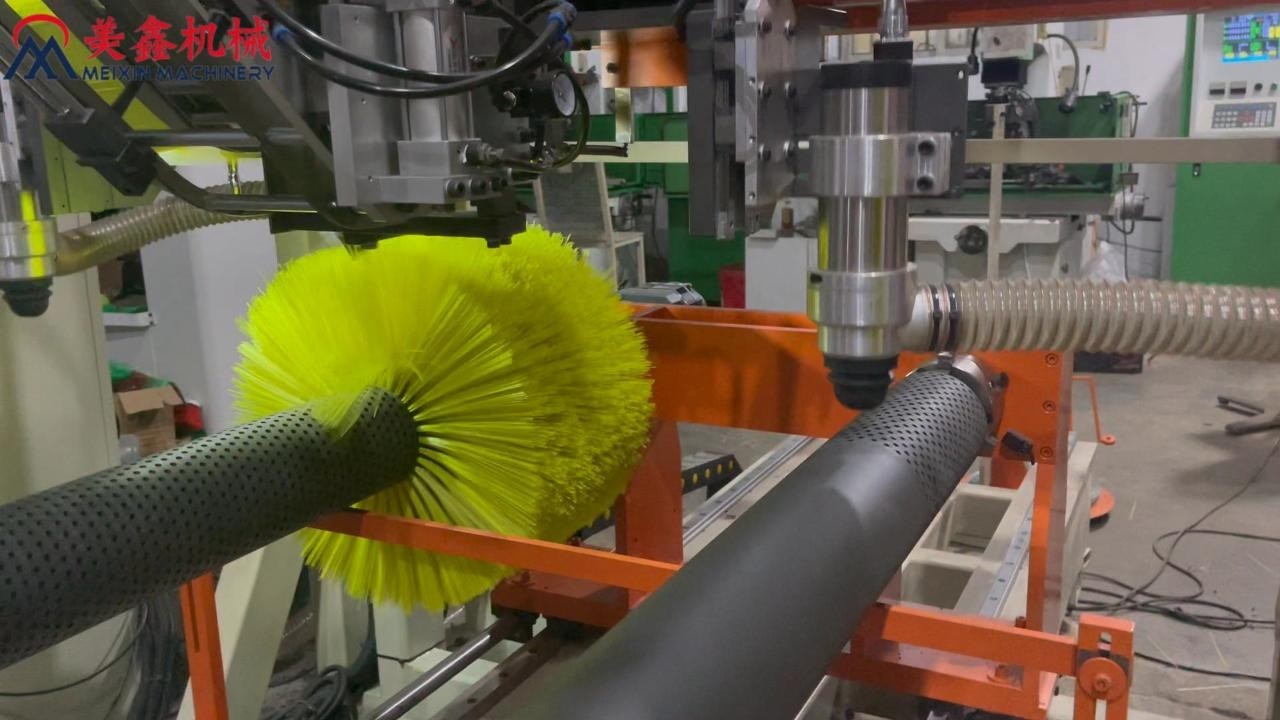
Choosing the right disc brush machine size is an important step when setting up or expanding a brush manufacturing operation. The machine needs to accommodate the dimensions of the brushes you plan to produce while providing sufficient capacity for your expected production volume.
When comparing Industrial Disc Brush Machines For Sale, manufacturers should consider more than the machine’s physical dimensions. Working range, brush specifications, production capacity, available space, and future requirements all play a role in determining the appropriate size.
Start With Your Disc Brush Dimensions
The first step is to identify the dimensions of the finished disc brushes you need to manufacture. Consider the brush diameter, thickness, center hole, and overall configuration.
If you produce several disc brush sizes, determine the smallest and largest dimensions required. This will help establish the machine’s necessary working range.
Consider Your Production Volume
Machine size is closely connected to production requirements. A smaller machine may be sufficient for limited or specialized production, while higher-volume manufacturing may require equipment with greater capacity and automation.
Estimate your current output requirements and consider reasonable future growth. Selecting equipment that can handle expected demand can help prevent production bottlenecks.
Check the Machine’s Working Range
Manufacturers should review the machine’s stated working range rather than relying on general size descriptions. The working range determines which brush dimensions and configurations the equipment can accommodate.
Make sure the machine can produce the complete range of disc brushes required by your business. If your product range is likely to expand, additional flexibility may be useful.
Match Machine Capacity to Product Variety
Businesses producing only one or two standard disc brush sizes may not require highly flexible equipment. Manufacturers serving multiple customers or industries may need a machine capable of handling a broader range of specifications.
Consider how frequently you change between brush sizes. A machine with convenient adjustment features can make product changes more efficient.
Consider Available Factory Space
The machine’s footprint should fit comfortably within your production facility. However, do not measure only the space occupied by the machine itself.
Allow additional room for:
- Operator access
- Material loading and unloading
- Maintenance and inspection
- Electrical connections
- Storage of materials and finished brushes
Adequate clearance can make daily operation and maintenance safer and more practical.
Evaluate Production Speed
Machine size and production capacity should be considered together with operating speed. A machine may accommodate your required brush dimensions but still be unsuitable if it cannot achieve your target production rate.
Compare expected output with your order volume and production schedule. The right equipment should provide sufficient capacity without creating unnecessary investment costs.
Consider Automation Requirements
Larger or higher-capacity production systems may include more automated functions. These can reduce repetitive manual tasks and help maintain consistent production.
However, automation requirements vary between businesses. If production volumes are relatively low, a simpler machine may provide sufficient performance without the additional complexity and cost of advanced automation.
Check Filament Compatibility
Machine size alone does not determine whether equipment is suitable. You should also confirm that it can handle the filament materials required for your disc brushes.
Nylon, polypropylene, abrasive filaments, and wire can have different production requirements. Make sure the selected machine supports the materials and brush configurations used in your products.
Think About Future Expansion
Production requirements can change as a business grows. Choosing equipment that is only suitable for today’s smallest production requirements may result in another investment sooner than expected.
At the same time, purchasing a machine that is significantly larger than necessary can increase costs without providing practical benefits. Consider your realistic growth plans when determining the appropriate capacity.
Compare Total Operating Costs
A larger machine may involve higher energy consumption, maintenance costs, and installation requirements. These expenses should be considered alongside production capacity.
Instead of choosing equipment based solely on maximum capacity, compare the expected output with total operating costs. The best size is one that provides sufficient production capability at a reasonable overall cost.
Request Detailed Specifications
Before making a purchase, ask for detailed technical information about the machine’s working range, dimensions, production capacity, power requirements, adjustment options, and installation conditions.
If possible, provide the manufacturer with your actual disc brush specifications. This can make it easier to determine whether a particular machine is suitable for your production needs.
Final Thoughts
Determining the right disc brush machine size requires a balance between brush dimensions, production volume, product variety, available factory space, automation, and future growth.
Rather than choosing the largest machine available, select equipment that matches your actual production requirements while providing reasonable flexibility. A properly sized machine can support efficient production, simplify operation, and help control long-term equipment costs.