


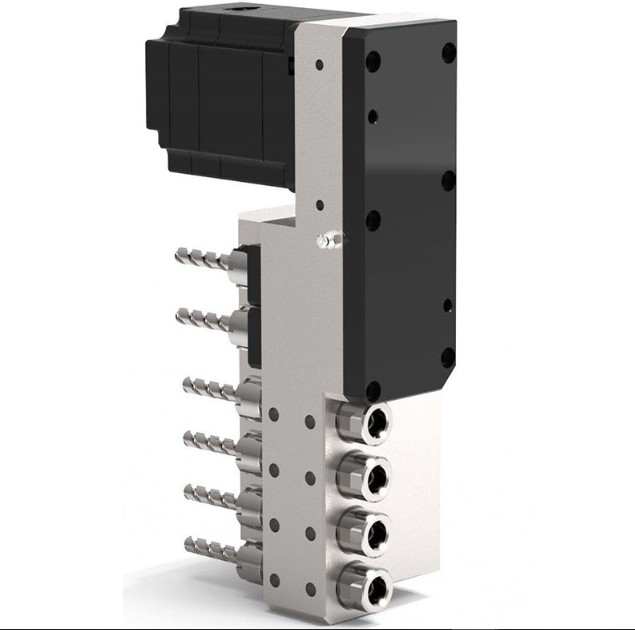
Modern precision components often require more than basic turning. A single part may need drilling, milling, slotting, threading, and other operations alongside standard turning processes. Handling these features efficiently can have a major effect on production output.
Live tooling gives a swiss type CNC lathe the ability to perform rotating-tool operations without moving the workpiece to a separate milling machine. This capability helps manufacturers combine more processes within one setup, reduce handling, and create a smoother production workflow.
What Is Live Tooling?
Live tooling uses powered cutting tools that rotate independently from the main workpiece spindle. These tools allow the machine to perform operations that normally require separate milling or drilling equipment.
Depending on the machine configuration, live tooling may support radial or axial machining. The available tool positions and spindle arrangements determine which operations the machine can perform.
Why Live Tooling Matters For Productivity
Without live tooling, a turned component that requires milled or drilled features may need another machining stage. That extra stage involves additional handling, workholding, programming, and inspection.
Live tooling brings more operations into the same machining process. This can reduce production steps and allow manufacturers to move from raw material to finished components more efficiently.
The productivity advantage becomes particularly noticeable when parts contain several secondary features.
Reducing Secondary Machining
Secondary machining can add significant time to the manufacturing process. After turning, an operator may need to transfer the component to another machine for cross holes, flats, slots, or other features.
Live tooling can eliminate some of these transfers. The machine can perform additional cutting operations while maintaining the workpiece in its existing position.
This approach reduces handling and helps create a more streamlined production route.
Performing Milling Operations
One of the major benefits of live tooling involves milling. A Swiss-type CNC machine equipped with suitable driven tools can create features that do not result from conventional turning.
Common applications include:
- Flats
- Slots
- Keyways
- Cross-milled profiles
- Small pockets
- Radial features
The actual capabilities depend on the machine’s live tooling configuration and available axis movements.
Faster Drilling Operations
Live tooling also supports drilling in different orientations. Radial drilling can create holes across the diameter of a component, while axial tooling can support holes along the spindle axis.
Performing these operations within the same setup reduces the need for separate equipment. It also helps maintain accurate positioning between drilled features and turned surfaces.
For small precision components, this positioning advantage can contribute to more consistent results.
Improving Setup Efficiency
Every additional setup takes time. Operators must reposition the workpiece, establish new offsets, load tooling, and verify alignment before production resumes.
Live tooling reduces the number of setups required for parts that combine turning with milling or drilling.
Fewer setups also mean less workpiece handling. This can help manufacturers increase productive machine time while reducing unnecessary process interruptions.
Supporting Complex Components
Modern precision components often feature several geometric details on different surfaces. Producing these features through separate machines can make the production process more complicated.
Live tooling provides greater flexibility within the Swiss machining environment. Multiple tools can address different features while the CNC control coordinates the machining sequence.
This capability makes live tooling valuable for complex small-diameter components.
Reducing Workpiece Handling
Manual handling does more than consume labor time. Each transfer creates another opportunity for scratches, incorrect positioning, or alignment problems.
Keeping the workpiece in the machine for additional operations reduces these handling points.
The result can include a more predictable workflow and fewer interruptions between machining stages.
Improving Feature Alignment
Feature alignment matters when several surfaces must maintain a precise relationship. Moving a component between machines may introduce positioning differences.
Live tooling allows many features to receive machining within the same workholding arrangement. The CNC system controls tool movement relative to the established workpiece position.
This can help maintain relationships between turned diameters, holes, slots, and milled surfaces.
How Live Tooling Affects Cycle Time
Live tooling does not automatically make every machining cycle faster. Its main advantage comes from eliminating or reducing separate operations.
A part that previously required turning followed by drilling and milling on separate equipment may require fewer production stages with suitable driven tooling.
Manufacturers should compare the complete process time rather than looking only at the cutting time of an individual operation.
Tooling Selection Still Matters
Live tooling performance depends heavily on the tools used. Tool diameter, cutting geometry, holder rigidity, spindle speed, and coolant access all influence machining results.
Manufacturers should select tools according to the material and feature requirements of the component.
Proper tool selection can also help control vibration, heat, chip formation, and tool wear during continuous production.
Supporting Automated Production
Live tooling works particularly well within an automated production environment. Bar-fed Swiss machines can perform multiple operations with limited operator involvement once the process receives proper setup and verification.
This helps manufacturers maintain production over longer runs while reducing repetitive manual tasks.
JSWAY develops CNC machining solutions for precision production where multi-operation processing and automation can support manufacturing efficiency.
Live Tooling And Production Flexibility
Production requirements often change as manufacturers introduce new components or modify existing designs. A flexible tooling system makes it easier to accommodate different machining requirements.
Live tooling provides additional options for parts that require both turning and rotating-tool operations.
Manufacturers should review the number of driven-tool positions, available spindle speeds, tool dimensions, and axis capabilities when evaluating a machine.
Applications That Benefit From Live Tooling
Live tooling can prove useful across many precision manufacturing applications. It commonly supports components that combine turned surfaces with cross features or other secondary details.
Potential applications include:
- Precision shafts
- Connectors
- Medical components
- Electronic hardware
- Automotive components
- Small mechanical parts
- Instrument components
The suitability of live tooling depends on the part geometry, material, tolerance requirements, and production volume.
Measuring The Productivity Gains
Manufacturers should evaluate productivity using measurable production factors. Useful metrics include:
- Total cycle time
- Number of setups
- Operator handling time
- Secondary machining time
- Tool change frequency
- Machine utilization
- Scrap and rework
- Output per shift
Comparing these figures before and after process optimization provides a clearer picture of the value that live tooling offers.
When Should Manufacturers Consider Live Tooling?
Live tooling becomes especially attractive when components require several operations beyond conventional turning.
It can provide strong value when a manufacturer wants to reduce secondary machining, improve feature alignment, shorten handling time, or produce complex components within fewer setups.
The machine should still match the actual production requirements. Excess tooling capacity may add cost without providing meaningful benefits.
How JSWAY Approaches Multi-Operation Machining
A productive Swiss machining process requires more than adding driven tools. Machine rigidity, spindle performance, tooling capacity, CNC control, workpiece support, and automation all contribute to the final result.
JSWAY provides CNC machining solutions for manufacturers producing precision components with demanding production requirements. Evaluating live tooling alongside the complete machine configuration helps manufacturers select equipment that fits their actual processes.
Final Thoughts
Live tooling improves Swiss-type CNC lathe productivity by bringing more machining operations into a single production process. Milling, drilling, slotting, and other rotating-tool operations can take place without unnecessary workpiece transfers.
By reducing setups, handling, and secondary machining, live tooling can create a more efficient workflow. Manufacturers that produce complex precision parts should evaluate driven-tool capacity alongside cycle time, tooling requirements, machine utilization, and production goals.