Efficient material handling is essential for maintaining productivity in modern industrial facilities. Manufacturing plants, mining operations, cement factories, and bulk terminals all depend on reliable transportation systems to move raw materials and finished products between different processing stages. As industrial production becomes more demanding, businesses need integrated solutions that can handle large material volumes while minimizing delays, labor requirements, and operating expenses.
A properly designed Conveyor Plant provides an organized approach to industrial material transportation by connecting different conveying machines and supporting equipment into a coordinated system. Instead of relying on separate handling processes, facilities can use integrated conveyor arrangements to maintain consistent material flow, improve production coordination, and make better use of available resources.
Understanding What a Conveyor Plant Does
A conveyor plant is an integrated material handling installation designed to transport products or bulk materials through different operational areas. It may consist of several conveyor types, transfer stations, loading equipment, storage arrangements, and automated control systems.
Depending on the industrial application, a conveyor plant can handle materials such as coal, limestone, cement, grain, minerals, aggregates, and manufactured products.
Its primary purpose is to establish a reliable transportation process that connects storage areas, processing equipment, and distribution points.
The overall design depends on material characteristics, production capacity, transportation distance, and the physical layout of the facility.
Essential Components of a Conveyor Plant
A conveyor plant consists of several interconnected components that work together to maintain efficient material movement.
1. Conveyor Belts and Conveying Mechanisms
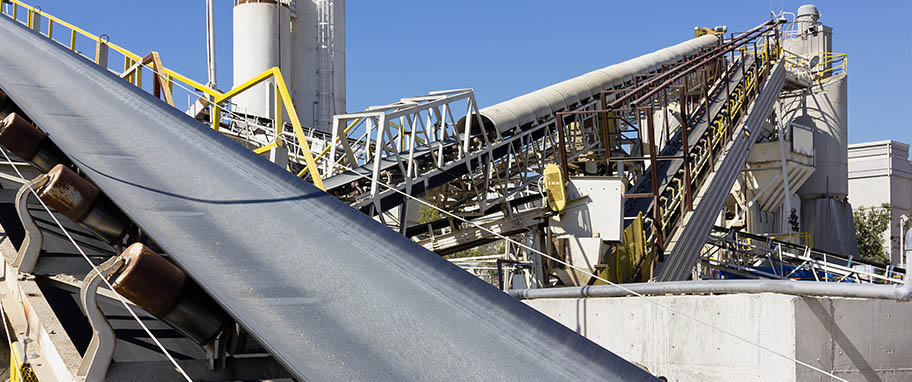
Conveyor belts are among the most important components in many industrial material handling installations. They provide a continuous surface for transporting bulk materials or packaged products between different locations.
Depending on operational requirements, a plant may also incorporate screw conveyors, chain conveyors, bucket elevators, or pneumatic conveying systems.
Each conveying mechanism serves a specific purpose. For example, belt conveyors are commonly used for long-distance transportation, while screw conveyors are suitable for controlled movement of powders and granular materials.
2. Drive Units and Motors
Drive units provide the mechanical power required to operate conveyor systems.
They typically include electric motors, gearboxes, drive pulleys, and associated transmission components.
Selecting suitable motors and drive arrangements is important for maintaining the required conveying speed and handling capacity.
Modern installations may also use variable-frequency drives to adjust operating speeds according to production demand.
3. Supporting Structures and Rollers
Supporting structures provide stability and maintain the correct alignment of conveying equipment.
In belt conveyor installations, idler rollers support the belt and help distribute material loads during transportation.
The structural design must account for equipment weight, material loads, operating conditions, and installation requirements.
Heavy-duty facilities may require reinforced support structures to withstand continuous operation and demanding workloads.
4. Loading and Discharge Equipment
Loading and discharge components control how materials enter and leave the conveyor system.
These components may include hoppers, chutes, feeders, transfer points, and discharge arrangements.
Properly designed transfer points help maintain consistent material flow while reducing spillage, blockages, and unnecessary material loss.
5. Electrical and Automation Systems
Modern conveyor plants often use centralized control systems to coordinate different equipment components.
Programmable logic controllers, sensors, motor controls, and monitoring devices help operators manage transportation activities.
Depending on the installation, automation systems can monitor conveyor speed, motor temperature, material flow, and equipment operating conditions.
Major Benefits of an Industrial Conveyor Plant
An integrated conveyor installation can improve several aspects of industrial operations.
1. Continuous Material Transportation
One of the main benefits of a conveyor plant is its ability to maintain a consistent flow of materials between different production stages.
Unlike transportation methods that require repeated loading and unloading, conveyor systems provide dedicated material movement routes.
This helps reduce waiting periods and supports more predictable production schedules.
2. Reduced Manual Labor
Manual material transportation can be physically demanding and time-consuming, especially in facilities handling heavy or large quantities of products.
Automated conveyor systems reduce the need for repetitive lifting, carrying, and transferring activities.
Operators can supervise equipment performance while focusing on production monitoring, maintenance, and quality control.
3. Improved Production Efficiency
A well-integrated conveyor plant connects different operational stages into a coordinated material handling process.
This reduces unnecessary transfers and helps prevent material shortages or accumulation between processing machines.
Improved coordination can increase equipment utilization and support higher production output.
4. Lower Long-Term Operating Costs
Although conveyor plants require an initial investment, they can help reduce several recurring operating expenses.
Potential savings include:
- Lower manual material handling requirements.
- Reduced dependence on mobile transportation equipment.
- Less material spillage and product loss.
- Improved energy management through optimized operation.
- Fewer production interruptions caused by inefficient transportation.
Actual savings depend on equipment configuration, operating hours, material characteristics, and maintenance practices.
5. Better Workplace Organization and Safety
Dedicated conveyor routes help organize material movement within industrial facilities.
They can reduce unnecessary vehicle movement and limit direct employee contact with heavy materials.
Appropriate guarding, emergency stops, warning systems, and enclosed conveying arrangements can further improve workplace safety.
However, proper operating procedures and regular inspections remain essential.
Applications of Conveyor Plants Across Different Industries
Conveyor plants are used in many industrial sectors because they can be customized to accommodate different material handling requirements.
Mining and Mineral Processing
Mining operations use integrated conveyor systems to move extracted materials between excavation areas, crushers, screening equipment, and storage facilities.
Heavy-duty belt conveyors are particularly useful for transporting large quantities of coal, iron ore, limestone, and other minerals.
Cement Manufacturing
Cement production involves several material handling stages, from transporting limestone and other raw materials to moving clinker and finished cement.
Conveyor plants connect crushers, storage silos, processing equipment, and packaging systems to support continuous production.
Ports and Bulk Terminals
Bulk terminals depend on integrated conveyor arrangements to transfer cargo between ships, storage yards, and transportation facilities.
Conveyor plants can work alongside ship loaders, barge unloaders, hoppers, and other material handling machines to improve cargo movement.
Agriculture and Grain Processing
Agricultural facilities use conveyor systems to transport grain, seeds, fertilizers, and animal feed.
Belt conveyors, bucket elevators, and screw conveyors can be combined to support storage, cleaning, processing, and distribution operations.
Manufacturing and Warehousing
Manufacturing plants and warehouses use conveyor installations to move components, packaged goods, and finished products between workstations.
Integrated systems can improve workflow coordination and reduce unnecessary product handling.
Important Factors to Consider When Designing a Conveyor Plant
Designing an effective conveyor installation requires a detailed assessment of operational requirements.
Material Characteristics
The physical properties of the material directly influence conveyor selection.
Important factors include particle size, bulk density, moisture content, temperature, abrasiveness, and flowability.
For example, abrasive minerals may require wear-resistant components, while fine powders may need enclosed conveying arrangements to minimize dust emissions.
Required Handling Capacity
The plant should be designed to accommodate expected production volumes without creating transportation bottlenecks.
Capacity planning should consider hourly throughput, peak operating requirements, and possible future expansion.
An appropriately sized system helps balance productivity with equipment and energy costs.
Facility Layout and Transportation Distance
The available installation space determines how conveying equipment can be arranged.
Designers should evaluate horizontal distances, elevation changes, structural supports, transfer locations, and access requirements.
A properly planned layout reduces unnecessary conveyor sections and simplifies maintenance.
Energy Efficiency
Energy consumption can have a significant impact on the total operating cost of a conveyor plant.
Efficient motors, suitable drive systems, variable-frequency controls, and optimized conveyor configurations can help reduce unnecessary power usage.
The system should also be sized according to actual material handling requirements.
Maintenance Accessibility
Conveyor plants require regular inspection and servicing to maintain reliable operation.
Components such as bearings, belts, rollers, motors, and gearboxes should be accessible for routine maintenance.
The availability of replacement parts and technical support should also be considered during equipment selection.
The Role of Automation in Modern Conveyor Plants
Automation has become an important feature of modern industrial material handling installations.
Advanced control systems allow different conveyors and supporting machines to operate in coordination rather than functioning as separate units.
Common automation features include:
- Automatic startup and shutdown sequences.
- Variable-speed conveyor operation.
- Material flow monitoring.
- Belt alignment and overload detection.
- Motor temperature and vibration monitoring.
- Centralized equipment supervision.
These technologies help operators identify abnormal operating conditions and manage production activities more efficiently.
Some advanced facilities also use predictive maintenance systems to analyze equipment data and identify potential mechanical problems before they cause unexpected downtime.
Maintenance Practices for Long-Term Performance
Regular maintenance is necessary to protect equipment reliability and extend the service life of a conveyor plant.
A preventive maintenance program should include:
- Inspecting belts, chains, and screw mechanisms for excessive wear.
- Checking drive motors, gearboxes, bearings, and pulleys.
- Monitoring conveyor alignment and belt tension.
- Cleaning accumulated material from transfer points.
- Inspecting electrical connections and control systems.
- Testing emergency stops and protective devices.
- Replacing damaged components according to manufacturer recommendations.
Maintenance frequency should reflect operating conditions, equipment usage, and material characteristics.
Identifying minor problems early can help prevent costly repairs and prolonged production interruptions.
Future Developments in Conveyor Plant Technology
Industrial material handling is increasingly influenced by digital monitoring, intelligent automation, and energy-efficient equipment design.
Modern conveyor plants are beginning to incorporate more advanced sensors and connected control platforms that provide detailed information about equipment performance.
Predictive maintenance technologies can help identify unusual vibration, temperature changes, and other warning signs before major failures occur.
Modular conveyor designs are also gaining importance because they allow facilities to modify or expand material handling arrangements as production requirements change.
These developments are helping industrial operators build more adaptable and reliable transportation systems.
Conclusion
A well-designed conveyor plant is an important investment for industries that depend on efficient and continuous material transportation. By integrating conveyor belts, drive units, transfer equipment, supporting structures, and automated controls, businesses can create coordinated systems that improve productivity and reduce unnecessary handling costs.
However, achieving reliable performance requires careful consideration of material properties, handling capacity, installation layout, energy consumption, and maintenance requirements.
Combining suitable equipment with automation, preventive maintenance, and effective safety procedures allows industrial facilities to improve material flow, maintain consistent production, and support long-term operational efficiency.