Adult dinosaur costumes have become popular attractions at themed events, festivals, promotional campaigns, birthday celebrations, and live entertainment shows. They allow performers to transform into recognizable prehistoric characters, creating memorable experiences for audiences of different ages. From realistic dinosaur suits to playful inflatable designs, these costumes offer a wide range of creative possibilities for entertainment professionals and event organizers.
Choosing the right costume involves more than selecting an appealing dinosaur design. Comfort, mobility, durability, appearance, and performance requirements all influence the final decision. Whether planning a one-time themed celebration or investing in costumes for regular public performances, understanding the available styles and practical features can help organizers make a suitable choice. Exploring different Adult Dinosaur Costumes can also provide inspiration for matching a dinosaur character to the event’s atmosphere and audience.
1. Why Adult Dinosaur Costumes Are Popular
Dinosaur characters have broad appeal because they combine recognizable prehistoric imagery with opportunities for humor, excitement, and interaction. An adult wearing a dinosaur costume can become a central attraction at an event, encouraging visitors to take photographs, participate in activities, and engage with performers.
Their popularity comes from several advantages:
- Strong visual appeal: Dinosaur costumes are easy to recognize and attract attention in busy event spaces.
- Versatile entertainment: They can be used for stage performances, promotional appearances, and informal interactions.
- Audience engagement: Performers can use gestures and movements to make characters more expressive.
- Themed presentation: Dinosaur characters complement prehistoric, adventure, science, and fantasy themes.
- Memorable experiences: A well-presented dinosaur character can become a highlight of an event.
These benefits make dinosaur costumes useful for both professional entertainment businesses and private celebrations.
2. Different Types of Adult Dinosaur Costumes
Adult dinosaur costumes are available in several styles, each suited to different entertainment settings. The best choice depends on the intended character, performance environment, and desired visual effect.
Inflatable Dinosaur Costumes
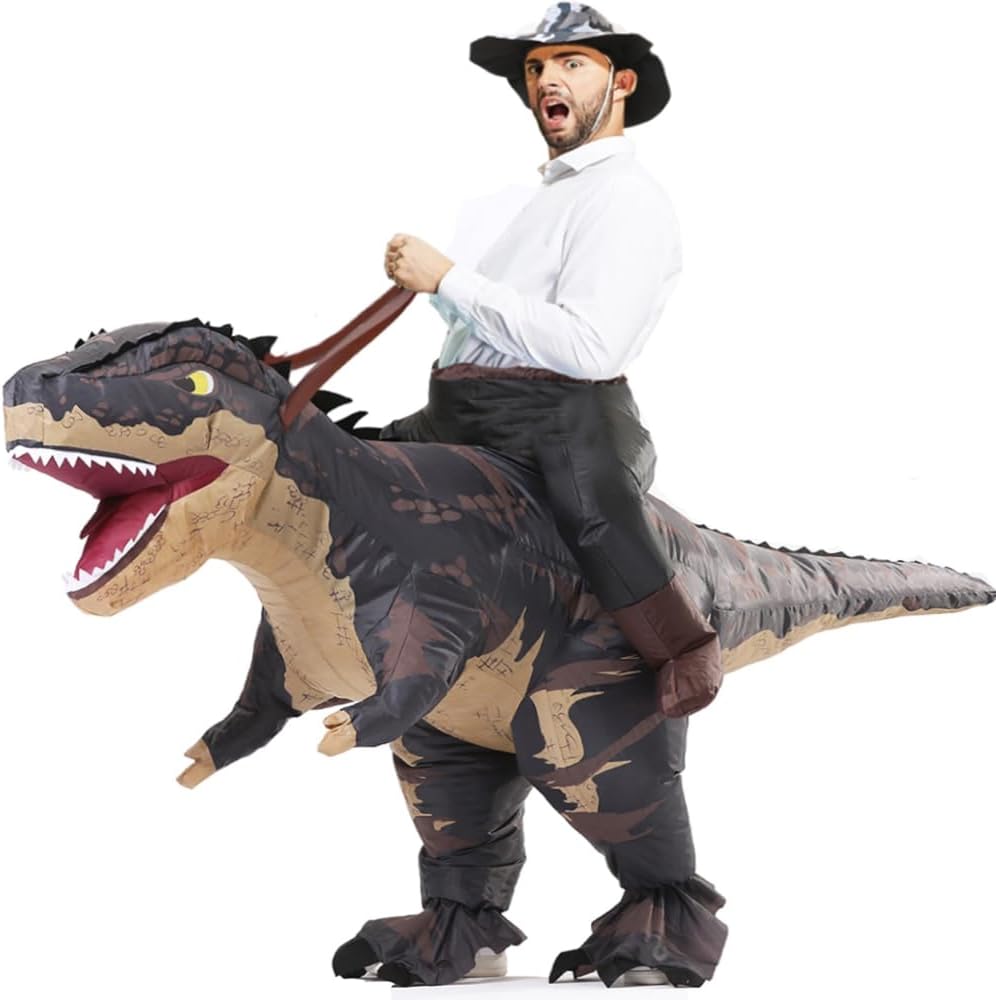
Inflatable dinosaur costumes are popular for parties, promotional events, festivals, and casual entertainment. They typically use a lightweight outer covering and a small battery-powered fan to maintain their inflated shape.
Common features include:
- Lightweight construction
- Full-body dinosaur appearance
- Easy-to-recognize character designs
- Convenient setup and removal
- Room for exaggerated and humorous movement
These costumes are especially suitable for lighthearted performances and informal audience interaction. However, users should consider ventilation, battery life, visibility, and the space needed to move safely.
Realistic Dinosaur Costumes
Realistic dinosaur costumes are designed to create a more convincing prehistoric appearance. They may include detailed skin textures, sculpted heads, claws, tails, and carefully selected colors.
These designs are often used in:
- Theme parks
- Museum programs
- Educational exhibitions
- Professional stage productions
- Immersive entertainment experiences
A realistic costume may require more detailed construction and careful fitting, but its appearance can make a strong impression on visitors.
Wearable Dinosaur Mascot Costumes
Mascot-style dinosaur costumes are designed for performers who interact directly with audiences. They often feature recognizable facial expressions, padded body sections, and a character-focused appearance.
These costumes work well for school events, shopping centers, festivals, and promotional activities. Their designs can be friendly, funny, adventurous, or slightly intimidating, depending on the event’s theme.
Full-Body Dinosaur Suits
Full-body dinosaur suits cover most or all of the performer, creating a unified character appearance. They may be designed around a particular dinosaur species or a fictional prehistoric creature.
The construction can include separate head, body, hand, and foot components. For professional use, the design should allow adequate ventilation, comfortable movement, and convenient access for the performer.
3. Choosing the Right Dinosaur Character
Selecting a dinosaur type helps establish the personality and visual identity of a costume. Different species have distinctive silhouettes and features that audiences can recognize.
| Dinosaur character | Recognizable features | Suitable entertainment style |
|---|---|---|
| Tyrannosaurus rex | Large head, powerful jaws, short forelimbs | Dramatic appearances and playful interactions |
| Velociraptor | Narrow head, agile body, curved claws | Adventure themes and character performances |
| Triceratops | Three facial horns and broad frill | Friendly mascot appearances and educational events |
| Stegosaurus | Back plates and spiked tail | Colorful family entertainment |
| Brachiosaurus | Long neck and large body | Visual attractions and themed displays |
| Spinosaurus | Long snout and distinctive back sail | Adventure-themed shows and exhibitions |
The intended audience should influence the character selection. A friendly Triceratops may suit a children’s event, while a dramatic T. rex may be more appropriate for a theatrical entrance or a dinosaur-themed attraction.
4. Comfort and Fit for Adult Performers
A costume may look impressive, but it must also fit the performer properly. Poor sizing can restrict movement, create pressure points, and make extended performances uncomfortable.
Before purchasing or commissioning a costume, organizers should consider:
- Performer height and body measurements
- Internal space for clothing and padding
- Weight distribution across the body
- Freedom of movement around the shoulders and legs
- Ease of putting on and removing the costume
- Adjustability for different performers
Adult costumes should not be selected solely by their exterior dimensions. The internal structure must accommodate the person wearing the costume.
For costumes used by multiple performers, adjustable straps and suitable fitting arrangements can make changing between users easier.
5. Materials and Construction Quality
The materials used in a dinosaur costume influence its appearance, weight, flexibility, and durability. Different costume styles require different construction approaches.
Common materials include:
| Material | Main characteristics | Typical use |
|---|---|---|
| Polyester fabric | Flexible, lightweight, and available in many finishes | Outer costume coverings |
| EVA foam | Lightweight and easy to shape | Decorative structures and costume details |
| Upholstery foam | Soft and suitable for padding | Body shaping and internal comfort |
| Thermoplastic materials | Can be shaped into defined forms | Structured headpieces and accessories |
| Silicone | Can reproduce detailed skin-like textures | Specialized realistic costume surfaces |
| Lightweight plastic | Provides structure without excessive bulk | Selected decorative components |
The quality of stitching, fastening systems, surface finishing, and internal supports also matters. A well-constructed costume should maintain its shape during normal use without creating unnecessary strain for the performer.
For frequent performances, organizers should consider materials that are easier to clean, repair, and maintain.
6. Realistic Details That Improve Appearance
Small design details can make a significant difference in how audiences perceive a dinosaur costume. A recognizable dinosaur shape is important, but surface finishing and facial features help establish character.
Head and Facial Features
The head is often the most noticeable part of the costume. Its shape, eyes, jaw, nostrils, and teeth contribute to the dinosaur’s expression.
A well-designed headpiece should balance visual detail with practical visibility and ventilation. If the jaw moves, its mechanism should operate smoothly without restricting the performer.
Skin Texture and Color
Textured surfaces can create a more natural prehistoric appearance. Designers may use raised patterns, folds, scales, and color variations to add depth.
Earthy greens, browns, gray tones, and darker markings are common artistic choices. However, the actual coloration of many dinosaur species remains uncertain, so costume colors should be understood as creative interpretations.
Claws and Feet
Claws and feet help establish the dinosaur’s physical character. They should be proportionate to the intended design while remaining safe for public use.
Costume footwear should provide adequate grip and stability, particularly when performers need to walk through crowded event spaces.
Tail Design
A tail adds visual balance and makes the dinosaur silhouette more recognizable. Its length, weight, and flexibility should be carefully considered.
A tail that is too heavy or difficult to control can interfere with movement, so lightweight materials and secure attachment systems are important.
7. Movement and Performance Capabilities
Adult dinosaur costumes are often used in interactive entertainment, which means performers need to move comfortably while maintaining the character’s personality.
Depending on the design, useful movement features may include:
- Head tilting and turning
- Jaw movement
- Flexible arm and hand gestures
- Controlled walking and turning
- Tail movement
- Crouching or bending, where appropriate
Performers can make a dinosaur character more engaging through deliberate movements. A slow head turn, playful reaction, or carefully timed roar may be more effective than constant exaggerated activity.
For professional shows, rehearsals help performers understand the costume’s movement limitations and coordinate their actions with music, sound effects, or other entertainers.
8. Using Adult Dinosaur Costumes at Different Events
The same costume may work well in one environment but be unsuitable for another. Event organizers should consider the venue, audience, performance duration, and type of interaction before making a selection.
Theme Parks and Family Attractions
Theme parks often use dinosaur characters to create memorable visitor experiences. Realistic costumes can support themed environments, character meet-and-greets, and scheduled performances.
Durability and maintenance are especially important because performers may wear the costume regularly.
Corporate Events and Promotional Campaigns
Dinosaur costumes can attract attention at product launches, exhibitions, trade shows, and promotional activities. A distinctive character can help create a recognizable visual theme.
For these events, appearance, ease of transportation, and the ability to interact with visitors are useful considerations.
Birthday Parties and Private Celebrations
Inflatable and mascot-style dinosaur costumes are popular for birthdays and family celebrations. A performer can greet guests, participate in games, pose for photographs, and create entertaining moments.
A friendly character design is often a suitable choice when younger children are attending.
School Events and Educational Programs
Dinosaur costumes can support science-themed activities and classroom presentations. Educators and performers may use them to introduce prehistoric animals, discuss fossils, and encourage curiosity about paleontology.
For educational settings, the costume can be paired with accurate information about the dinosaur being represented.
Stage Shows and Live Performances
Theatrical productions may require more detailed costumes with expressive movement, dramatic visual features, or sound effects.
In these environments, costumes should be designed around the choreography and available stage space.
9. Safety and Visibility Considerations
Safety is essential whenever performers wear large or full-body costumes. Dinosaur heads, tails, and padded structures can restrict visibility and change the wearer’s balance.
Important precautions include:
- Ensure the performer has an adequate field of vision.
- Check that footwear provides suitable traction.
- Secure all costume components before use.
- Avoid sharp or exposed decorative edges.
- Provide sufficient ventilation.
- Keep tails clear of visitors and nearby objects.
- Establish safe movement areas.
- Arrange assistance for performers in crowded environments.
A trained assistant or spotter can help guide a performer through busy venues, particularly when the costume has restricted visibility.
Performers should also take regular breaks and remain aware of heat buildup during extended appearances.
10. Ventilation and Temperature Management
Full-body costumes can become warm, especially when performers work outdoors or remain active for long periods. Ventilation should therefore be considered during the design and purchasing process.
Possible comfort features include:
- Breathable internal fabrics
- Mesh ventilation panels
- Lightweight padding
- Small internal cooling fans, where suitable
- Easy access for breaks and removal
- Moisture-managing clothing worn underneath
Inflatable costumes also require appropriate airflow from their operating fan. Before a performance, users should check the fan, battery, and air openings to ensure the costume functions as intended.
Organizers should schedule breaks according to the temperature, activity level, and costume design.
11. Adding Sound and Interactive Features
Sound effects and mechanical details can make a dinosaur performance more immersive. Some costumes incorporate speakers, recorded roars, moving jaws, or other character effects.
These features may be particularly useful for professional performances and themed attractions.
Possible additions include:
- Dinosaur roars and growls
- Breathing or movement sounds
- Manually operated jaw mechanisms
- Moving eyes or eyelids
- Coordinated lighting effects
- Remote-controlled sound playback
Not every costume needs advanced technology. A performer with good timing and expressive movement can create an engaging character even with a simple design.
For costumes with electronic components, reliable power sources, secure wiring, and convenient controls should be included in the planning process.
12. Cleaning, Storage, and Long-Term Maintenance
Regular maintenance helps keep adult dinosaur costumes presentable and suitable for repeated performances. Cleaning requirements depend on the materials and construction methods.
A basic maintenance routine should include:
- Inspect the costume after each performance.
- Remove dust and surface dirt using appropriate cleaning methods.
- Clean removable fabric sections according to their care instructions.
- Allow damp components to dry completely.
- Check stitching, zippers, straps, and fasteners.
- Inspect the headpiece, tail, and decorative parts for damage.
- Test electronic features and fans where applicable.
- Store the costume in a clean, dry space.
Large headpieces should be protected from pressure that could distort their shape. Inflatable costumes should be fully dried and folded according to the manufacturer’s instructions.
For professional entertainment businesses, maintaining an inspection and repair record can help extend costume life and reduce unexpected problems.
13. What to Consider Before Buying Adult Dinosaur Costumes
A purchasing decision should reflect the costume’s intended use rather than appearance alone. Event organizers and entertainment providers can compare options by reviewing several practical factors.
| Buying consideration | Questions to ask |
|---|---|
| Design | Does the dinosaur character match the event theme? |
| Sizing | Will the costume fit the intended performer? |
| Comfort | Is the internal structure suitable for the expected performance duration? |
| Mobility | Can the performer walk, turn, and gesture comfortably? |
| Visibility | Can the wearer see the surrounding environment? |
| Durability | Are the materials suitable for repeated use? |
| Maintenance | Can the costume be cleaned and repaired conveniently? |
| Accessories | Are sound effects or mechanical features necessary? |
| Storage | Is there sufficient space to store the costume safely? |
Buyers should also ask about customization, available sizes, material specifications, maintenance requirements, and replacement components when comparing professional costume options.
Conclusion
Adult dinosaur costumes offer versatile opportunities for themed events, live performances, promotional activities, and interactive entertainment. From inflatable designs to detailed realistic suits, each style can create a different experience for performers and audiences.
The most suitable costume combines an appealing dinosaur character with comfortable fitting, durable materials, practical movement, adequate ventilation, and reliable construction. By considering the event environment and performer requirements before purchasing, organizers can choose a design that delivers visual impact while supporting safe and enjoyable performances.