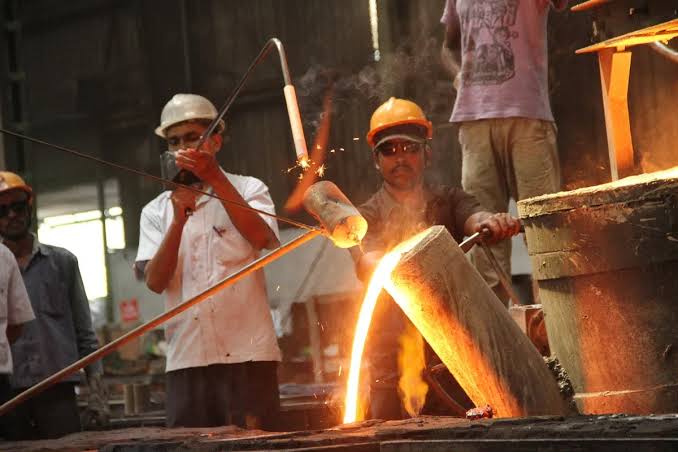
Iron casting is one of the oldest and most widely used metal manufacturing processes, playing an important role in industries such as automotive, construction, agriculture, machinery, and infrastructure. It involves melting iron and pouring the molten metal into specially designed molds to create components with specific shapes, dimensions, and mechanical properties. From small machine parts to large industrial components, iron castings provide strength, durability, and design flexibility.
An Iron Castings Manufacturer specializes in producing these components through controlled casting processes, material selection, mold preparation, and finishing operations. Manufacturers work with different grades of iron to meet the performance requirements of various applications. Understanding how iron casting production works helps businesses, engineers, and procurement professionals make informed decisions when selecting materials and manufacturing methods.
What Does an Iron Castings Manufacturer Do?
An iron castings manufacturer manages the production of metal components from raw materials to finished products. The process typically involves engineering design, pattern development, melting, molding, pouring, cooling, and quality inspection.
Manufacturers may produce standard components or customized castings based on technical drawings and application requirements. Their responsibilities often include:
- Selecting suitable iron grades for different applications.
- Designing and preparing casting patterns and molds.
- Controlling melting temperatures and chemical compositions.
- Pouring molten iron into prepared molds.
- Monitoring cooling and solidification.
- Removing excess material and performing finishing operations.
- Inspecting castings for dimensional accuracy and structural defects.
These activities help ensure that finished components meet the required specifications and perform reliably under operating conditions.
Understanding the Different Types of Iron Used in Casting
Iron casting production involves several material types, each offering different mechanical and physical characteristics. Selecting the appropriate material depends on the component’s intended use, loading conditions, and operating environment.
Gray Cast Iron
Gray cast iron is widely used because of its excellent machinability, vibration-damping properties, and good thermal conductivity. Its graphite structure gives the material a gray appearance when fractured.
Common applications include engine blocks, machine bases, brake components, pump housings, and industrial equipment.
Ductile Cast Iron
Ductile iron, also known as nodular cast iron, contains graphite in spherical forms. This structure provides greater strength, toughness, and ductility than conventional gray iron.
It is commonly used for automotive components, pipes, gears, crankshafts, and heavy-duty machinery parts where resistance to impact and mechanical stress is important.
White Cast Iron
White cast iron has a hard, wear-resistant structure with limited ductility. It is particularly suitable for applications involving abrasion and surface wear.
Typical uses include grinding equipment, crusher components, wear plates, and industrial processing machinery.
Malleable Cast Iron
Malleable cast iron is produced through heat treatment of white cast iron. This process improves its ductility and toughness, making it suitable for components that require a combination of strength and flexibility.
It is often used in pipe fittings, brackets, agricultural machinery, and various mechanical connections.
How Does the Iron Casting Production Process Work?
Iron casting involves multiple production stages that must be carefully controlled to achieve consistent quality. Each step influences the final component’s dimensions, mechanical properties, and surface condition.
1. Product Design and Pattern Development
Production begins with an engineering design based on the component’s dimensions, shape, and performance requirements. Engineers consider factors such as wall thickness, material properties, shrinkage allowances, and mold design.
A pattern is then created to form the cavity into which molten iron will be poured. Accurate pattern development helps reduce dimensional errors and improve production consistency.
2. Mold Preparation
Molds are prepared using materials such as sand or other suitable molding systems. The mold must withstand the temperature of molten iron while maintaining its shape during pouring and solidification.
The mold also includes gating and riser systems that help control metal flow and compensate for shrinkage during cooling.
3. Melting and Material Preparation
Iron and other required raw materials are melted in industrial furnaces. Manufacturers carefully control the chemical composition by adjusting carbon, silicon, and other alloying elements.
Temperature monitoring is equally important because incorrect melting conditions can affect fluidity, solidification behavior, and the quality of the finished casting.
4. Pouring Molten Iron
Once the molten metal reaches the required temperature and composition, it is transferred into the prepared mold.
Controlled pouring helps prevent problems such as turbulence, air entrapment, incomplete filling, and other casting defects. Proper pouring techniques are essential for producing components with consistent internal structures.
5. Cooling and Solidification
After pouring, the molten iron gradually cools and solidifies inside the mold. Cooling rates influence the final microstructure and mechanical properties of the casting.
Manufacturers must consider component size, wall thickness, mold material, and iron composition when determining appropriate cooling conditions.
6. Shakeout and Cleaning
Once the casting has cooled sufficiently, it is removed from the mold. This stage is commonly called shakeout.
Excess sand, gating systems, risers, and other unwanted material are removed. Cleaning operations may include shot blasting, grinding, and surface preparation to achieve the required appearance and condition.
7. Machining and Finishing
Some iron castings require additional machining to achieve precise dimensions, smooth surfaces, and accurate fitting points.
Depending on the component, finishing operations may include drilling, milling, turning, grinding, and other machining processes. Heat treatment may also be used when specific material properties are required.
8. Quality Inspection
The final production stage involves checking the casting against technical and quality requirements. Manufacturers may use dimensional measurement, visual inspection, hardness testing, chemical analysis, and non-destructive testing.
These inspections help identify defects and confirm whether the finished component is suitable for its intended application.
Common Applications of Iron Castings
Iron castings are used across many industries because they can provide a practical combination of strength, durability, wear resistance, and manufacturing flexibility.
Some important application areas include:
- Automotive industry: Engine blocks, brake drums, transmission housings, and suspension components.
- Construction industry: Structural fittings, machinery parts, drainage components, and equipment housings.
- Agricultural machinery: Tractor components, gearbox housings, pump bodies, and equipment frames.
- Industrial manufacturing: Machine bases, valves, gears, bearing housings, and pump components.
- Infrastructure: Water supply pipes, manhole covers, drainage systems, and municipal equipment.
- Energy sector: Turbine housings, pump components, and parts used in power generation systems.
The ability to manufacture components in different sizes and configurations makes iron casting suitable for both general-purpose and specialized industrial applications.
Key Factors That Influence Iron Casting Quality
Producing reliable iron castings requires careful attention to several manufacturing variables. Even minor inconsistencies during production can affect the strength, appearance, or dimensional accuracy of finished components.
Material Composition
The chemical composition of iron directly influences hardness, strength, ductility, machinability, and wear resistance. Manufacturers must select appropriate material grades according to the component’s operating requirements.
Mold Design and Accuracy
Poor mold design can lead to dimensional variations, incomplete filling, shrinkage defects, and surface imperfections. Proper pattern development and mold preparation help minimize these problems.
Melting Temperature
Maintaining suitable melting and pouring temperatures is essential for achieving proper metal fluidity and mold filling. Temperature variations can increase the risk of casting defects.
Cooling Conditions
Uneven cooling may create internal stresses, shrinkage cavities, and unwanted microstructural changes. Controlling solidification helps improve the consistency of the finished product.
Inspection and Testing
Regular inspections throughout production allow manufacturers to identify potential problems before components reach the final stage. A well-organized quality control system supports repeatable manufacturing results.
Benefits of Working with an Experienced Iron Casting Manufacturer
Choosing an experienced manufacturer can help businesses improve production reliability and maintain consistent component quality. Knowledge of materials, mold design, and casting techniques is particularly important when producing complex or large-scale components.
Important benefits include:
Technical expertise: Experienced manufacturers understand different iron grades, production methods, and engineering requirements.
Customized production: They can develop castings according to specific drawings, dimensions, and application needs.
Consistent quality: Established production controls help reduce defects and maintain uniformity across batches.
Manufacturing efficiency: Proper process planning can reduce material waste, production delays, and unnecessary rework.
Machining capabilities: Integrated machining services can help produce components that meet precise dimensional and assembly requirements.
These advantages are particularly valuable for businesses that depend on reliable cast components for continuous industrial operations.
How to Choose the Right Iron Casting Manufacturer
Selecting a suitable manufacturing partner requires more than comparing prices. Businesses should evaluate technical capabilities, production experience, material expertise, and quality management practices.
Consider the following factors when assessing potential manufacturers:
- Manufacturing experience: Review the manufacturer’s experience with similar casting materials, component designs, and industrial applications.
- Material capabilities: Confirm whether the manufacturer can produce the required gray iron, ductile iron, or other specified grades.
- Production equipment: Examine the available melting furnaces, molding systems, and machining facilities.
- Quality control procedures: Ask about inspection methods, testing capabilities, and quality documentation.
- Customization options: Determine whether the manufacturer can handle specialized designs and different production volumes.
- Technical communication: Choose a manufacturer that can understand engineering drawings, discuss design requirements, and provide practical production feedback.
- Delivery capabilities: Evaluate production capacity, lead times, and the ability to maintain consistent supply.
Comparing these factors helps buyers identify a manufacturer capable of meeting both immediate production needs and long-term requirements.
Common Challenges in Iron Casting Production
Although iron casting is an established manufacturing method, it involves several technical challenges that require careful process management.
One common issue is porosity, which occurs when gas becomes trapped inside the casting or when shrinkage creates internal cavities. Proper mold design, venting, metal treatment, and pouring control can help reduce these defects.
Another challenge is dimensional inconsistency. Variations in mold preparation, cooling rates, and pattern accuracy may cause finished components to differ from their specified measurements.
Surface defects, cracks, and incomplete mold filling can also affect product quality. Manufacturers address these problems through improved process monitoring, appropriate material selection, and systematic inspection.
In addition, machining cast iron requires suitable cutting tools and operating parameters. Selecting appropriate machining methods helps achieve the required surface finish while minimizing tool wear.
The Role of Technology in Modern Iron Casting Manufacturing
Modern casting facilities increasingly use advanced technologies to improve production accuracy, efficiency, and quality control. Computer-aided design (CAD) and computer-aided manufacturing (CAM) software allow engineers to develop and evaluate component designs before production begins.
Simulation software can also help predict molten metal flow, cooling behavior, and potential shrinkage locations. This makes it possible to identify design problems and optimize mold systems before manufacturing actual components.
Automation is another important development. Automated pouring systems, robotic finishing equipment, and digital monitoring solutions can improve process consistency while reducing manual handling.
Advanced inspection technologies, including coordinate measuring machines and non-destructive testing methods, further support the production of components that meet demanding industrial specifications.
Future Trends in the Iron Casting Industry
The iron casting industry continues to evolve as manufacturers respond to changing industrial requirements, environmental expectations, and technological developments.
Several trends are influencing the future of production:
- Automation and smart manufacturing: Digital monitoring and automated equipment are improving process control and productivity.
- Energy efficiency: Manufacturers are exploring more efficient melting systems and improved furnace technologies to reduce energy consumption.
- Sustainable production: Increased attention is being given to material recycling, waste reduction, and environmentally responsible manufacturing practices.
- Advanced simulation: Digital casting simulations are helping engineers optimize designs and reduce production defects.
- Greater customization: Industrial buyers increasingly require cast components designed for specific equipment and operating conditions.
- Improved quality inspection: Modern measurement and testing systems are supporting higher levels of dimensional accuracy and product reliability.
These developments are expected to strengthen the role of iron casting in modern industrial manufacturing.
Conclusion
An iron castings manufacturer plays an important role in producing durable and functional metal components for a wide range of industries. From material selection and mold preparation to melting, pouring, machining, and quality inspection, every production stage contributes to the final product’s performance.
Understanding the different types of cast iron, manufacturing processes, quality requirements, and industrial applications helps businesses make better sourcing decisions. By evaluating technical capabilities, production experience, and quality management systems, buyers can identify manufacturing partners that meet their specific component requirements.
As technology and sustainability practices continue to advance, iron casting will remain an important manufacturing solution for producing reliable components used in machinery, transportation, construction, and infrastructure.