Packaging plays an essential role in modern manufacturing, helping businesses prepare products for storage, transportation, and distribution. As production demands continue to increase, companies are adopting advanced technologies to improve packaging speed, accuracy, and consistency. Automated packaging systems have become an important solution for manufacturers looking to streamline their operations while maintaining high product quality.
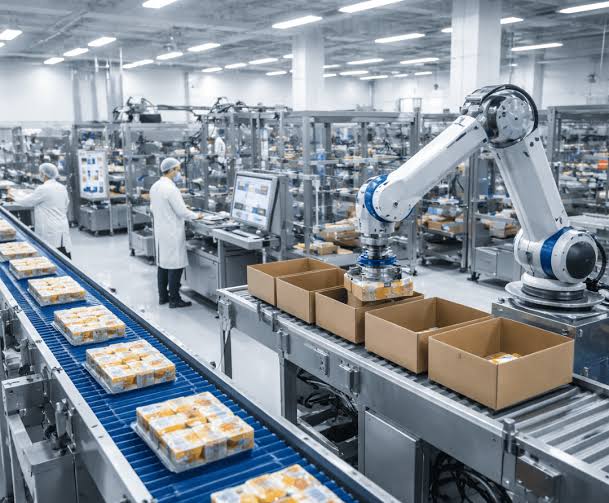
Automated Packaging Lines are integrated systems that use machinery, sensors, conveyors, and control technologies to perform multiple packaging tasks with minimal manual involvement. These systems can handle different stages of the packaging process, from product feeding and filling to sealing, labeling, and final packing. By connecting individual machines into one coordinated workflow, manufacturers can achieve more efficient and reliable production.
Understanding Automated Packaging Lines
An automated packaging line is a combination of interconnected machines designed to package products systematically. Instead of relying on workers to complete every task manually, the system uses programmed equipment to perform repetitive operations with greater consistency.
Depending on the product and industry, these systems may include filling machines, capping equipment, labeling units, wrapping machines, case packers, and palletizing systems. Each machine performs a specific function while communicating with other equipment to maintain a continuous production flow.
Automated packaging solutions are commonly used in food and beverages, pharmaceuticals, cosmetics, chemicals, and consumer goods manufacturing. Their flexibility allows businesses to package products in different shapes, sizes, and formats.
How Do Modern Packaging Systems Work?
Modern packaging systems operate through a coordinated sequence of processes. Products move from one machine to another using conveyor systems, while sensors and automated controls monitor each stage.
Although configurations differ between industries, a typical automated packaging process includes several steps.
1. Product Feeding and Preparation
The process begins with feeding products into the packaging line. Automated feeders and conveyor belts organize products and maintain a consistent flow toward the next processing stage.
Some systems also include sorting, orientation, or inspection equipment to ensure that products are properly positioned before packaging begins.
2. Filling and Dosing
For liquid, powder, and granular products, filling machines measure and dispense specific quantities into containers. Automated dosing technology helps maintain accurate filling volumes and reduces material waste.
The appropriate filling method depends on product characteristics, including viscosity, density, texture, and flow behavior.
3. Sealing and Closing
After filling, containers or packages move to sealing and closing equipment. Depending on the packaging format, this stage may involve heat sealing, induction sealing, capping, or other closure methods.
Proper sealing protects products from contamination, leakage, moisture, and external damage.
4. Labeling and Coding
Labeling machines apply product information, branding, barcodes, and regulatory details to packages. Coding equipment can also print manufacturing dates, expiration dates, and batch numbers.
Automation improves label placement accuracy and helps manufacturers maintain consistent product identification.
5. Secondary Packaging and Palletizing
Once individual products are packaged, secondary packaging equipment groups them into cartons, boxes, or multipacks. Case packing machines organize products for transportation and storage.
At the final stage, robotic palletizers or automated stacking equipment arrange packaged goods onto pallets, preparing them for warehouse handling and distribution.
Main Components of an Automated Packaging Line
An efficient packaging system depends on several components working together. Each component contributes to production speed, accuracy, and operational reliability.
Conveyor Systems
Conveyors transport products and packaging materials between different machines. They help maintain continuous movement and reduce the need for manual product handling.
Filling and Packaging Machines
These machines perform essential operations such as measuring, dispensing, wrapping, and enclosing products. Their design depends on the specific packaging requirements of the manufacturer.
Sensors and Inspection Equipment
Sensors detect product positions, container levels, missing packages, and other production conditions. Inspection systems can identify defects and remove unsuitable products before they reach the final stage.
Programmable Logic Controllers
Programmable Logic Controllers (PLCs) coordinate machine operations according to predefined instructions. They help synchronize different equipment and maintain consistent production processes.
Human-Machine Interfaces
Human-Machine Interfaces (HMIs) allow operators to monitor equipment, adjust settings, and review production information through control panels or touchscreens.
Robotic Equipment
Robotic systems can perform repetitive tasks such as picking, placing, sorting, case packing, and palletizing. They are particularly useful in high-volume manufacturing environments.
Key Benefits of Automated Packaging Systems
Manufacturers invest in packaging automation because it can improve several aspects of production. The advantages extend beyond reducing manual work and include better quality control, operational consistency, and resource management.
Increased Production Efficiency
Automated equipment can perform repetitive packaging tasks at consistent speeds. This helps manufacturers increase production capacity and process larger quantities without requiring a proportional increase in labor.
Improved Packaging Accuracy
Automated filling, labeling, and sealing equipment reduces variations caused by manual operations. Accurate measurements and consistent packaging procedures help maintain product standards.
Reduced Labor Requirements
Automation minimizes the need for workers to perform repetitive physical tasks. Employees can instead focus on equipment supervision, quality inspection, maintenance, and production management.
Lower Material Waste
Precise filling and packaging operations help reduce product spillage, incorrect measurements, and damaged packaging materials. Over time, these improvements can contribute to better resource utilization.
Enhanced Product Safety
Automated handling can reduce unnecessary human contact with products, which is particularly important in industries with strict hygiene and contamination-control requirements.
Consistent Product Presentation
Uniform packaging improves the appearance of finished products. Consistent labeling, sealing, and carton arrangement also help businesses maintain professional packaging standards.
Types of Automated Packaging Lines
Different products require different packaging methods. Manufacturers can select equipment based on product characteristics, packaging materials, production volumes, and industry regulations.
Some common types include:
- Liquid packaging lines: Designed for beverages, oils, sauces, and other liquid products using specialized filling and sealing equipment.
- Powder packaging lines: Used for flour, spices, chemicals, and powdered food products.
- Granule packaging lines: Suitable for products such as seeds, rice, sugar, and small solid materials.
- Bag packaging lines: Designed to fill and seal pouches, bags, and flexible packaging materials.
- Bottle packaging lines: Integrate bottle feeding, filling, capping, labeling, and collection operations.
- Carton packaging lines: Used to package products in cardboard boxes and cartons for storage and transportation.
- Case packing lines: Automatically arrange individual packages into shipping cases.
- Palletizing lines: Organize finished cartons or containers onto pallets for distribution.
Each configuration can be customized according to the requirements of a particular manufacturing operation.
Industries That Use Automated Packaging Lines
Packaging automation supports a wide range of industrial applications. Its ability to handle different materials and packaging formats makes it suitable for both small-scale and large-scale production facilities.
Food and Beverage Industry
Food manufacturers use automated systems to package snacks, dairy products, beverages, frozen foods, sauces, and other consumable products. These systems help maintain hygiene while supporting consistent filling and sealing operations.
Pharmaceutical Industry
Pharmaceutical packaging requires accuracy, traceability, and strict quality control. Automated equipment is used for packaging tablets, capsules, medical liquids, and healthcare products while supporting compliance with industry requirements.
Cosmetics and Personal Care
Cosmetic manufacturers use packaging automation for creams, lotions, shampoos, perfumes, and other personal care products. Flexible equipment allows businesses to handle different container sizes and packaging designs.
Chemical Industry
Chemical manufacturers rely on specialized packaging systems to handle powders, liquids, and granular materials. Equipment selection must consider product compatibility, safety requirements, and the risk of leakage or contamination.
Consumer Goods Manufacturing
Household products, cleaning supplies, electronics accessories, and other consumer goods benefit from automated filling, wrapping, labeling, and carton packaging processes.
Factors to Consider When Choosing a Packaging System
Selecting the right packaging equipment requires careful evaluation of production requirements. A system that works effectively for one manufacturer may not be suitable for another.
Consider the following factors before making a decision:
- Product characteristics: Evaluate the product’s size, weight, shape, viscosity, and physical properties.
- Production capacity: Determine the required output per hour or shift to select equipment with suitable operating speeds.
- Packaging materials: Ensure that machinery supports the required bottles, cartons, pouches, films, or other materials.
- Available factory space: Consider equipment dimensions, conveyor layouts, and the space needed for maintenance and operator access.
- Automation level: Decide whether partial automation or a fully integrated production line is more appropriate.
- Maintenance requirements: Review cleaning procedures, spare parts availability, technical support, and servicing needs.
- Future expansion: Select a system that can accommodate higher production volumes or additional packaging formats when necessary.
A detailed assessment of these factors can help manufacturers avoid unnecessary expenses and choose equipment that supports long-term operational goals.
Automated Packaging Lines vs. Manual Packaging
Manual packaging relies heavily on human labor to perform tasks such as filling, labeling, sealing, and arranging products. Although it may be suitable for small production volumes or specialized packaging requirements, it can become less practical as manufacturing demand increases.
Automated systems use machinery to perform these operations with greater consistency and speed. They can also reduce repetitive workloads and improve coordination between production stages.
However, automation requires an initial investment in equipment, installation, training, and maintenance. Manual packaging may remain a practical option for businesses with limited production requirements.
The most suitable approach depends on production volume, available resources, product complexity, and long-term business objectives.
Maintenance Practices for Reliable Packaging Operations
Regular maintenance is necessary to keep automated packaging equipment operating efficiently. Without proper servicing, machine wear, sensor problems, or mechanical failures can interrupt production.
Manufacturers can improve equipment reliability through several maintenance practices:
- Inspect conveyor belts, motors, and mechanical components regularly.
- Clean product-contact surfaces according to hygiene requirements.
- Check sensors, electrical connections, and control systems.
- Lubricate moving parts according to manufacturer recommendations.
- Replace worn or damaged components before they cause equipment failure.
- Train operators to identify unusual machine behavior.
- Maintain records of servicing, repairs, and equipment performance.
Preventive maintenance helps minimize unexpected downtime and supports consistent packaging quality.
Future Trends in Packaging Automation
Packaging technology continues to evolve as manufacturers look for smarter and more flexible production solutions. Several developments are influencing the future of automated packaging systems.
Smart Manufacturing and Industry 4.0
Connected machines and industrial data systems allow manufacturers to monitor equipment performance in real time. Production information can help identify inefficiencies and support better operational decisions.
Artificial Intelligence and Machine Vision
Artificial intelligence and machine vision technologies can improve product inspection, defect detection, and packaging accuracy. These technologies help identify problems that may be difficult to detect through conventional inspection methods.
Collaborative Robotics
Collaborative robots are designed to work alongside human operators in suitable production environments. They can assist with repetitive packaging tasks while allowing employees to focus on more complex activities.
Sustainable Packaging Solutions
Environmental concerns are encouraging manufacturers to explore recyclable materials, lightweight packaging, and more efficient production methods. Modern packaging equipment is increasingly being adapted to handle different sustainable packaging formats.
Flexible and Modular Equipment
Manufacturers increasingly need equipment that can handle multiple products and packaging sizes. Modular systems make it easier to modify production layouts, add new machinery, and respond to changing market demands.
Conclusion
Automated packaging technology has transformed modern manufacturing by improving production efficiency, packaging accuracy, and operational consistency. From product feeding and filling to labeling, sealing, case packing, and palletizing, integrated systems help businesses manage multiple packaging stages within a coordinated workflow.
Understanding the different machine components, packaging formats, maintenance requirements, and automation technologies is essential when selecting an appropriate system. As smart manufacturing, robotics, and sustainable packaging continue to develop, automated packaging solutions will remain an important part of efficient industrial production.
For businesses exploring modern packaging technologies and integrated production solutions, Techflow Pack is a relevant name to consider when researching equipment options and packaging line configurations.