
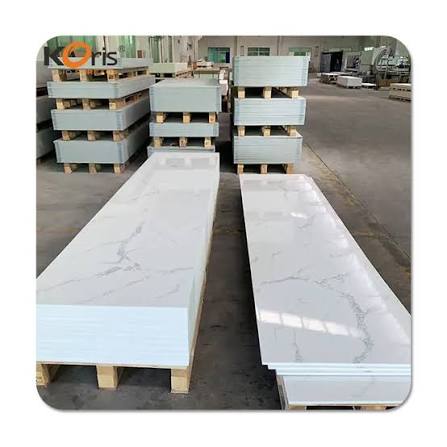
Solid surface materials have become an important choice in modern construction, furniture manufacturing, and interior design. Their smooth appearance, design flexibility, and ability to be fabricated into different shapes make them suitable for countertops, bathroom vanity tops, reception desks, wall panels, and commercial furniture. As global demand for these materials increases, China has developed a strong manufacturing industry supported by modern production equipment, specialized material suppliers, and experienced fabrication professionals.
Understanding how these materials are manufactured helps buyers, distributors, contractors, and designers evaluate product quality and select suitable suppliers. The production of Solid Surfaces China involves several interconnected stages, starting with raw material selection and ending with finished sheet inspection and packaging. Each stage influences the final product’s appearance, consistency, durability, and suitability for different applications.
1. Understanding Solid Surface Material Composition
The manufacturing process begins with selecting the raw materials used to produce solid surface sheets. Different formulations are available, and their composition determines important characteristics such as appearance, workability, strength, and resistance to everyday use.
Most solid surface materials contain a combination of the following components:
- Resins: Acrylic, polyester, or modified resin systems act as binding agents that hold the material together.
- Mineral fillers: Aluminum trihydrate and other suitable mineral fillers contribute to the material’s structure, appearance, and processing characteristics.
- Pigments: These create different colors and help manufacturers achieve consistent shades throughout the material.
- Additives: Selected additives may improve processing, stability, and other formulation-specific properties.
The exact proportions depend on the product type and manufacturer’s formulation. Acrylic solid surfaces, modified acrylic products, and polyester-based materials can have different manufacturing requirements and performance characteristics.
Careful material selection provides the foundation for consistent production.
2. Raw Material Inspection and Preparation
Before manufacturing begins, incoming raw materials should undergo quality checks. This stage is important because variations in resin quality, mineral fillers, or pigments can affect the final appearance and physical properties of the finished sheets.
Manufacturers generally verify material specifications and check for contamination, moisture, or other irregularities.
Preparation may involve:
- Checking the quality and specifications of incoming materials
- Measuring the required quantities for each formulation
- Preparing pigments according to approved color requirements
- Ensuring equipment and mixing containers are clean
- Organizing materials for the production schedule
Accurate preparation helps maintain consistency between manufacturing batches. It also reduces the possibility of formulation errors that could affect finished product quality.
3. Precise Mixing of Raw Materials
Mixing is one of the most important stages in solid surface manufacturing. During this process, resins, mineral fillers, pigments, and other formulation components are combined according to specific production requirements.
Manufacturers use suitable mixing equipment to distribute the ingredients evenly. The mixing speed, duration, temperature, and material proportions may vary depending on the formulation.
Proper mixing helps achieve:
- Uniform material composition
- Consistent color distribution
- Reduced air entrapment
- Stable processing characteristics
- Improved visual consistency
Inadequate mixing may create uneven coloring, visible imperfections, or variations in material properties.
Modern production systems can improve the accuracy and repeatability of this stage. However, equipment settings and formulation controls must be managed carefully to achieve the desired results.
4. Vacuum Deaeration and Air Removal
Air bubbles trapped inside the mixture can negatively affect the appearance and structural consistency of solid surface sheets. To address this issue, some manufacturing processes incorporate vacuum deaeration.
During this stage, the prepared mixture is exposed to controlled vacuum conditions to remove trapped air before molding or casting.
Effective air removal can help reduce internal voids and visible surface defects. It also contributes to a more uniform finished material.
The exact deaeration procedure depends on the manufacturer’s production technology and the properties of the selected formulation.
This stage demonstrates why controlling the manufacturing environment is important when producing high-quality solid surface materials.
5. Molding and Sheet Formation
After preparation and mixing, the material is transferred into suitable molds or production systems to form solid surface sheets.
Depending on the manufacturing method, this process may involve casting, molding, or continuous production equipment.
Important factors include:
- Mold cleanliness and condition
- Material distribution
- Sheet dimensions
- Required thickness
- Processing temperature
- Formulation-specific production conditions
Manufacturers must control these factors to produce sheets with consistent dimensions and an even surface.
For customized products, molding and sheet formation may also involve special dimensions, decorative patterns, or other design requirements.
6. Curing and Material Solidification
Curing is the stage during which the prepared material develops its solid structure. The exact process depends on the resin system and manufacturing method.
For acrylic and polyester formulations, curing involves controlled chemical reactions that transform the prepared mixture into a solid material.
Manufacturers must follow appropriate temperature and time requirements to achieve the intended material characteristics.
Improper curing can contribute to defects such as:
- Uneven material properties
- Dimensional instability
- Surface irregularities
- Internal stresses
- Inconsistent hardness
Careful control of curing conditions helps manufacturers produce sheets that meet their intended specifications.
7. Cooling and Sheet Stabilization
Following curing, the newly formed sheets may require controlled cooling before further processing.
Cooling allows the material to stabilize and helps reduce the risk of dimensional changes during subsequent manufacturing operations.
Rapid or uneven temperature changes can create problems in some formulations. Therefore, manufacturers should follow appropriate cooling procedures according to the material composition and sheet dimensions.
Once the material has stabilized, it can proceed to trimming, calibration, and finishing operations.
8. Cutting and Dimensional Calibration
After the sheets have cooled, manufacturers process them to achieve the required dimensions and thickness.
Precision cutting equipment helps create clean edges and consistent sheet sizes. Depending on the production line, calibration machinery may also be used to achieve uniform thickness across the material.
This stage is particularly important for customers who require standardized sheets for countertops, vanity tops, furniture components, and other installations.
Dimensional inspections may cover:
- Length and width
- Sheet thickness
- Edge straightness
- Surface flatness
- Dimensional tolerances
Consistent dimensions make transportation, fabrication, and installation easier for downstream manufacturers and contractors.
9. Surface Polishing and Finishing
Surface finishing influences both the appearance and practical characteristics of solid surface materials.
After dimensional processing, sheets may undergo sanding, polishing, or other finishing operations to achieve the required texture and appearance.
Common finishes include:
Matte finish: Provides a softer appearance with limited surface reflection. It is often selected for contemporary interior designs.
Satin finish: Offers a balanced appearance between matte and polished surfaces.
Gloss finish: Creates a more reflective surface that can complement decorative and modern interiors.
The finishing process should be carefully controlled to avoid scratches, uneven polishing, and visible imperfections.
Manufacturers may also apply suitable protective films before packaging to reduce the risk of surface damage during handling.
10. Quality Control Throughout Production
Quality control should be integrated into every major manufacturing stage rather than being limited to final inspection.
Chinese solid surface manufacturers may use different inspection procedures depending on their equipment, product categories, and quality management systems.
Important quality control activities include:
- Raw material verification
- Resin and filler proportion checks
- Mixing process monitoring
- Air bubble and internal defect checks
- Curing condition monitoring
- Dimensional measurements
- Surface appearance inspections
- Finished product performance testing
Manufacturers may also evaluate material characteristics such as stain resistance, water absorption, hardness, and heat performance using relevant test methods.
For buyers, requesting technical data sheets and independent laboratory reports can provide additional confidence in product quality.
11. Custom Color and Pattern Development
Customization is an important part of modern solid surface manufacturing. Architects, interior designers, and commercial buyers often require materials that match specific project concepts or brand identities.
Manufacturers can develop different colors and patterns by adjusting pigment combinations and decorative production techniques.
Common customization options include:
- Solid and neutral colors
- Marble-inspired patterns
- Granite-inspired appearances
- Speckled and particulate designs
- Customized color combinations
- Specialized surface finishes
For large projects, manufacturers should establish an approved color reference before beginning full production.
This helps reduce differences between sample products and bulk orders.
12. Fabrication of Finished Solid Surface Products
Some manufacturers offer additional fabrication services beyond producing standard sheets. These services allow customers to purchase finished or semi-finished products for specific applications.
Common fabricated products include:
- Kitchen countertops
- Bathroom vanity tops
- Integrated sinks
- Washbasins
- Reception desks
- Commercial worktops
- Decorative wall panels
- Customized furniture components
Fabrication may involve cutting, shaping, thermoforming where suitable, joining, sanding, and polishing.
Solid surface materials are particularly useful for projects requiring smooth transitions and integrated designs. However, fabrication methods and achievable shapes depend on the formulation and thickness of the material.
13. Final Inspection and Product Approval
Before packaging, finished solid surface sheets should undergo a final inspection to confirm that they meet the approved specifications.
This stage provides an opportunity to identify defects that may have occurred during production, cutting, or finishing.
Inspectors may check:
Appearance: Verify that the surface is free from unacceptable scratches, discoloration, cracks, and other visible defects.
Dimensions: Confirm that sheet sizes and thicknesses match the purchase requirements.
Color consistency: Compare products against approved samples and reference standards.
Surface finish: Ensure that the polishing or texture meets the agreed specifications.
Product quantity: Confirm that the completed order matches the purchase documentation.
For large international orders, buyers may arrange third-party inspections before shipment to verify compliance with the agreed quality standards.
14. Protective Packaging and Export Preparation
Packaging is the final manufacturing-related stage before solid surface products are shipped to customers.
Because sheets can be damaged during transportation, manufacturers need suitable protective materials and organized packing procedures.
Common packaging practices include:
- Applying protective surface films where appropriate
- Using foam or other cushioning materials
- Protecting corners and edges
- Securing sheets on suitable pallets
- Using protective crates for certain shipments
- Applying product identification and shipping labels
The packaging method should reflect sheet dimensions, shipment volume, transportation conditions, and destination requirements.
Manufacturers with export experience may also assist with commercial invoices, packing lists, and other shipping documentation.
15. How Manufacturing Technology Is Improving the Industry in China
The solid surface industry continues to benefit from improvements in production equipment and manufacturing management.
Automation can help manufacturers control material proportions, monitor processing conditions, and improve dimensional accuracy. Digital production systems may also support more consistent manufacturing schedules and better production records.
Several developments are particularly important:
Improved production automation: Automated equipment can reduce manual handling and help maintain repeatable production conditions.
Precision processing: Advanced cutting and finishing machinery can improve sheet dimensions and surface quality.
Better quality monitoring: Digital inspection systems and improved testing methods can help identify defects earlier.
Material development: Manufacturers continue exploring different resin formulations, pigments, and mineral combinations to expand product options.
Waste reduction: More efficient production planning and material utilization can help reduce manufacturing waste.
These developments support the industry’s ability to respond to changing international requirements and increasingly customized product demand.
16. What Buyers Should Check When Evaluating a Chinese Manufacturer
Understanding the manufacturing process also helps buyers ask better questions when selecting a supplier.
Before placing an order, consider evaluating the following areas:
- Raw material standards: Ask about the resin systems, mineral fillers, and other components used in production.
- Manufacturing equipment: Determine whether the company has suitable machinery for the required products.
- Production consistency: Ask how the manufacturer maintains color, thickness, and dimensional uniformity.
- Quality control: Request information about inspection procedures and product testing.
- Customization services: Confirm whether the supplier can meet your design and fabrication requirements.
- Production capacity: Verify whether the company can handle your expected order volume.
- Export experience: Review its packaging standards and international shipping arrangements.
- Technical support: Determine whether assistance is available for fabrication, installation, and product maintenance questions.
Requesting samples and technical documentation before committing to a large order can significantly reduce procurement risks.
Conclusion
The manufacturing process of solid surface materials in China involves multiple stages, including raw material preparation, precise mixing, deaeration, molding, curing, cooling, cutting, polishing, and quality inspection. Each stage contributes to the appearance, consistency, and performance of the finished product.
Manufacturing technology, material formulation, and quality management all play important roles in determining the final results. For international buyers, understanding these processes provides a useful foundation for evaluating suppliers and selecting materials that meet specific project requirements.
By examining production capabilities, reviewing technical specifications, requesting physical samples, and verifying quality control procedures, businesses can make more informed sourcing decisions. A reliable manufacturing partner can support consistent product quality, customized solutions, and dependable supply arrangements for residential, commercial, and industrial applications.