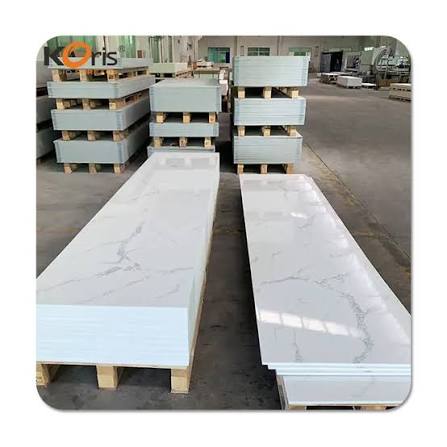

Choosing a solid surface manufacturer is an important step for businesses involved in construction, interior design, furniture production, and building material distribution. The supplier’s manufacturing capabilities, product quality, customization options, and delivery reliability can directly influence project costs and results. Although many manufacturers offer similar product categories, their production standards and technical capabilities may differ considerably.
Before placing an order, buyers should gather enough information to understand what a supplier can deliver and whether its products meet their requirements. Asking the right questions helps reduce purchasing risks, clarify expectations, and establish a reliable working relationship. Evaluating a Solid Surface Manufacturer through a structured discussion can also make it easier to compare suppliers beyond their advertised prices.
1. What Types of Solid Surface Products Do You Manufacture?
The first question should focus on the manufacturer’s product range. Solid surface materials are available in different forms, thicknesses, colors, and finishes, and suppliers may specialize in particular product categories.
Some manufacturers produce standard sheets, while others also offer fabricated countertops, bathroom vanities, integrated sinks, and customized components.
Ask whether the supplier can provide products for your intended applications, such as:
- Kitchen countertops
- Bathroom vanity tops
- Integrated washbasins
- Commercial reception desks
- Wall panels
- Decorative furniture components
- Customized architectural surfaces
A manufacturer with a suitable product range may simplify sourcing, particularly when a project requires several coordinated components.
2. What Materials and Ingredients Are Used in Your Products?
The composition of a solid surface material influences its processing characteristics, appearance, and performance.
Most engineered solid surface products contain combinations of mineral fillers, resin systems, pigments, and other additives. However, formulations can vary between manufacturers and product grades.
Ask the supplier to explain:
- Which resin system is used?
- What mineral fillers are included?
- Are pigments and additives controlled?
- Are material specifications available?
- How are raw materials inspected?
- Are different formulations offered for different applications?
Understanding the composition helps buyers compare products more accurately instead of relying only on visual appearance or general product descriptions.
3. How Long Have You Been Manufacturing Solid Surface Products?
Manufacturing experience can indicate how familiar a company is with production challenges, material handling, and customer requirements.
However, years in business should not be the only measure of capability. Buyers should also examine the company’s production history, product range, facility, and previous project experience.
Useful follow-up questions include:
- Which markets do you currently serve?
- What types of customers do you work with?
- Have you supplied products for similar projects?
- Can you provide references or examples of previous work?
- How has your production capability developed over time?
These details help establish whether the supplier has relevant experience rather than simply operating in a related industry.
4. What Quality Control Procedures Do You Follow?
Quality control is one of the most important subjects to discuss before purchasing solid surface materials.
Manufacturing defects can affect appearance, dimensions, fabrication, and installation. A professional supplier should have procedures for monitoring product quality throughout production.
Ask whether the manufacturer checks:
- Incoming raw materials
- Ingredient measurements
- Mixing consistency
- Curing conditions
- Sheet thickness and dimensions
- Surface appearance
- Color uniformity
- Finished product quality
It is also useful to ask how defects are recorded, investigated, and corrected. A manufacturer with documented inspection procedures can provide greater transparency about its production standards.
5. Can You Provide Product Samples Before a Bulk Order?
Samples allow buyers to examine material characteristics before committing to a large purchase.
A product may look different in photographs than it does under actual lighting conditions. Samples also help evaluate surface texture, color, thickness, and general workmanship.
Before requesting samples, clarify:
- Whether samples are free or chargeable
- Available sample sizes
- Whether custom colors can be sampled
- How long sample preparation takes
- Whether the final production batch will follow the approved sample
For large projects, retaining an approved sample can help provide a reference when inspecting delivered materials.
6. What Customization Options Are Available?
Standard products may not meet every project’s design requirements. Customization can be important when buyers need specific dimensions, colors, patterns, thicknesses, or molded shapes.
Ask the manufacturer which customization services it provides and whether additional charges apply.
Potential options include:
- Custom color development
- Special sheet dimensions
- Different thicknesses
- Customized surface finishes
- Integrated sinks and basins
- Curved or shaped components
- Special edge profiles
- Project-specific fabrication
Also confirm whether the manufacturer can produce prototypes, what minimum order quantities apply, and how customization affects production time.
7. What Testing and Certifications Can You Provide?
Technical documentation helps buyers evaluate whether a material meets the requirements of a particular project or market.
Depending on the product and application, relevant documentation may include material data sheets, performance test reports, quality management certificates, and environmental management certifications.
Ask the supplier:
- Which product-specific tests have been conducted?
- Can you provide the corresponding test reports?
- Which testing standards were followed?
- Are the certificates current?
- Do the documents apply to the exact product being quoted?
It is important to distinguish between company certifications and product testing. A quality management certificate does not automatically prove that every product meets a specific technical performance requirement.
8. What Is Your Production Capacity?
Production capacity matters when purchasing large quantities or managing projects with fixed construction schedules.
A supplier may offer attractive pricing but struggle to fulfill a large order within the required timeframe. Buyers should therefore understand the manufacturer’s actual production capabilities.
Ask about:
- Monthly or annual production capacity
- Available production lines
- Workforce and equipment resources
- Raw material availability
- Current production commitments
- Ability to handle urgent or repeat orders
The manufacturer should provide realistic estimates based on product specifications and order volume.
9. What Are Your Minimum Order Quantities?
Minimum order quantities can affect purchasing decisions, especially for distributors, smaller businesses, and companies testing a new product range.
Some manufacturers may accept small sample orders but require larger quantities for customized production.
Clarify whether minimum quantities differ for:
- Standard solid surface sheets
- Customized colors
- Special dimensions
- Molded basins and sinks
- Fabricated components
- Private-label orders
Understanding these requirements early helps buyers calculate purchasing costs and avoid unnecessary inventory commitments.
10. How Do You Calculate Product Pricing?
Price comparisons are useful only when suppliers are quoting products with equivalent specifications.
Solid surface manufacturing costs can vary according to material formulation, thickness, dimensions, color complexity, finish, order volume, and customization requirements.
Ask the manufacturer for a detailed quotation that identifies the main cost factors.
You should also clarify whether the quoted price includes:
- Product manufacturing
- Customized processing
- Sample development
- Protective packaging
- Export documentation
- Transportation or freight
- Other applicable charges
Transparent pricing makes it easier to calculate the total purchasing cost and compare competing offers fairly.
11. What Is the Expected Production Lead Time?
Delivery schedules can influence installation planning, contractor coordination, and project completion.
Before confirming an order, ask how long manufacturing normally takes and whether the estimated timeline changes for customized products.
Important points to discuss include:
- Standard production lead times
- Sample approval periods
- Customized manufacturing schedules
- Inspection and packaging time
- Shipping preparation
- Potential seasonal delays
- Procedures for communicating schedule changes
It is advisable to obtain a written delivery estimate and confirm when the production timeline officially begins.
12. How Do You Package and Ship Products?
Solid surface sheets and fabricated components require appropriate protection during transportation.
Poor packaging can lead to scratches, chipped corners, breakage, or other damage before products reach the buyer.
Ask the supplier about its packaging methods, including the use of protective films, foam sheets, corner guards, reinforced cartons, pallets, and wooden crates.
For international shipments, clarify:
- Available shipping methods
- Export documentation
- Container loading procedures
- Estimated transportation time
- Responsibility for freight arrangements
- Procedures for reporting transit damage
These details are especially important when purchasing large sheets or customized products that may be difficult to replace quickly.
13. Do You Offer Technical Support for Fabrication and Installation?
Solid surface products often require cutting, bonding, shaping, polishing, and other fabrication operations before installation.
Incorrect processing can affect the appearance and performance of the finished installation. Technical guidance can therefore be valuable, especially for buyers working with unfamiliar materials.
Ask whether the manufacturer provides recommendations covering:
- Cutting and machining
- Suitable adhesives
- Seam joining
- Edge finishing
- Thermoforming where applicable
- Surface polishing
- Handling and storage
- Cleaning and maintenance
A supplier that can explain these requirements helps buyers and fabricators work with the material more effectively.
14. What Happens If Products Arrive Defective or Damaged?
Even when manufacturers follow quality procedures, defects or transportation damage may occasionally occur.
Buyers should understand how the supplier handles such situations before placing an order.
Ask about:
- Inspection procedures before dispatch
- Product acceptance criteria
- Warranty coverage
- Reporting deadlines for defects
- Required photographs or inspection records
- Replacement or repair arrangements
- Responsibility for transportation-related damage
These terms should be documented in the purchase agreement. Clear procedures reduce uncertainty if a problem occurs after delivery.
15. Can You Support Repeat Orders and Long-Term Projects?
For distributors and construction businesses, supplier reliability extends beyond a single transaction.
Repeat orders may require consistent product specifications, similar colors, and dependable production schedules. Buyers should ask whether the manufacturer can maintain product references and coordinate recurring orders.
Discuss whether the supplier can:
- Retain approved product specifications
- Support repeat production
- Maintain color references
- Provide updated technical documents
- Accommodate changing order quantities
- Communicate product or formulation changes
Long-term supply planning can be particularly important for commercial developments, hotel projects, and businesses that maintain regular inventory.
16. How Do You Manage Environmental and Workplace Responsibilities?
Environmental practices are becoming increasingly relevant in construction material sourcing.
Solid surface production may involve energy use, dust generation, chemical handling, and material waste. Buyers can ask manufacturers how they manage these aspects.
Relevant questions include:
- How is production waste handled?
- Are dust extraction systems used?
- How are chemicals stored and managed?
- Are energy-saving measures implemented?
- Is wastewater managed appropriately?
- Are environmental management procedures documented?
Where sustainability is part of the purchasing criteria, buyers should request relevant evidence rather than relying solely on general environmental statements.
17. A Checklist for Comparing Solid Surface Manufacturers
After discussing these questions with potential suppliers, organize the responses in a comparison table. This makes it easier to identify differences and select a manufacturer that matches the project’s priorities.
| Evaluation category | Information to collect |
|---|---|
| Product range | Available sheets, sinks, countertops, and components |
| Material composition | Resin, mineral fillers, and additives |
| Industry experience | Relevant manufacturing and project history |
| Quality control | Inspection procedures and testing records |
| Samples | Availability and approval process |
| Customization | Colors, dimensions, finishes, and shapes |
| Certifications | Current and relevant documentation |
| Production capacity | Available output and order management |
| Minimum order | Quantity requirements for each product |
| Pricing | Detailed quotation and additional charges |
| Lead time | Sample, production, and dispatch schedules |
| Packaging | Protection and shipping arrangements |
| Technical support | Fabrication and installation guidance |
| After-sales service | Warranty and complaint procedures |
The most suitable manufacturer is not necessarily the one with the lowest quotation. It is the supplier whose product quality, technical capabilities, commercial terms, and service standards align with the project’s needs.
Conclusion
Selecting a solid surface manufacturer requires more than reviewing product photographs and comparing prices. Buyers should investigate material composition, production experience, quality control, customization capabilities, testing documentation, and delivery arrangements before making a decision.
Asking detailed questions helps reveal how a manufacturer manages production and responds to customer requirements. It also allows businesses to identify potential risks before committing to a large order.
By evaluating suppliers systematically, requesting samples, and documenting important commercial and technical terms, buyers can make more confident sourcing decisions and build stronger relationships with manufacturing partners.