


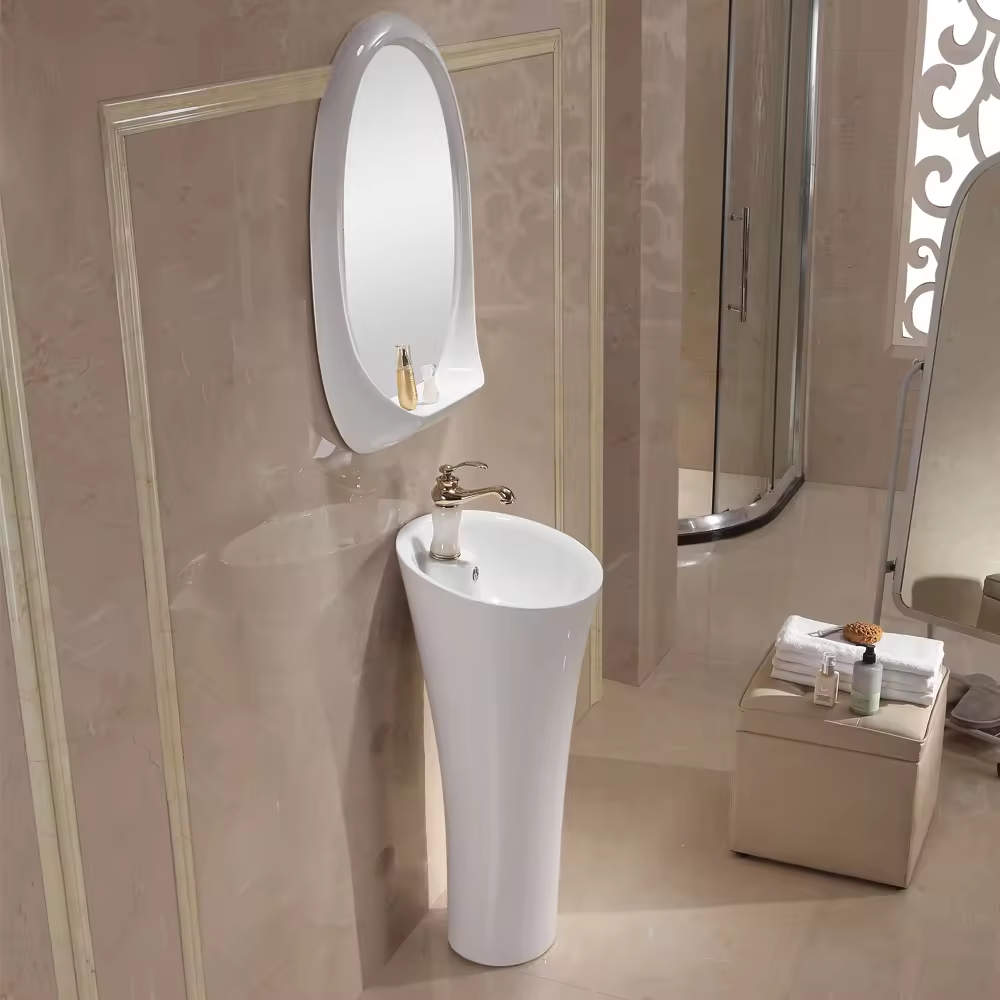
Choosing the right washbasin can make a significant difference in a compact bathroom, guest toilet, or powder room. While the available floor area may be limited, the right basin design can improve convenience, create a balanced interior, and make everyday handwashing more comfortable. Wall-mounted, pedestal, and countertop basins are three popular options, each offering distinct advantages for different layouts and design preferences.
When selecting a Small Wash Basin, it is important to consider more than its appearance. The mounting style affects floor space, storage, plumbing access, cleaning, and installation requirements. Understanding these differences can help homeowners choose a basin that meets their practical needs without compromising the room’s overall style.
1. Understanding Wall-Mounted Wash Basins
Wall-mounted washbasins attach directly to the wall, leaving the floor underneath open. This design is particularly useful in narrow bathrooms where every inch of available space matters.
Without a pedestal or cabinet below the bowl, the room can appear more open. The exposed floor also makes cleaning around the basin easier, which is helpful in frequently used toilet rooms.
Advantages of Wall-Mounted Designs
- Space efficiency: The absence of a floor-standing support helps preserve usable floor area.
- Modern appearance: Simple outlines and floating profiles complement contemporary interiors.
- Easy floor cleaning: The open area beneath the basin allows convenient access for sweeping and mopping.
- Flexible positioning: The installation height can often be adjusted to suit the room and intended users, subject to plumbing and accessibility requirements.
Potential Limitations
Wall-mounted basins require suitable structural support. The wall and mounting hardware must be capable of safely carrying the fixture’s load.
Plumbing connections may also need to be positioned carefully to maintain a tidy appearance. If the existing wall is unsuitable or the pipes are incorrectly located, additional installation work may be necessary.
Best Applications
Wall-mounted basins are well suited to compact guest toilets, minimalist bathrooms, and spaces where maintaining an open floor area is a priority.
2. Exploring Pedestal Wash Basins
Pedestal washbasins consist of a basin supported by a pedestal that extends toward the floor. This traditional arrangement can conceal some plumbing components while providing a stable, coordinated appearance.
Although pedestal models occupy more floor space than wall-mounted designs, compact versions can still work well in bathrooms that have enough clearance around the toilet and doorway.
Advantages of Pedestal Designs
- Concealed plumbing: The pedestal can hide some visible pipework, creating a more finished appearance.
- Classic styling: Pedestal basins suit traditional, transitional, and certain contemporary interiors.
- Coordinated construction: The basin and pedestal are often designed to work together visually.
- Straightforward visual layout: The supporting structure creates a familiar, balanced appearance.
Potential Limitations
The pedestal takes up floor space and can make cleaning around the base less convenient. It also limits the storage options available beneath the basin.
When considering a compact pedestal model, measure the width and projection of both the basin and pedestal. Ensure the fixture does not restrict access to the toilet or interfere with the door.
Best Applications
Pedestal basins are suitable for guest bathrooms, traditional interiors, and compact rooms where a neat appearance is more important than maximizing under-basin space.
3. Understanding Countertop Wash Basins
Countertop washbasins sit on a vanity or supporting surface. They are available in a wide range of shapes, including round, oval, and rectangular designs, allowing homeowners to create a distinctive focal point.
This style can combine practical handwashing facilities with a countertop area for soap and other essentials. Depending on the vanity configuration, it may also provide useful storage.
Advantages of Countertop Designs
- Design flexibility: A variety of shapes, finishes, and profiles can suit different interior styles.
- Storage opportunities: A supporting vanity may provide drawers or cabinets for bathroom supplies.
- Decorative appeal: The visible bowl can become a feature in a modern bathroom.
- Convenient surface space: Some arrangements include a small area for soap dispensers or other daily essentials.
Potential Limitations
A countertop basin requires a suitable supporting surface, which increases the total footprint of the installation. The combined height of the bowl, countertop, and tap must also be considered.
The joint between the basin and countertop may require regular cleaning, depending on the design. Vanity doors and drawers need sufficient clearance, particularly in narrow toilet rooms.
Best Applications
Countertop basins are a good option for contemporary bathrooms where visual style, coordinated surfaces, and storage are important considerations.
4. Wall-Mounted vs. Pedestal vs. Countertop: Key Differences
The best mounting style depends on the room’s dimensions, preferred appearance, and storage needs. The following table summarizes the main differences.
| Feature | Wall-Mounted | Pedestal | Countertop |
|---|---|---|---|
| Floor space | Generally preserves more open floor area | Uses space around the pedestal | Depends on the basin and vanity footprint |
| Appearance | Minimalist and contemporary | Traditional or classic | Decorative and versatile |
| Storage | Usually limited beneath the basin | Usually limited | Possible with a vanity |
| Plumbing visibility | May be visible unless concealed | Some plumbing can be hidden | Often managed within the vanity |
| Cleaning access | Easy beneath the fixture | More difficult around the base | Depends on vanity and countertop design |
| Installation | Requires suitable wall support | Requires secure placement and plumbing connections | Requires a suitable countertop or vanity |
| Design flexibility | Available in multiple shapes and sizes | Often a coordinated basin-and-pedestal design | Broad choice of bowls and supporting surfaces |
These are general characteristics rather than fixed rules. Individual models vary in dimensions, construction, and installation requirements.
5. Which Design Is Best for a Small Bathroom?
Each basin style can work in a compact room when its dimensions and placement are carefully planned.
Choose Wall-Mounted for Maximum Floor Clearance
If the bathroom is very narrow, a wall-mounted basin can help preserve the open floor area. Its compact profile is particularly useful where the toilet and doorway leave limited room for movement.
However, check the wall’s structural suitability and the position of the water supply and drainage connections before choosing a model.
Choose Pedestal for a Traditional Appearance
A pedestal basin may be the better option when the bathroom has a classic design or when concealing some plumbing is a priority. It can create a balanced appearance without requiring a separate vanity.
Make sure the pedestal does not obstruct cleaning or reduce the space needed to use the toilet comfortably.
Choose Countertop for Storage and Design Flexibility
A countertop basin can be suitable when the room has enough space for a compact vanity. It provides opportunities to coordinate the bowl with cabinetry, taps, and countertop finishes.
For particularly small rooms, a shallow vanity may help control the overall projection while offering some storage.
6. Consider Basin Dimensions and Bowl Capacity
Regardless of mounting style, the basin should provide enough room for comfortable handwashing. A fixture that is too shallow or narrow may cause water to splash onto nearby surfaces.
Measure the basin’s width, depth, and height, and compare these dimensions with the available installation area. Include the projection of taps, mounting components, and supporting furniture where relevant.
Also consider the internal bowl dimensions. Two basins with similar external measurements can offer different usable washing areas because of their shape and depth.
Leave adequate clearance around the toilet and doorway, and make sure the tap can be reached without awkward movements. Accurate measurements help prevent a basin from becoming an obstacle in an already restricted space.
7. Select the Right Material and Finish
Material selection influences the basin’s appearance, cleaning requirements, and durability. Ceramic is widely used for its smooth glazed surface and variety of designs. Porcelain and solid-surface products may offer different finishes and construction characteristics.
When comparing products, check the manufacturer’s material specifications, warranty, and care instructions rather than assuming that every basin in a particular category performs identically.
White remains a versatile choice for many modern interiors, while other finishes can coordinate with darker tiles, natural wood, or brushed-metal fittings.
Choose a surface that is easy to maintain and suitable for the expected level of use. A simple design with accessible edges may be more convenient to clean than a basin with complex contours.
8. Evaluate Plumbing and Installation Requirements
The mounting style can influence the complexity and cost of installation. Before purchasing, check the position of the existing water supply lines and drainage outlet.
Wall-mounted basins may require additional wall reinforcement or adjustments to concealed plumbing. Pedestal basins need sufficient floor clearance and correct alignment with the waste connection. Countertop basins require a stable supporting surface and suitable openings for the bowl, tap, and drainage components.
Review the manufacturer’s technical drawings and installation instructions. If plumbing must be relocated or the wall requires reinforcement, consult a qualified professional.
Proper installation helps prevent leaks, unstable fittings, and damage to the surrounding surfaces.
9. Match the Basin With Your Interior Design
A washbasin should complement the room’s overall style rather than appear disconnected from the other fixtures.
Wall-mounted basins pair well with frameless mirrors, simple lighting, and understated taps. Pedestal designs complement traditional finishes and classic bathroom accessories. Countertop basins work well with coordinated vanity cabinets, decorative mirrors, and carefully selected countertop materials.
In a small room, visual consistency can help the space feel more organized. Choose a limited palette of colors and finishes, and avoid adding unnecessary accessories around the basin.
The aim is to balance decorative appeal with practical use, ensuring the room remains comfortable and easy to maintain.
10. Common Mistakes to Avoid When Choosing a Basin Style
A few planning errors can reduce the benefits of even a well-designed washbasin.
- Choosing by appearance alone: A stylish model may still be too deep or wide for the available space.
- Ignoring wall support: Wall-mounted basins need appropriate structural support and mounting hardware.
- Underestimating the pedestal footprint: The base may interfere with movement or cleaning.
- Selecting an oversized vanity: A countertop basin can consume valuable floor space if the supporting cabinet is too large.
- Overlooking plumbing compatibility: Incorrect connection positions can increase installation costs.
- Forgetting maintenance access: Pipes, joints, and surrounding surfaces should remain accessible for inspection and cleaning.
Checking these factors before purchasing helps ensure the basin suits both the room’s design and its everyday requirements.
Conclusion
Wall-mounted, pedestal, and countertop washbasins each offer distinct advantages for modern bathrooms. Wall-mounted designs help preserve floor clearance, pedestal models provide a classic appearance and can conceal some plumbing, while countertop basins offer decorative flexibility and potential storage.
The best choice depends on the room’s dimensions, installation conditions, cleaning preferences, and design priorities. Compare the complete footprint, bowl capacity, mounting requirements, and plumbing compatibility before making a decision.
By evaluating these factors together, homeowners can select a small washbasin that fits the available space, supports comfortable daily use, and complements the overall interior without compromising functionality.


