Choosing a supplier for disposable cutlery is an important decision for restaurants, catering companies, hotels, takeaway outlets, and food distributors. The quality, availability, and cost of disposable utensils can directly influence daily operations and customer satisfaction. Working with an unsuitable supplier may lead to inconsistent products, delayed deliveries, unexpected expenses, or difficulties managing inventory.
Before establishing a business relationship with Disposable Cutlery Suppliers, buyers should ask specific questions to understand their products, manufacturing capabilities, pricing structures, and service standards. Gathering this information helps businesses compare potential partners objectively and make purchasing decisions based on long-term value rather than attractive quotations alone.
1. What Types of Disposable Cutlery Do You Offer?
The first question should focus on the supplier’s available product range. Different food businesses have different requirements depending on their menus, serving methods, and customer preferences.
Ask whether the supplier offers:
- Disposable forks, spoons, and knives.
- Complete cutlery sets.
- Different sizes and designs.
- Individually wrapped utensils.
- Bulk packaging options.
- Customized cutlery packaging.
A diverse product range provides flexibility when business requirements change. It can also simplify procurement by allowing buyers to source several types of utensils through one supplier.
2. What Materials Are Used in Your Products?
Material selection affects product durability, appearance, cost, and disposal requirements. Buyers should understand exactly what materials are used before placing an order.
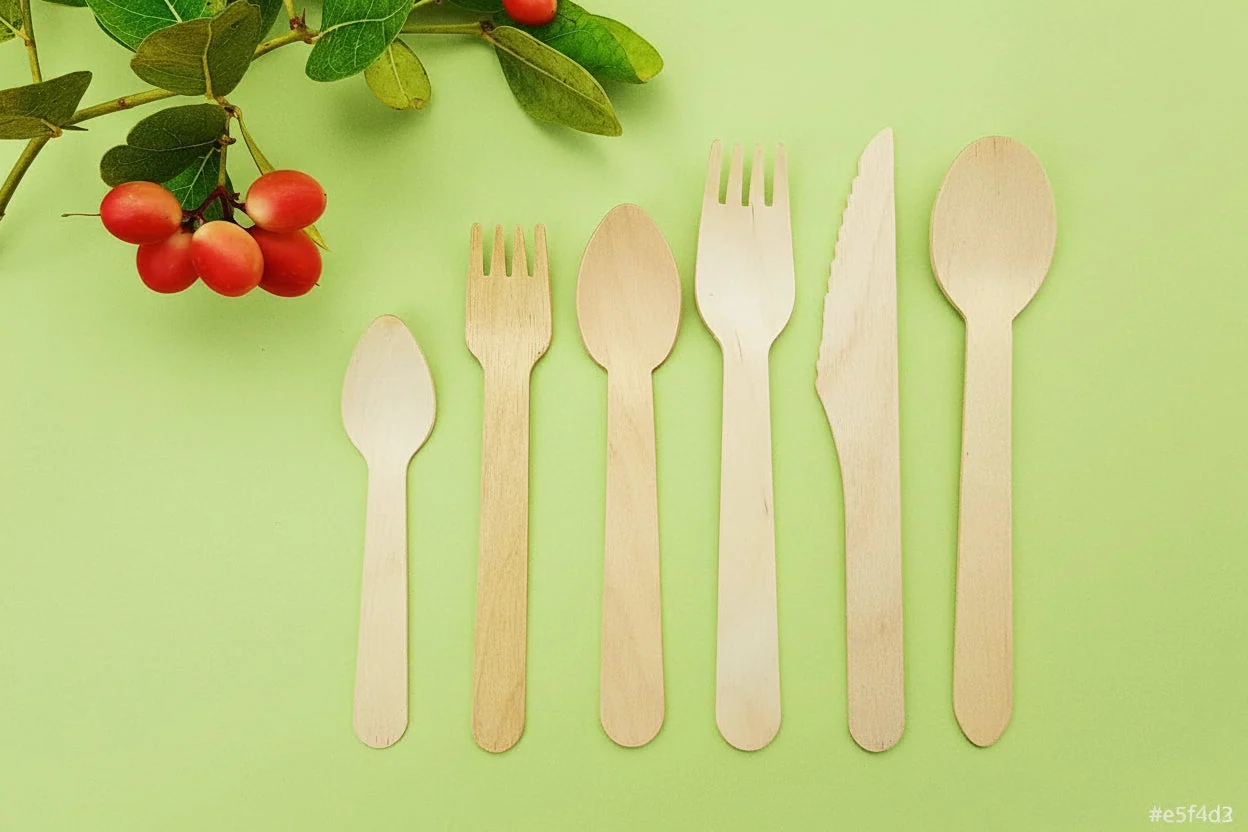
Common options include plastic, wood, bamboo, and compostable materials.
Ask suppliers about material composition, sourcing practices, and the characteristics of each product. For example, wooden utensils may provide a natural appearance, while certain compostable products require specific disposal conditions.
Understanding these differences helps businesses select products that match their operational needs and environmental objectives.
3. Do Your Products Meet Food Safety Requirements?
Disposable utensils come into direct contact with food, so safety compliance should never be overlooked.
Ask whether the products meet applicable food-contact requirements and whether the supplier can provide supporting documentation.
Depending on the product and destination market, relevant information may include:
- Food-contact compliance documentation.
- Material specifications.
- Laboratory testing reports.
- Manufacturing quality certifications.
- Information about hygienic production and packaging.
Requesting these details before purchasing helps businesses verify product suitability and reduce potential compliance risks.
4. Can You Provide Product Samples?
Product samples allow buyers to evaluate quality before committing to a large order.
Ask whether the supplier can provide samples of different materials, sizes, and designs. Test the utensils under normal serving conditions to determine whether they are sufficiently strong and comfortable to use.
Pay attention to:
- Resistance to bending and breaking.
- Smoothness of edges and surfaces.
- Handle comfort and dimensions.
- Suitability for different food textures.
- Overall appearance and finishing.
Sample testing is particularly useful when comparing products from multiple manufacturers.
5. What Is Your Minimum Order Quantity?
Minimum order quantity (MOQ) is an important consideration for wholesale buyers.
Some suppliers may require substantial orders, while others offer more flexible purchasing arrangements. The appropriate quantity depends on business size, storage capacity, consumption levels, and available budget.
Ask whether different MOQs apply to different materials, product designs, or customized packaging.
Understanding these requirements in advance helps businesses avoid purchasing more inventory than they can reasonably use or store.
6. How Do You Calculate Your Wholesale Prices?
Price comparisons should include all expenses associated with purchasing and receiving the products.
Instead of asking only for the unit price, request a detailed quotation covering the complete order.
Important questions include:
- Do you offer discounts for bulk purchases?
- Are prices different for different materials?
- Are customization charges included?
- What packaging costs apply?
- Are shipping expenses calculated separately?
- How long is the quotation valid?
Comparing complete quotations makes it easier to identify the most cost-effective option without compromising product quality.
7. What Is Your Production Capacity?
A supplier’s manufacturing capacity determines whether it can handle regular and large-volume orders.
This question is particularly important for restaurant chains, distributors, and catering businesses that require consistent quantities throughout the year.
Ask about production facilities, average output, current order commitments, and the ability to accommodate sudden increases in demand.
It is also useful to understand whether the supplier manufactures its products directly or sources them from other manufacturers.
This information provides a clearer picture of its production capabilities and supply arrangements.
8. How Long Does Order Processing and Delivery Take?
Delivery reliability is essential for businesses that depend on disposable cutlery for daily operations.
A delayed shipment can create inventory shortages and disrupt customer service. Before confirming an order, ask for realistic production and delivery timelines.
Discuss the following details:
- Standard production lead times.
- Order processing and dispatch schedules.
- Domestic and international shipping options.
- Estimated transportation times.
- Order tracking availability.
- Procedures for handling unexpected delays.
International buyers should also clarify export documentation, customs requirements, and responsibility for additional shipping expenses.
9. Do You Offer Customized Packaging?
Branding can be important for restaurants, takeaway businesses, and food distributors that want consistent packaging across their products.
Ask whether the supplier offers customized wrappers, printed sleeves, branded packaging, or private-label services.
If customization is available, confirm the minimum order quantity, printing methods, artwork requirements, sample approval process, and additional production costs.
Also consider whether customized packaging provides sufficient protection during transportation and storage.
10. How Do You Maintain Product Quality?
Consistent manufacturing standards are essential when purchasing disposable cutlery regularly.
Ask suppliers about their quality control procedures and how they inspect products before shipment.
Useful questions include:
- Are products inspected during manufacturing?
- How are defective items identified?
- Are product specifications maintained across batches?
- Can quality inspection reports be provided?
- What happens if an order does not meet agreed requirements?
Understanding these procedures can help buyers identify suppliers that take product consistency seriously.
11. What Happens If Products Arrive Damaged or Defective?
Even with proper manufacturing and transportation arrangements, problems can occasionally occur.
Buyers should understand the supplier’s policies for handling defective products, damaged packaging, incorrect quantities, and order discrepancies.
Ask whether replacements, refunds, or other corrective arrangements are available.
It is also important to establish how complaints should be reported and what documentation is required.
Clear procedures help avoid misunderstandings and make it easier to resolve problems professionally.
12. Can You Support Sustainable Purchasing Requirements?
Environmental considerations are becoming increasingly important for food service businesses.
If sustainability is part of your purchasing strategy, ask whether the supplier offers wooden, bamboo, compostable, or other alternative cutlery materials.
You should also request information about environmental certifications, raw material sourcing, and disposal instructions.
Do not rely solely on labels such as biodegradable or eco-friendly. Confirm whether the products meet recognized standards and whether suitable composting or recycling facilities are available in your operating area.
13. Do You Have Experience Serving Businesses Like Mine?
A supplier’s experience can help determine whether it understands your industry’s requirements.
For example, a manufacturer serving large catering companies may have experience handling high-volume orders, while a supplier working with takeaway businesses may be more familiar with individually wrapped cutlery and compact packaging.
Ask about previous clients, the types of businesses served, and experience with similar order requirements.
References and customer feedback can provide additional insight into reliability and service quality.
14. What Are Your Payment Terms and Business Conditions?
Financial arrangements should be discussed before confirming a long-term purchasing relationship.
Ask about accepted payment methods, advance payment requirements, credit terms, and applicable transaction charges.
For international purchases, clarify the currency, bank transfer expenses, and agreed shipping responsibilities.
All important terms should be documented in writing. This reduces the possibility of disagreements about payments, quantities, delivery schedules, or product specifications.
15. Can You Accommodate Future Business Growth?
Your disposable cutlery requirements may change as your business expands. A supplier that can support increasing order volumes and new product requirements may offer greater long-term value.
Ask whether it can accommodate larger orders, additional product categories, new packaging designs, and changes in delivery schedules.
Businesses planning to open additional locations or expand distribution should consider supplier scalability during the initial evaluation process.
A Practical Checklist Before Finalizing a Supplier
After asking these questions, compare potential suppliers using a consistent evaluation process.
| Evaluation area | What to verify |
|---|---|
| Product quality | Durability, finish, and consistency |
| Product range | Materials, sizes, and designs |
| Food safety | Relevant compliance documents |
| Pricing | Complete quotation and bulk rates |
| Order quantity | MOQ and purchasing flexibility |
| Production | Manufacturing and supply capacity |
| Delivery | Lead times and shipping arrangements |
| Customization | Branding and packaging options |
| Customer support | Complaint and replacement procedures |
| Sustainability | Material information and certifications |
This comparison makes it easier to identify suppliers that meet your business requirements and provide dependable service.
Conclusion
Choosing a disposable cutlery supplier requires careful evaluation of product quality, pricing, manufacturing capabilities, delivery arrangements, and customer support. Asking the right questions before placing an order helps businesses understand what they are purchasing and what they can expect from a potential supplier.
Food service companies should also consider food safety documentation, material options, customization capabilities, and environmental requirements when comparing suppliers.
By reviewing these factors, requesting samples, and documenting important purchasing terms, businesses can reduce sourcing risks and establish more reliable supply relationships. A well-informed supplier selection process supports efficient operations, predictable inventory management, and consistent customer service.