


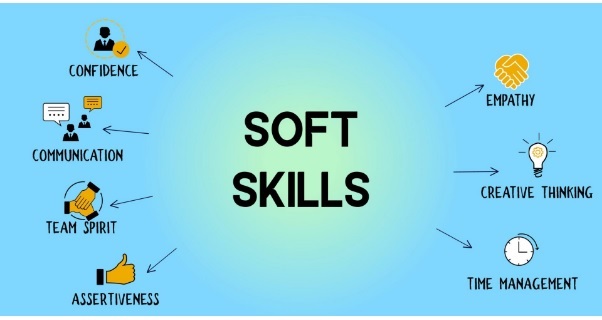
Training programs are not all made equal. Many organizations make well-meaning investments in the development of soft skills, only to discover months later that their teams’ ability to cooperate, communicate, and handle pressure has hardly altered. Soft skills training is effective when done correctly; the concept is rarely the issue. Knowing what is truly “done right” is the difficult part. What distinguishes a program that truly changes a workforce from one that only lasts a few hours before being forgotten? The best soft skills training for employees has a few distinguishing characteristics that hold the key to the solution. Here are some of them, each with a detailed explanation.
- It Is Grounded in Real Workplace Situations, Not Theory Alone
The best training for soft skills is not found in a textbook. It is based on real life scenarios that employees find themselves in, including having a tough conversation with a colleague, misunderstanding during a project handover, or the pressure to give constructive feedback to not offend anyone. Staff members begin to understand the value of learning which involves realistic contexts and useful examples. They are learning knowledge, rather than abstract. They are learning by doing and are going through the motions as if it were happening in real life so that what they learn will become real and be applied when most needed.
- It Encourages Honest Self-Reflection Without Creating Discomfort
Holding up a mirror is one of the most effective things that high-quality soft skills training accomplishes. Employees are encouraged to honestly assess their present communication, reaction, listening, and leadership styles without feeling exposed or condemned. The most effective programs foster a secure atmosphere where self-awareness is not a source of shame but rather a strength. Employees are far better positioned to make significant and long-lasting adjustments to how they present themselves at work when they are aware of their own habits, including what they do well and where they need to improve.
- It Is Designed to Be Inclusive and Relevant Across All Levels
Soft skills are important for positions other than managers and client-facing positions. From the newest hire to the most seasoned team lead, they are crucial at every level of an organization. This is taken into consideration when creating the best training programs. They are made to appeal to all employees, regardless of title or department, rather than focusing on only one level of the workforce. A uniform standard of behavior and communication is established when all employees participate in a shared learning experience, strengthening the culture from the ground up.
- It Measures Progress in Ways That Go Beyond a Simple Test Score
A multiple-choice test at the conclusion of a session is not used in effective soft skills training to assess whether or not learning has taken place. Since soft skills are behavioral in nature, the most relevant assessment takes place over time, as seen by changes in how employees interact, resolve conflict, and develop connections with coworkers in addition to clients. The most effective programs incorporate peer observations, organized feedback mechanisms, and frequent check-ins so that development may be monitored in a realistic, human way that represents actual growth rather than merely recollected information.
Conclusion
Selecting the appropriate soft skills training for your team involves more than just checking a development box or meeting a yearly HR requirement. Investing in your organization’s human capital is a conscious choice that forms the basis of everything else. The finest off the shelf e learning courses are authentic, introspective, inclusive, quantifiable, and intentionally linked to the company’s future. The impact of those characteristics extends beyond a more skilled staff. It encompasses a more robust culture, better interpersonal connections, and an organization that is truly prepared to expand, sustainably and with people at its core.