


Modern motion control systems are increasingly evaluated not only by precision and force output but also by energy efficiency and dynamic responsiveness. As industries such as semiconductor manufacturing, robotics, medical technology, and optical engineering evolve, the demand for fast, efficient, and compact actuation solutions continues to grow. These requirements have placed direct-drive electromagnetic systems in a strong position within advanced engineering applications.
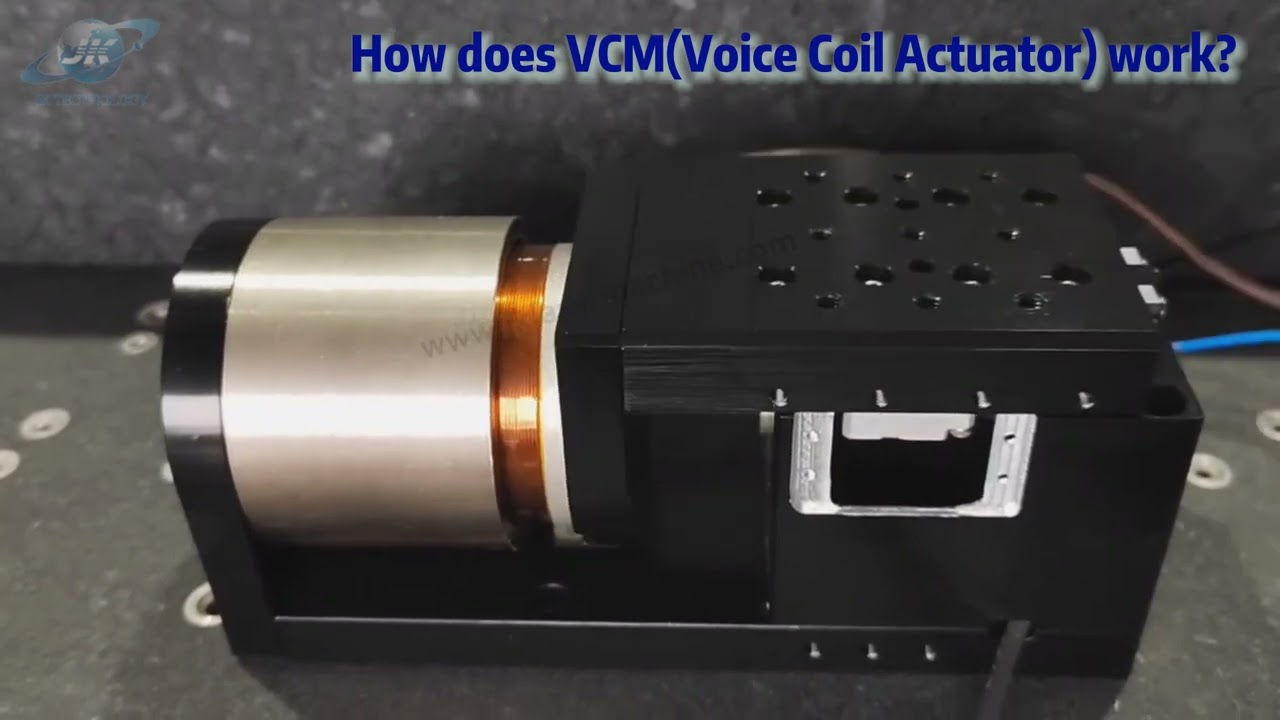
A voice coil linear actuator is a direct-drive device that generates linear motion through the interaction of a magnetic field and a current-carrying coil. Because it eliminates mechanical transmission elements such as gears and screws, it delivers highly responsive and smooth motion with minimal mechanical loss. Understanding how a voice coil actuator behaves in terms of efficiency and responsiveness is essential for designing high-performance motion systems.
Understanding Energy Efficiency in Voice Coil Systems
Energy efficiency in motion systems is often defined by how effectively electrical energy is converted into useful mechanical motion. In a voice coil system, this conversion is direct and linear, which reduces losses associated with mechanical friction and transmission.
Key factors influencing efficiency include:
- Coil resistance and electrical losses
- Magnetic field strength and uniformity
- Load conditions and duty cycle
- Thermal management efficiency
Because there are no gears or screws involved, energy is not lost through frictional contact or mechanical backlash. However, resistive heating in the coil remains a key factor that must be managed to maintain optimal efficiency.
How Direct Drive Design Improves Responsiveness
One of the most important advantages of voice coil technology is its exceptional responsiveness. Since the actuator directly converts electrical current into linear force, it reacts almost instantly to control signals.
This results in:
- Extremely fast acceleration and deceleration
- Minimal latency between input and motion
- Smooth directional changes without mechanical delay
- High-frequency motion capability
The absence of intermediate mechanical components such as lead screws or belts significantly reduces inertia and improves dynamic response.
Role of Moving Mass in Dynamic Performance
Responsiveness is closely linked to the mass of the moving components. Lower inertia allows the system to react more quickly to changes in input.
Design considerations include:
- Lightweight coil assemblies
- Compact load interfaces
- Reduced mechanical attachments
- Optimized structural design
By minimizing moving mass, engineers can significantly enhance acceleration performance and improve overall system responsiveness.
Thermal Effects on Efficiency and Performance
Thermal behavior plays a critical role in both efficiency and responsiveness. As current flows through the coil, heat is generated, which can affect electrical resistance and force output.
If not properly managed, this can lead to:
- Reduced force efficiency
- Slower response times due to thermal drift
- Limited continuous operation capability
Common thermal management strategies include:
- Heat sinks and conductive mounting structures
- Active cooling systems such as airflow or liquid cooling
- Duty cycle optimization
- Real-time temperature monitoring
Maintaining stable thermal conditions ensures consistent performance and energy efficiency.
Electrical Control and Power Optimization
Efficient energy usage also depends on how the actuator is driven electrically. Advanced control systems help optimize power consumption while maintaining performance.
Key techniques include:
- Current-controlled power amplifiers
- High-efficiency PWM (Pulse Width Modulation) drives
- Real-time feedback control loops
- Minimization of electrical noise and losses
These methods ensure that energy is delivered precisely when needed, reducing unnecessary consumption.
Responsiveness in High-Speed Applications
Voice coil systems are widely used in applications where rapid motion changes are essential. Their ability to respond in milliseconds makes them ideal for high-speed and precision environments.
Common applications include:
- Semiconductor inspection systems
- High-speed pick-and-place automation
- Optical focusing and alignment systems
- Precision testing and measurement equipment
In these systems, fast response directly translates to higher productivity and accuracy.
Balancing Efficiency and Performance
While voice coil actuators offer excellent responsiveness, achieving optimal efficiency requires balancing multiple design factors. Increasing force output or speed may increase energy consumption, requiring careful system optimization.
Engineers often balance:
- Force output vs. power consumption
- Duty cycle vs. thermal limits
- Speed vs. stability in control systems
This balance ensures that the actuator performs efficiently without compromising reliability or precision.
Conclusion
Energy efficiency and responsiveness are two of the most important performance characteristics of a voice coil linear actuator. Its direct-drive electromagnetic design eliminates mechanical losses and enables extremely fast, precise motion control.
By optimizing thermal management, electrical control, and mechanical design, engineers can maximize both efficiency and dynamic performance, making voice coil technology a powerful solution for advanced industrial and high-precision applications.