


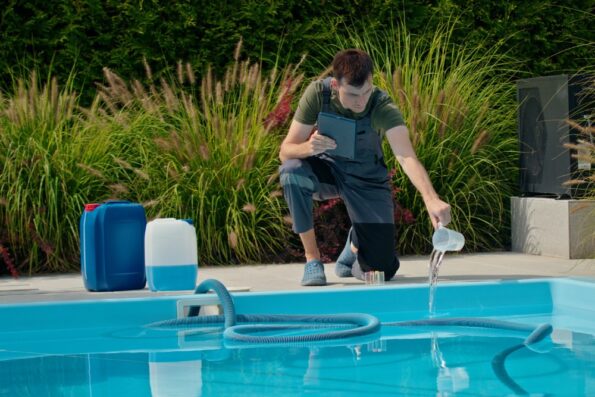
Keeping a swimming pool clean requires regular attention, the right tools, and a consistent maintenance routine. Leaves, dirt, algae, and other debris can accumulate quickly, making effective cleaning essential for maintaining water clarity and protecting pool surfaces. However, homeowners have different options when choosing how to handle this task.
The main choice is often between automatic cleaners that perform much of the work independently and manual tools that require hands-on effort. Both approaches have advantages, and the right choice depends on your pool’s size, cleaning needs, budget, and available time. Understanding the differences between these options can help you select suitable swimming pool equipment and supplies for your maintenance routine.
Understanding Manual Pool Cleaning Equipment
Manual pool cleaning equipment gives homeowners direct control over the cleaning process. These tools are typically straightforward to use and allow you to focus on specific areas that need attention.
Common manual cleaning tools include leaf skimmers, telescopic poles, pool brushes, vacuum heads, and compatible vacuum hoses. Each tool serves a different purpose, from removing floating debris to scrubbing walls and collecting dirt from the pool floor.
Advantages of Manual Pool Cleaning
One of the biggest benefits of manual cleaning is affordability. Basic tools usually cost less upfront than automated cleaning systems, making them a practical choice for homeowners who want to manage maintenance expenses.
Manual cleaning also provides greater control over problem areas. You can spend additional time on steps, corners, waterlines, and locations where dirt or algae tends to accumulate.
Other benefits include:
- Simple operation with minimal technical setup.
- No dedicated robotic cleaner or automation system required.
- Easy access to specific spots that need extra attention.
- Straightforward storage and replacement of basic tools.
Manual equipment is particularly useful for small pools, occasional cleaning, and removing debris immediately after storms or windy weather.
Disadvantages of Manual Pool Cleaning
The main drawback is the time and physical effort involved. Brushing, vacuuming, and collecting debris can become demanding when the pool is large or used frequently.
Manual cleaning also depends on consistency. If maintenance is delayed, dirt may accumulate and algae can develop, increasing the amount of work needed to restore the pool.
For homeowners with busy schedules, relying entirely on manual cleaning may make it harder to maintain a regular routine.
Understanding Automatic Pool Cleaning Equipment
Automatic pool cleaners are designed to reduce the amount of hands-on cleaning required. Depending on the model, they can collect debris from the pool floor, climb walls, and clean selected waterline areas.
There are three common types of automatic pool cleaners: suction-side, pressure-side, and robotic cleaners. Each operates differently and has specific compatibility requirements.
Suction-Side Pool Cleaners
Suction-side cleaners connect to the pool’s suction system and use water movement to collect debris. They are often suitable for routine cleaning in pools with compatible plumbing and circulation equipment.
These cleaners can reduce manual vacuuming, although their performance depends on the pool’s configuration and the available suction flow.
Pressure-Side Pool Cleaners
Pressure-side cleaners use pressurized water to move around the pool and collect debris. Some models include a separate debris bag, which can reduce the amount of larger material reaching the main filter.
Depending on the design, they may require a dedicated pressure line, booster pump, or other compatible equipment.
Robotic Pool Cleaners
Robotic cleaners operate using an electric motor and onboard cleaning components. Many models have their own filtration baskets or cartridges, allowing them to collect debris without relying on the pool’s main filtration system in the same way as suction-side cleaners.
Some robotic models offer programmable cleaning cycles, wall climbing, and waterline cleaning. These features can make them convenient for homeowners who want to reduce routine manual effort.
Advantages of Automatic Pool Cleaning
Automatic cleaners can save time by handling much of the repetitive work involved in pool maintenance. Once properly installed or placed in the water, many models can clean with limited supervision.
Other potential benefits include:
- More consistent scheduled cleaning.
- Reduced need for manual vacuuming.
- Coverage of larger pool surfaces, depending on the model.
- Convenient operation for homeowners with busy schedules.
- Specialized features for collecting fine debris or cleaning walls.
The actual benefits depend on the cleaner’s design, pool shape, surface material, and the type of debris present.
Disadvantages of Automatic Pool Cleaning
Automatic cleaners generally cost more upfront than basic manual tools. Some models also require replacement filters, debris bags, brushes, tracks, or other components over time.
Compatibility can be another consideration. Suction-side and pressure-side models may depend on the existing plumbing and circulation system, while robotic cleaners require suitable electrical arrangements and proper handling around water.
Automatic cleaners also have limitations. They may miss certain corners, struggle with unusual pool shapes, or require manual brushing to remove stubborn deposits.
Even with an automatic cleaner, owners must continue testing water chemistry, checking circulation equipment, emptying baskets, and inspecting pool surfaces.
Automatic vs. Manual Pool Cleaning: Key Differences
The following comparison highlights the main differences between the two approaches.
| Feature | Manual Cleaning | Automatic Cleaning |
|---|---|---|
| Initial cost | Usually lower | Usually higher |
| Time required | More hands-on effort | Generally less hands-on effort |
| Cleaning control | Direct control over each area | Depends on programming and navigation |
| Routine consistency | Depends on the owner’s schedule | Can support regular cleaning cycles |
| Maintenance | Basic tool cleaning and replacement | Cleaner-specific servicing and parts |
| Compatibility | Generally works with basic pool setups | Depends on cleaner type and pool configuration |
| Best suited for | Smaller pools and targeted cleaning | Frequent cleaning and reduced manual effort |
Neither option is automatically better for every pool. The best choice depends on how much cleaning is required and how much time or money you want to invest.
Which Option Is More Cost-Effective?
Cost is an important factor when comparing automatic and manual pool cleaning equipment. However, the cheapest option upfront may not always be the most economical over several years.
Manual equipment typically requires a smaller initial investment. A skimmer, brush, pole, and suitable vacuum setup may be enough for homeowners with modest cleaning needs.
Automatic cleaners require a larger purchase budget, and some models have ongoing electricity, replacement-part, or servicing costs. In return, they can reduce the time spent on routine cleaning.
When comparing costs, consider:
- Initial purchase price.
- Expected lifespan and warranty coverage.
- Replacement parts and servicing.
- Electricity or additional pump requirements.
- Time spent cleaning each week.
- Pool size and frequency of use.
For homeowners who clean a small pool occasionally, manual tools may offer better value. For larger or frequently used pools, an automatic cleaner may justify its cost by reducing ongoing effort.
Which Equipment Works Best for Different Pool Types?
The best cleaning approach also depends on the pool’s size, design, and surroundings.
Small Residential Pools
Manual cleaning is often practical for smaller pools because the surfaces can be cleaned relatively quickly. A leaf skimmer, brush, and suitable vacuum may provide sufficient coverage.
An automatic cleaner can still be useful if the pool receives frequent use or the owner wants to minimize maintenance time.
Large Residential Pools
Larger pools generally have more surface area to clean, making manual vacuuming more time-consuming. An automatic cleaner may be a useful investment, especially when regular cleaning is needed.
Manual brushes and skimmers remain valuable for targeted cleaning and removing debris that the automatic system misses.
Pools Surrounded by Trees
Pools exposed to leaves, twigs, and other outdoor debris may need frequent surface cleaning. A manual leaf net is useful for removing large debris quickly, while an automatic cleaner can help collect material that settles on the floor.
The most effective setup may combine both approaches rather than relying on a single device.
Pools With Complex Shapes
Pools with multiple steps, tight corners, benches, or unusual contours may challenge some automatic cleaners. Check the cleaner’s coverage specifications and suitability for the pool’s design before purchasing.
Manual tools are useful for reaching areas that automated systems cannot clean effectively.
Can You Combine Automatic and Manual Pool Cleaning?
Yes. For many homeowners, combining the two approaches offers a practical balance between convenience and control.
An automatic cleaner can handle routine floor and wall cleaning, while manual tools help remove floating debris, scrub stubborn deposits, and reach tight corners.
A combined maintenance routine may include:
- Skimming the water surface to remove leaves and insects.
- Running the automatic cleaner according to the manufacturer’s instructions.
- Brushing areas where dirt or algae tends to accumulate.
- Emptying skimmer baskets and cleaning the cleaner’s filter or debris container.
- Testing and balancing the water chemistry.
- Inspecting the circulation and filtration systems.
This approach reduces repetitive work without eliminating the need for regular maintenance.
How to Choose the Right Pool Cleaning Equipment
Before purchasing a cleaner, assess your pool’s requirements and the amount of time you can dedicate to maintenance.
Evaluate pool size and shape. Larger pools may benefit more from automatic cleaning, while smaller pools can often be maintained efficiently with manual tools.
Identify common debris. Fine dust, sand, leaves, and larger debris may require different cleaning capabilities.
Check compatibility. Confirm that the cleaner suits your pool surface, plumbing configuration, and circulation system.
Set a realistic budget. Include purchase price, replacement parts, operating costs, and expected maintenance expenses.
Consider ease of use. Look at setup requirements, storage, cleaning cycles, and the effort needed to empty or maintain the equipment.
Review manufacturer guidance. Specifications and coverage claims can help determine whether a particular model suits your pool.
Choosing equipment based on actual cleaning needs helps avoid paying for features that offer little practical benefit.
Conclusion
Automatic and manual pool cleaning equipment both play valuable roles in maintaining clean swimming water. Manual tools are affordable, simple, and effective for targeted cleaning, while automatic cleaners can reduce repetitive work and support a more consistent maintenance routine.
For many homeowners, the best solution is a combination of both. An automatic cleaner can handle much of the routine floor and wall cleaning, while manual equipment provides control over surface debris and hard-to-reach areas.
By considering pool size, debris levels, budget, and maintenance preferences, you can choose a cleaning setup that keeps your pool in good condition without unnecessary expense. Regular water testing, proper filtration, and consistent cleaning remain essential regardless of which equipment you choose.


