


Placing a large sunglasses order can help retailers maintain product availability and potentially improve purchasing efficiency. However, ordering in high quantities also increases the importance of making informed decisions about product quality, assortment, pricing, and supplier reliability.
When evaluating Bulk Polarized Sunglasses, retailers should look beyond the initial wholesale price. The right order should match customer demand while providing dependable quality, practical margins, and a product mix that can perform across different selling periods.
Check the Polarization Quality
The first consideration should be the quality and consistency of the polarized lenses. Retailers should request clear product specifications and, when available, relevant testing information.
Inspect samples for visual clarity, consistent tint, surface imperfections, and overall lens finishing. A small sample evaluation can help identify potential problems before committing to a large quantity.
Verify UV Protection
Polarization and UV protection are different features, so retailers should not assume that one automatically guarantees the other. Ask suppliers for specific information about the level of UV protection provided by the lenses.
Reliable product documentation can also make it easier for retailers to communicate accurate product information to customers.
Examine Frame Construction
The frames should be assessed alongside the lenses. Check the temples, hinges, nose bridge, lens fitting, and overall finishing for signs of weak construction.
Frames that feel sturdy and well-finished are more likely to provide a positive customer experience. Consistency is especially important when purchasing hundreds or thousands of units.
Review the Product Assortment
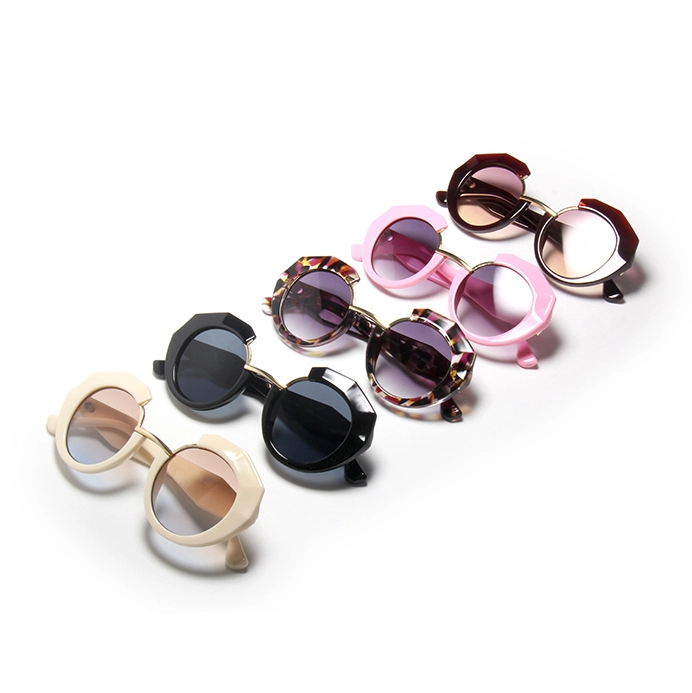
A bulk order should contain a practical mix of styles rather than an excessive quantity of nearly identical products. Consider how different frame shapes appeal to different customer preferences.
A balanced assortment may include:
- Rectangular and square frames
- Round and oval designs
- Oversized styles
- Cat-eye silhouettes
- Geometric frames
- Classic everyday shapes
The best combination depends on the store’s target audience and previous sales performance.
Consider Color Variety
Color selection can influence both shelf appeal and sales performance. Neutral shades often provide broad customer appeal, while seasonal or fashion-forward colors can add variety.
Retailers should avoid automatically ordering every available color. Instead, compare supplier options with historical sales data and the preferences of the target market.
Check Sizing and Fit
Sunglasses are not one-size-fits-all products in terms of appearance or comfort. Frame width, bridge design, temple length, and lens dimensions can affect how a product fits different customers.
A bulk assortment with several sizing and shape options can help retailers serve a wider range of shoppers.
Evaluate Product Consistency
Consistency becomes particularly important when ordering in bulk. Samples may look excellent, but retailers should also determine whether production units are likely to maintain the same specifications.
Ask about quality-control procedures and how the supplier handles defects or inconsistencies. Clear quality standards can reduce potential problems after delivery.
Calculate the Complete Cost
The listed wholesale price is only part of the purchasing equation. Retailers should calculate the total cost associated with acquiring and storing the products.
Depending on the order, expenses may include:
- Product cost
- Shipping charges
- Customs duties and taxes
- Packaging
- Payment fees
- Warehousing and handling
Knowing the total landed cost helps retailers estimate realistic profit margins.
Understand Minimum Order Quantities
Minimum order quantities can have a significant effect on inventory planning. Retailers should determine whether minimums apply to the overall purchase or to individual styles and colors.
An attractive unit price may not provide a real advantage if the required quantity exceeds the store’s expected sales volume.
Review Supplier Lead Times
Delivery timing can affect seasonal sales opportunities. Retailers should ask how long production and shipping normally take and whether lead times change during busy periods.
Understanding these timelines allows businesses to place orders early enough to avoid stock shortages without purchasing far more inventory than necessary.
Ask About Reordering Popular Styles
A supplier’s ability to replenish successful products can be valuable. If a particular frame becomes a strong seller, retailers should know whether they can reorder it and how long replenishment typically takes.
Reliable reordering can make inventory planning easier and reduce the need to maintain excessive safety stock.
Inspect Packaging
Packaging should protect sunglasses throughout transportation and storage. Retailers should examine how individual units are packed and whether bulk cartons provide adequate protection.
Poor packaging can lead to scratches, broken components, or other avoidable damage before the products reach the sales floor.
Review Pricing and Payment Terms
The best supplier is not necessarily the one offering the lowest quoted price. Payment schedules, order flexibility, shipping terms, quality standards, and communication can all affect the overall value of a purchasing relationship.
Retailers working with suppliers such as Eugenia Eyewear should consider the complete purchasing arrangement rather than evaluating price alone.
Consider Seasonal Demand
Sunglasses often experience changes in demand based on weather, travel, holidays, and outdoor activities. Retailers should use previous sales information to estimate when specific styles are likely to perform best.
Planning bulk orders around expected demand can help reduce both stock shortages and excess inventory.
Test the Market Before Scaling Up
When working with an unfamiliar supplier or introducing a new collection, a trial order can be a sensible starting point. It allows retailers to evaluate actual product quality, customer response, delivery performance, and sales velocity.
Once the results are clear, future orders can be adjusted based on real purchasing and sales data.
Keep Inventory Risk Under Control
Large orders can tie up substantial working capital. Retailers should consider how quickly the products are expected to sell and whether there is enough storage capacity for the planned quantity.
A carefully selected assortment is usually more useful than simply maximizing the number of units purchased.
Track Performance After Delivery
The purchasing process should not end when the shipment arrives. Record which styles sell quickly, which colors receive the most attention, and which products remain in stock for longer periods.
These insights can improve future ordering decisions and help retailers build an assortment that reflects actual customer behavior.
Final Thoughts
A successful bulk polarized sunglasses order requires more than choosing attractive frames at a competitive price. Retailers should examine lens quality, UV protection, frame construction, product consistency, assortment, sizing, packaging, costs, supplier terms, and expected demand.
Taking time to evaluate these factors before placing a large order can reduce purchasing risks and create a stronger foundation for profitable sunglasses inventory. By combining careful product evaluation with sales data and reliable supplier communication, retailers can make bulk buying a more predictable part of their overall business strategy.