


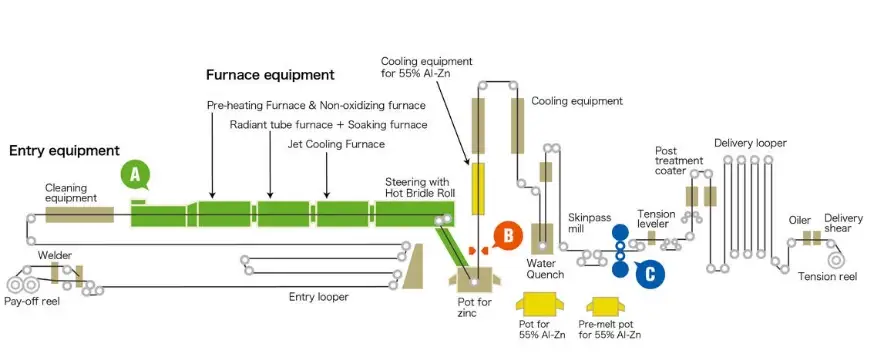
In steel coating production, surface preparation is one of the most important stages that determines final coating quality. Before steel can be coated with zinc, it must undergo a series of chemical treatments that remove impurities and prepare the surface for proper bonding.
A well-controlled hot dip galvanizing line relies on carefully selected pretreatment chemicals to ensure clean, reactive steel surfaces that allow strong and uniform zinc adhesion during immersion.
Importance of Chemical Pretreatment in Galvanizing
Steel surfaces naturally contain oil, rust, oxide layers, and dirt accumulated during storage and handling. These contaminants prevent proper bonding between steel and zinc.
Chemical pretreatment ensures:
- Removal of surface contaminants
- Activation of steel surface for bonding
- Prevention of coating defects
- Improved coating durability
Without proper pretreatment, the final galvanized layer may become weak or uneven.
Degreasing Chemicals for Oil Removal
The first stage of chemical treatment involves removing oil and grease from steel surfaces. These contaminants come from rolling processes and storage conditions.
Common Degreasing Agents
- Alkaline cleaning solutions
- Surfactant-based cleaners
- Mild detergent compounds
These chemicals break down oil films and allow them to be washed away easily. Proper degreasing ensures that subsequent stages work effectively.
Acid Pickling Solutions for Rust Removal
After degreasing, steel is treated with acidic solutions to remove rust and mill scale. This is one of the most critical stages in surface preparation.
Typical Acids Used
- Hydrochloric acid
- Sulfuric acid
These acids react with iron oxides and dissolve them, exposing clean steel underneath. Controlled acid concentration is important to avoid surface damage.
Rinsing Water and Neutralization Agents
After acid treatment, steel must be thoroughly rinsed to remove chemical residues. This step prevents contamination in later stages.
Purpose of Rinsing
- Remove remaining acid traces
- Prevent chemical carryover
- Stabilize surface condition
In some systems, neutralizing agents are also used to balance surface pH before further processing.
Flux Solutions in Final Surface Preparation
Fluxing is the last chemical pretreatment stage before zinc immersion. It ensures that the cleaned steel does not oxidize again before entering the molten zinc bath.
Common Flux Composition
- Zinc ammonium chloride solution
This chemical forms a thin protective layer that improves zinc wetting and bonding during galvanizing.
Role of Chemical Balance in Surface Quality
Maintaining correct chemical concentration is essential throughout pretreatment stages. Any imbalance can affect coating performance.
Key factors include:
- Acid strength control
- Solution temperature stability
- Contamination levels
- Treatment duration
Proper chemical balance ensures consistent surface preparation results.
Chemical Maintenance and Bath Management
Pretreatment chemicals must be regularly monitored and maintained to ensure stable operation.
Maintenance practices include:
- Regular solution replacement
- Filtration of impurities
- Monitoring concentration levels
- Cleaning of treatment tanks
These steps help maintain process stability and coating quality.
Environmental Considerations in Chemical Use
Chemical pretreatment processes must be managed carefully to reduce environmental impact. Waste solutions must be treated before disposal.
Common practices include:
- Wastewater neutralization
- Chemical recycling systems
- Controlled disposal procedures
- Emission reduction measures
Proper management helps ensure compliance with environmental requirements.
Impact on Final Galvanized Product Quality
The quality of chemical pretreatment directly affects final coating performance. Poor preparation can lead to:
- Uneven coating thickness
- Weak adhesion between zinc and steel
- Surface defects and bare spots
- Reduced corrosion resistance
High-quality pretreatment ensures strong, durable, and uniform galvanized coatings.
Integration with Production Flow
Chemical pretreatment is closely integrated with the overall production sequence. Each stage must be completed efficiently before steel enters the coating section.
A well-designed hot dip galvanizing line ensures smooth transition between cleaning, pickling, fluxing, and zinc immersion without contamination or delay.
Conclusion
Pretreatment chemicals play a vital role in ensuring successful galvanizing results. From degreasing and pickling to rinsing and fluxing, each chemical stage prepares steel for strong zinc bonding.
Proper control of these processes in a hot dip galvanizing line ensures high-quality coating performance, long-term corrosion resistance, and reliable steel products for industrial use.