Designers of compact mechanical and electronic products often face a difficult manufacturing challenge: creating metal components with detailed geometry while maintaining repeatable dimensions and useful mechanical properties. Traditional machining can produce precise features, but complex shapes may require multiple setups, specialized tools, and considerable material removal. Metal injection molding offers another option for suitable components by shaping fine metal powder through an injection process before debinding and sintering.
The use of MIM Parts is particularly relevant when a component is small, geometrically intricate, and required in production quantities that justify dedicated tooling. The process can combine several features into one molded metal part, but its suitability must be assessed against dimensional tolerances, alloy requirements, production volume, and the expected operating environment.
Complex shapes without extensive machining
MIM uses a feedstock made from fine metal powder and a binder. This material is injected into a mold, allowing the cavity to form the component’s detailed geometry. Depending on the design, features such as recesses, curved surfaces, small openings, and complex contours may be created during molding.
This capability can reduce the need for multiple machining operations. A part that would otherwise require separate components or several manufacturing stages may be redesigned as one integrated piece. Fewer individual parts can simplify assembly and reduce the number of interfaces where alignment or fastening problems might occur.
The geometry still has to suit the process. Very thick sections, abrupt wall changes, unsuitable thin features, and difficult binder-removal paths can create manufacturing risks. Early design review helps identify these issues before mold construction.
How dimensional precision is achieved
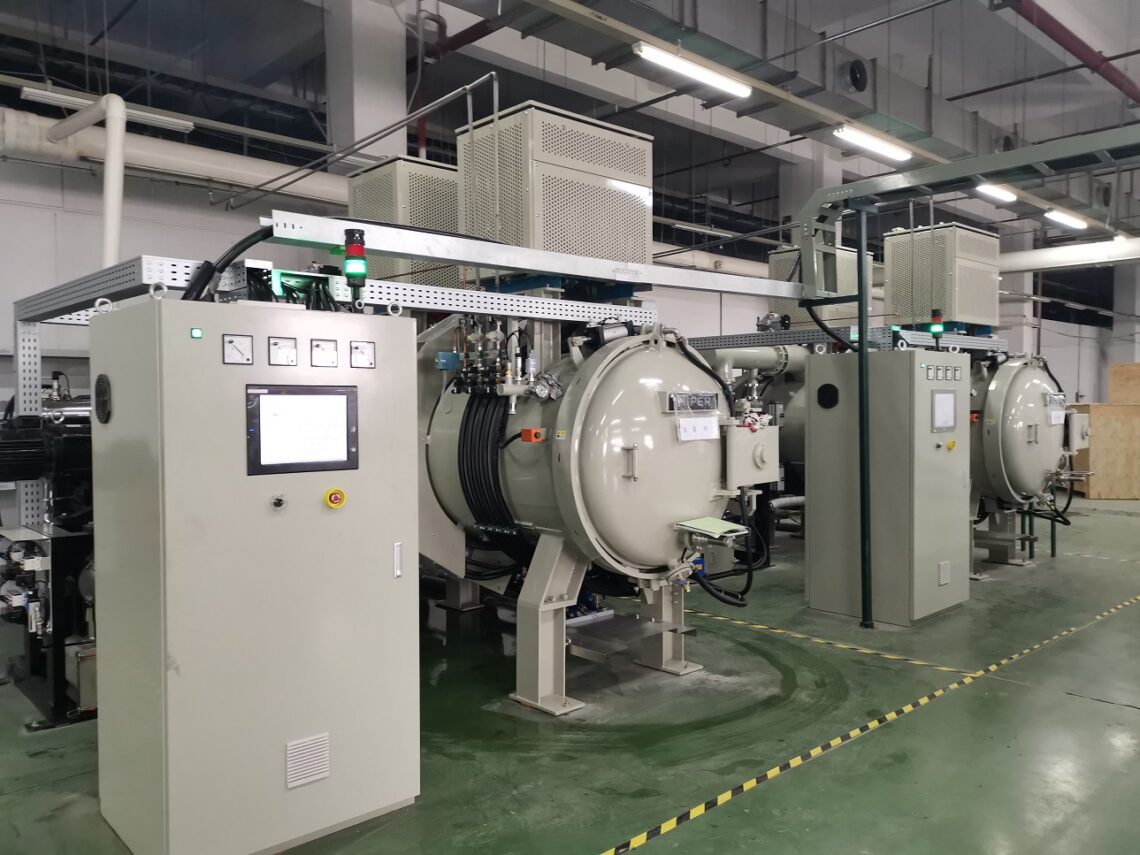
MIM can produce detailed components, but precision is not created by the mold alone. The molded part contains binder that must be removed before sintering. During sintering, metal particles bond and the component shrinks as it densifies.
The amount and consistency of shrinkage are central to dimensional control. Mold dimensions must be developed around the expected behavior of the material and process. Feedstock consistency, injection conditions, debinding, furnace loading, and sintering parameters can all affect the final dimensions.
Manufacturers should identify critical features and establish inspection methods for them. Some dimensions may be achieved directly through the MIM process, while others may need machining, sizing, or finishing to meet tighter requirements.
Material properties for functional applications
MIM can process a range of metal alloys, including stainless steels and selected low-alloy or specialty materials. The appropriate alloy depends on the component’s required strength, hardness, corrosion resistance, wear behavior, and service environment.
After sintering, a properly processed MIM component can provide useful mechanical properties for demanding compact applications. However, properties vary with the material and production conditions. Designers should review the actual material specification and test data rather than rely on broad assumptions about the process.
Heat treatment or surface finishing may be appropriate where the component requires additional hardness, wear resistance, or surface characteristics. These operations should be considered as part of the manufacturing plan.
Production efficiency and component integration
MIM can be attractive for repeated production because the mold creates the part geometry in a relatively consistent cycle. Once the process has been validated, large quantities of similar components can be produced using established settings.
Component integration may also reduce downstream assembly. If a design combines several functions into one molded part, the manufacturer may be able to reduce fasteners, joints, or separate machined features. This can lower handling requirements and simplify inventory.
The economics depend on scale. Mold development and process qualification require investment, so MIM is generally more compelling when production volumes are sufficient to distribute those costs across the required parts. A simpler geometry or small batch may be better suited to machining, casting, or conventional powder compaction.
Applications in precision industries
MIM is used in products across medical technology, automotive engineering, electronics, consumer devices, industrial equipment, and precision instruments. Applications may include small levers, connectors, locking elements, intricate housings, and components in compact mechanisms.
The process is most useful when the part’s size and shape make injection molding advantageous and the selected alloy provides the required performance. Designers should consider the component’s complete function, including its contact surfaces, fastening features, and interaction with other parts.
Quality checks that support confidence
Inspection plans may include dimensional measurement, material verification, density assessment, hardness testing, surface examination, and mechanical evaluation. For complex geometries, measurement strategies should address features that are difficult to access with conventional gauges.
Functional testing can provide further assurance. A component may meet individual dimensions but still fail to assemble or operate as intended. Testing in a representative product helps verify the complete design.
A process selected through engineering evaluation
MIM is suitable for many complex and precision metal components because it can form detailed geometry while retaining the characteristics of a metal material. Its advantages are strongest when the design, alloy, tolerances, and production volume are aligned with the process. Careful development and inspection are essential to ensure that geometric complexity translates into reliable component performance.