


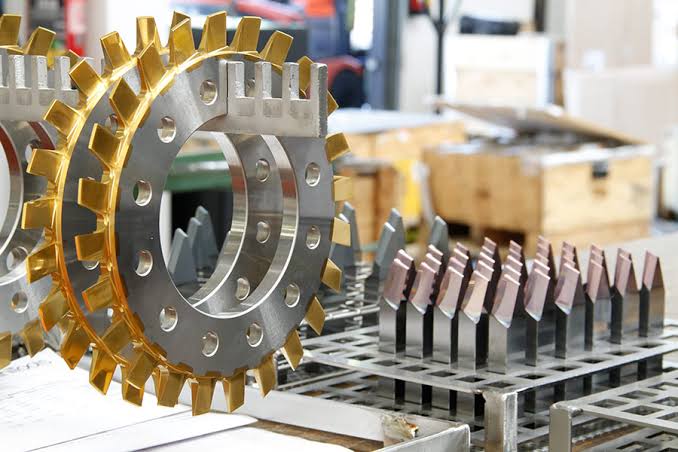
Modern gear manufacturing requires a careful balance between accuracy, productivity, and consistent quality. As gear designs become more demanding, manufacturers need cutting solutions that can produce reliable tooth profiles while working efficiently with different materials and machine configurations.
The choice of tooling depends on the gear geometry, production volume, workpiece material, machine capabilities, and required finish. Understanding available cutting methods can help manufacturers select a practical solution for their specific application.
Why Gear Cutting Accuracy Matters
Gears must engage correctly with their mating components to transfer motion and power smoothly. Small variations in tooth geometry can contribute to noise, vibration, uneven wear, and reduced performance.
A suitable machining process can help manufacturers achieve:
- Consistent tooth profiles
- Accurate dimensions
- Repeatable production
- Efficient machining
- Reliable surface quality
- Smooth gear engagement
Tool selection is an important part of achieving these results.
Understanding Helical Gear Shaping
A helical shaper cutter is designed for applications involving helical gear profiles. Gear shaping uses a controlled reciprocating cutting action to generate teeth on the workpiece.
Helical gear production requires careful consideration of cutter geometry and machine setup. The cutter needs to correspond with the gear’s specifications so that the intended tooth profile can be produced accurately.
Manufacturers should evaluate factors such as module, pressure angle, helix angle, tooth count, material, and machine compatibility when selecting a suitable solution.
Exploring Power Skiving
Power skiving is a modern gear cutting process that uses coordinated rotation between the cutting tool and workpiece. It can provide an efficient approach to producing certain internal and external gear profiles.
Power skiving cutters are designed specifically for this type of machining. Their geometry and operating conditions need to match the workpiece and machine to achieve consistent results.
The process can be useful where manufacturers are looking for efficient production and flexible gear machining capabilities.
Comparing Gear Cutting Approaches
Different gear designs require different machining strategies. Manufacturers should select a process based on the actual application rather than relying on a single method for every component.
Gear Geometry
The type of gear, tooth profile, helix angle, and other design characteristics influence the suitable cutting method.
Production Requirements
Manufacturers with high production volumes may prioritize efficient processes that provide repeatable results.
Workpiece Material
Material properties can affect cutter selection, operating conditions, and expected tool performance.
Machine Capabilities
Available equipment should be able to accommodate the selected tooling and machining process.
Required Accuracy
The desired dimensional tolerances and surface quality should be considered before choosing the cutting solution.
Maintaining Consistent Cutting Results
Good tooling performance depends on proper machine setup and regular inspection. Alignment, workholding, tool positioning, and machining conditions should be carefully controlled.
Tools should also be inspected for wear. Identifying wear early can help prevent it from affecting the accuracy of finished gears.
Correct storage and handling can further protect cutting equipment between production cycles.
Selecting the Right Industrial Tooling
Manufacturers should consider product quality, technical expertise, application suitability, and support when choosing a tooling provider. A knowledgeable supplier can help identify solutions based on gear specifications and production requirements.
SS Tools provides gear cutting solutions for industrial applications. Manufacturers can assess available tooling according to their gear design, machining process, machine configuration, and production objectives.
Improving Gear Manufacturing Efficiency
Tooling selection should be combined with good manufacturing practices. Consistent machine setup, suitable cutting conditions, preventive maintenance, and regular quality checks can all contribute to dependable production.
Monitoring finished components can also help manufacturers understand whether the selected cutting process is delivering the required results.
Conclusion
Modern gear production offers several cutting approaches, each suited to particular applications. A suitable helical shaper cuttercan support accurate production of helical gear profiles, while power skiving cutters can provide an efficient option for compatible internal and external gear applications.
By evaluating gear geometry, material, production volume, machine capabilities, and accuracy requirements, manufacturers can select cutting solutions that support consistent quality and efficient production.