


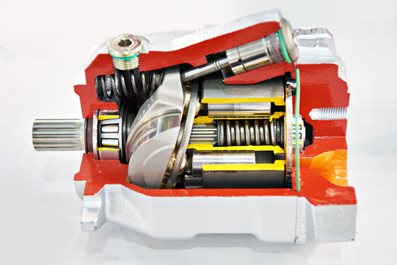
Choosing the right pump supplier can have a significant impact on equipment reliability, operating efficiency, maintenance requirements, and long-term costs. For industrial buyers, the decision should go beyond comparing product prices and should consider the supplier’s technical capabilities and ability to meet application-specific requirements.
When evaluating a piston pump manufacturer, buyers should consider factors such as product quality, engineering expertise, materials, pressure and flow capabilities, customization options, testing procedures, and after-sales support. A structured evaluation can help businesses select equipment that performs consistently under actual operating conditions.
Understand Your Pumping Requirements
Before comparing manufacturers, define the technical requirements of the intended application. The right supplier can only be identified when the operating conditions are clearly understood.
Important specifications include:
- Required flow rate
- Operating and maximum pressure
- Fluid type and viscosity
- Fluid temperature
- Duty cycle
- Installation environment
- Required materials of construction
These factors influence the pump design and help eliminate unsuitable options early in the purchasing process.
Evaluate Manufacturing Experience
Experience in producing piston pumps can be an important indicator of a manufacturer’s technical knowledge. Companies with established manufacturing processes are generally more familiar with common operating challenges and application requirements.
However, buyers should look beyond the number of years a company has operated. Consider whether its experience is relevant to your industry, pressure range, fluid type, and required pump configuration.
Examine Product Quality
Pump quality depends on the design, materials, machining accuracy, assembly process, and quality-control procedures used during manufacturing.
Ask suppliers about their production standards and inspection procedures. Consistent dimensional tolerances, properly selected components, and controlled assembly processes can all contribute to dependable pump performance.
Materials and Component Selection
Materials should be compatible with the fluid and operating environment. Corrosive, abrasive, high-temperature, or chemically reactive fluids may require specialized materials for wetted components.
Pay particular attention to components such as cylinders, pistons, valves, seals, packing, and other parts exposed to the pumped medium.
Check Pressure and Flow Capabilities
A piston pump is often selected for applications requiring controlled fluid displacement and relatively high pressure. The manufacturer’s stated performance should therefore match the actual requirements of the system.
Do not evaluate pressure and flow figures independently. A pump’s achievable flow can vary with operating pressure, speed, fluid characteristics, and configuration.
Request performance data that reflects the intended operating range rather than relying only on maximum ratings.
Consider Engineering and Customization Capabilities
Industrial applications do not always fit standard pump configurations. Differences in fluid properties, pressure requirements, installation dimensions, drive arrangements, or environmental conditions may require modifications.
A capable manufacturer should be able to explain which specifications can be adjusted and which limitations must be considered. Engineering support can also help determine whether a standard pump is appropriate or whether a customized design is necessary.
Review Testing and Quality Assurance
Testing is an important part of evaluating pump reliability. Manufacturers may use different inspection and testing procedures depending on pump type and application.
Before purchasing, ask what testing is performed and what documentation is provided. Depending on the application, relevant checks may include pressure testing, leakage inspection, performance verification, dimensional inspection, and operational testing.
Clear testing procedures provide buyers with greater confidence that the equipment meets its specified requirements.
Assess Maintenance and Spare Parts Support
A pump’s service life depends not only on its initial construction but also on how easily it can be maintained. Components such as seals, valves, and packing may eventually require inspection or replacement.
When comparing manufacturers, find out whether replacement components are readily available and whether maintenance instructions are provided. Easy access to appropriate spare parts can reduce downtime when routine servicing is required.
Look at Long-Term Serviceability
Buyers should also consider how practical the pump will be to service at the installation site. Accessible wear components and clear maintenance procedures can make routine inspections more efficient.
The manufacturer’s technical documentation should explain recommended inspection intervals, lubrication requirements, replacement procedures, and operating limits where applicable.
Compare Technical Support
Technical support can become particularly important when a pump is being integrated into a complex industrial system. Problems may arise from incorrect sizing, installation conditions, fluid compatibility, or system pressure rather than from the pump itself.
A responsive supplier should be able to provide useful technical information before and after purchase. Documentation, installation guidance, troubleshooting information, and application support can all contribute to smoother operation.
Consider Quality Control and Traceability
A well-organized manufacturing process should provide appropriate control over materials, components, assembly, and final inspection.
For industrial applications where reliability is critical, buyers may also want to understand how products and components are identified and documented throughout production. Good traceability can make maintenance, quality investigations, and replacement-part selection easier.
Evaluate Total Cost of Ownership
Purchase price is important, but it should not be the only factor in a manufacturer comparison. A lower-cost pump may become more expensive if it requires frequent maintenance, consumes more energy, or has limited spare-parts availability.
Consider the complete ownership cost, including:
- Initial purchase and installation
- Energy consumption
- Routine maintenance
- Replacement components
- Downtime risk
- Expected service life
- Technical support
Comparing these factors provides a more realistic picture of long-term value.
Check Industry and Application Experience
Relevant application experience can help a manufacturer understand the practical demands of a particular industry. This is especially useful for applications involving high pressures, unusual fluids, continuous operation, or challenging environmental conditions.
Rather than relying solely on general claims, ask whether the supplier has experience with comparable operating requirements. Technical references and documented application information can be useful during the evaluation process.
Review Documentation Before Ordering
Complete documentation can make equipment selection and installation significantly easier. Before finalizing a purchase, request the technical information necessary to verify compatibility with the existing system.
Useful documents may include pump specifications, dimensional drawings, performance data, materials information, installation instructions, maintenance recommendations, and spare-parts information.
Ask the Right Questions
A detailed discussion with potential suppliers can reveal differences that are not obvious from product catalogs. Buyers should ask questions about both current requirements and long-term operation.
Consider asking:
- What operating pressure and flow range is recommended?
- Which materials are available for the pumped fluid?
- What testing is performed before shipment?
- Which components are considered wear parts?
- How are replacement parts supplied?
- What maintenance schedule is recommended?
- Can the pump be modified for specific installation requirements?
- What technical documentation is supplied with the equipment?
The answers can help determine whether a supplier is technically suited to the application.
Final Thoughts
Selecting a piston pump supplier requires a balanced assessment of technical performance, manufacturing quality, serviceability, support, and overall ownership costs. The best choice is not necessarily the manufacturer offering the lowest initial price.
By clearly defining operating requirements and carefully comparing engineering capabilities, materials, testing, maintenance support, documentation, and long-term reliability, industrial buyers can make a more informed purchasing decision. A thorough evaluation also reduces the risk of selecting equipment that is poorly matched to the application.