


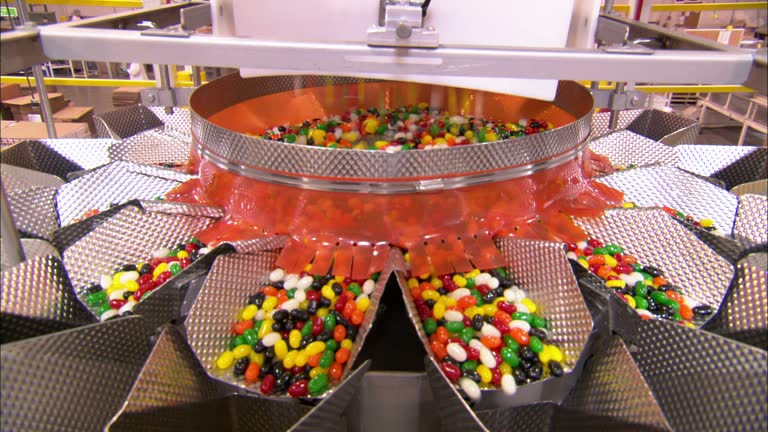
In the competitive world of confectionery, delivering jelly candies with consistent quality and appealing texture is essential for brand reputation and consumer satisfaction. Manual candy production often results in variations in size, shape, sweetness, and texture, which can impact market acceptance. Investing in a Jelly Candy Making Machine allows manufacturers to standardize production processes, enhance product consistency, and achieve superior texture, all while increasing operational efficiency.
A modern jelly candy making machine automates key stages of candy production, including ingredient mixing, cooking, depositing, molding, and cooling. By controlling these processes precisely, manufacturers can produce candies with uniform shape, texture, and flavor. Automation minimizes human error, reduces inconsistencies, and ensures that each batch meets strict quality standards. Beyond consistency, advanced machines can also influence the sensory characteristics of jelly candies, such as chewiness, elasticity, and moisture content, enhancing the overall consumer experience.
Precise Ingredient Mixing
One of the critical factors affecting the quality and texture of jelly candies is the homogeneity of the ingredients. A jelly candy making machine is equipped with high-precision mixers that blend sugar, glucose, gelatin, pectin, flavorings, and colorings uniformly.
- Even distribution of gelatin or pectin ensures the correct gel formation, which directly impacts the candy’s elasticity and chewiness.
- Accurate mixing prevents localized over- or under-concentration of ingredients, avoiding variations in texture across candies.
- Machines allow precise timing and temperature control during mixing, ensuring that sugar solutions dissolve completely and maintain consistent viscosity.
This level of control is difficult to achieve with manual methods, making machine-assisted mixing a significant contributor to high-quality products.
Controlled Cooking and Temperature Management
Cooking is another stage where precision determines candy quality. Overcooked sugar can result in brittle or overly hard candies, while undercooked batches may be sticky or fail to set properly. Jelly candy making machines incorporate advanced heating systems that regulate temperature and cooking duration accurately.
- Sensors monitor the mixture continuously to maintain optimal heat levels.
- Automated temperature control prevents burning, caramelization, or uneven gelatin setting.
- Consistent cooking reduces batch-to-batch variability, ensuring every candy has the intended texture.
By maintaining exact cooking conditions, manufacturers can produce candies with uniform chewiness and moisture content, enhancing the sensory appeal of the final product.
Accurate Depositing and Molding
The depositing and molding stages directly influence the shape, size, and surface quality of jelly candies. Manual deposition can lead to irregular sizes and inconsistent shapes, affecting both appearance and texture. Jelly candy making machines use automated depositing systems that deliver precise portions into molds.
- Uniform portioning ensures that all candies have the same size and shape, leading to consistent mouthfeel and chewiness.
- Automated molds reduce the risk of air bubbles, uneven surfaces, or deformations.
- Machines can handle complex shapes while maintaining structural integrity, allowing for creative product designs without compromising quality.
Accurate molding also ensures even cooling and setting, which is essential for achieving the desired texture and preventing sticky or overly soft areas.
Controlled Cooling and Setting
Cooling is a critical step that affects the final firmness, elasticity, and texture of jelly candies. A jelly candy making machine often includes cooling tunnels or temperature-controlled chambers that allow candies to set gradually under precise conditions.
- Consistent cooling prevents surface cracks or sticky residues.
- Proper temperature management ensures a balanced moisture distribution, producing a firm but chewy texture.
- Automated systems reduce manual handling, minimizing deformation or damage during setting.
This controlled environment allows manufacturers to consistently deliver candies with the intended mouthfeel and shelf stability.
Consistency and Quality Assurance
Using a jelly candy making machine supports stringent quality assurance practices. Automation enables manufacturers to reproduce recipes precisely, monitor critical production parameters, and maintain batch-to-batch consistency. Many machines also integrate data logging and monitoring features, allowing operators to track temperature, mixing times, and deposition accuracy.
- Reduced human error ensures uniform product quality across large production runs.
- Consistent texture and flavor improve consumer trust and brand loyalty.
- Integrated monitoring supports regulatory compliance and food safety standards.
Flexibility for Product Innovation
Beyond consistency, jelly candy making machines allow manufacturers to experiment with texture modifications and new product formulations. Adjusting parameters such as gelatin concentration, cooking temperature, or cooling rate can create candies with different levels of chewiness, elasticity, or softness. This flexibility supports product diversification while maintaining high-quality standards.
Conclusion
A Jelly Candy Making Machine is an indispensable tool for modern confectionery production. By automating critical processes such as mixing, cooking, depositing, and cooling, these machines ensure consistent quality, precise texture, and appealing appearance. Manufacturers benefit from reduced variability, enhanced efficiency, and the ability to innovate with new candy formulations.
Investing in advanced machinery not only improves product quality and texture but also enhances operational efficiency and supports scalability. For confectionery businesses, leveraging a jelly candy making machine translates into higher consumer satisfaction, reduced waste, and a stronger competitive edge in the growing global candy market.