


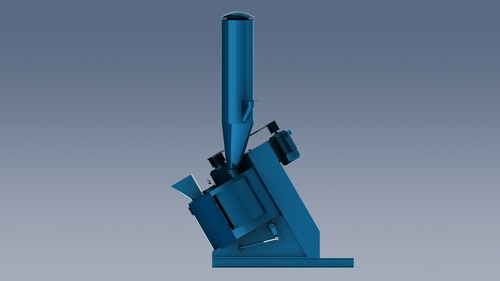
Industrial mixing equipment plays an important role in producing consistent materials for demanding manufacturing processes. Different mixer designs provide different levels of shear, circulation, and material conditioning, so selecting suitable equipment requires a clear understanding of the production requirements.
When comparing Counter Current Intensive Mixer Brands, buyers should evaluate key features such as mixing performance, capacity, construction, control systems, maintenance, and material compatibility. Looking at these factors together can make it easier to identify equipment that fits a specific application rather than choosing based only on price or brand reputation.
What Is a Counter Current Intensive Mixer?
A counter current intensive mixer is designed to create strong interaction between mixing tools and the materials being processed. The movement of the mixing components and material flow generates intensive mechanical action inside the mixing chamber.
This approach can help achieve thorough blending, dispersion, and conditioning. It is particularly useful when conventional mixing methods do not provide sufficient material circulation or uniformity.
The exact operating principle can vary between mixer designs, making it important to examine the technical details of each model.
Key Features to Look For
Several features can influence the performance and reliability of an intensive mixer. Buyers should consider how each feature relates to their specific materials and production process.
Intensive Mixing Action
A strong mixing action helps distribute materials throughout the batch. This can be particularly important when processing formulations containing small quantities of additives or components with different physical properties.
The mixer should provide sufficient mechanical energy without unnecessarily extending the production cycle.
Efficient Material Circulation
Effective circulation helps prevent inactive areas inside the mixing chamber. Good material movement can improve batch uniformity and reduce the possibility of unmixed material remaining after the cycle.
The arrangement of mixing tools, chamber geometry, and rotational movement all contribute to circulation.
Durable Construction
Industrial mixers often handle abrasive, dense, or demanding materials. Durable construction can therefore influence equipment service life and maintenance requirements.
Important components to examine include mixing tools, liners, shafts, seals, bearings, and the main mixing chamber.
Evaluate Mixing Capacity
Capacity should be matched to the required production volume. Buyers should consider the actual batch size needed and the number of batches required per hour.
Mixing capacity alone does not determine output. Charging, mixing, discharge, and cleaning times also affect the overall production cycle.
A properly sized mixer should provide enough output without unnecessary overcapacity.
Consider Material Characteristics
The materials being processed have a major influence on mixer selection. Particle size, moisture, density, abrasiveness, and flowability can all affect mixing behavior.
For example, abrasive materials may require specialized wear-resistant components, while formulations containing liquids may require controlled liquid injection.
Before comparing brands, document the properties of all major materials used in the production process.
Examine Mixing Tool Configuration
Mixing tools are central to the performance of an intensive mixer. Their shape, arrangement, rotational speed, and material construction can influence how effectively the batch is circulated and blended.
Buyers should determine whether the tool configuration is appropriate for their particular formulation.
The ability to replace worn tools efficiently is also an important consideration for long-term operation.
Review Speed and Process Control
The ability to control mixing speed can provide flexibility when processing different formulations. Some materials may require more intensive action, while others can be processed at lower speeds.
Modern control systems can also manage mixing time, material addition, speed, and discharge sequences.
A well-designed control system can improve repeatability and reduce variations caused by manual operation.
Assess Automation Options
Automation can be particularly useful for industrial facilities with high production volumes. Automated dosing and process control can help maintain consistent material proportions and mixing conditions.
When evaluating different mixer brands, buyers should consider whether the control system can communicate with existing batching and material-handling equipment.
Data monitoring and recording capabilities may also support quality management.
Check Wear Resistance
Abrasive materials can cause significant wear on mixer components. The expected service life of these parts can have a direct effect on maintenance costs and production availability.
Ask manufacturers about the materials and treatment methods used for wear-prone components.
It is also useful to determine how quickly replacement parts can be installed when maintenance is required.
Consider Cleaning and Discharge
Efficient discharge helps maintain short production cycles and reduces material retention inside the mixer. This becomes particularly important when different formulations are processed using the same equipment.
A suitable mixer should allow the finished material to leave the mixing chamber efficiently.
Cleaning requirements should also be considered when assessing the time required between batches.
Evaluate Maintenance Requirements
Routine maintenance is essential for maintaining reliable mixer performance. Before selecting equipment, buyers should understand the inspection and service requirements.
Common maintenance areas include:
- Mixing tools and arms
- Wear liners
- Bearings and seals
- Drive components
- Lubrication systems
- Discharge mechanisms
Equipment that provides convenient access to these components can help simplify maintenance work.
Compare Energy Consumption
Intensive mixing requires mechanical energy, but energy consumption should be considered in relation to actual production output and mixing quality.
A mixer that achieves the required uniformity in an efficient cycle may provide better operating economics than one that requires excessive processing time.
Energy use should therefore be included in the overall evaluation rather than considered separately.
Review Manufacturer Support
Reliable technical support can be important throughout the equipment’s service life. Buyers should assess the manufacturer’s ability to provide installation guidance, operating documentation, spare parts, and troubleshooting assistance.
Training can also help operators understand the correct use and maintenance of the mixer.
A supplier that communicates clearly about technical specifications and operating requirements can make equipment implementation easier.
Consider Total Cost of Ownership
The purchase price provides only a partial picture of the investment. Other costs may include installation, energy, maintenance, replacement parts, labor, and downtime.
A mixer with a higher initial cost may provide better long-term value if it offers durable components and reliable operation.
Comparing expected lifetime costs can help buyers make a more practical purchasing decision.
Create a Selection Checklist
Before making a final decision, buyers can compare manufacturers using a consistent set of criteria:
- Required batch capacity
- Material characteristics
- Mixing uniformity
- Mixing cycle time
- Tool and liner durability
- Automation and control
- Discharge efficiency
- Maintenance requirements
- Spare parts availability
- Technical support
- Total operating cost
Using the same criteria for every manufacturer can make the comparison more objective.
Conclusion
Choosing among counter current intensive mixer brands requires more than comparing capacity and purchase price. Mixing performance, material compatibility, tool configuration, durability, automation, maintenance, and long-term operating costs all contribute to equipment suitability.
By defining production requirements first and evaluating each manufacturer against the same technical criteria, buyers can identify a mixer that fits their application more effectively. A well-selected intensive mixer can support consistent material quality, efficient processing, and dependable long-term production.