Energy use is an important consideration in any manufacturing business. Block producers need equipment that can operate reliably while fitting the electrical infrastructure, production schedule, and operating budget of the factory. Electric machinery can offer a practical alternative to equipment that relies on other power arrangements, particularly where a suitable electricity supply is readily available.
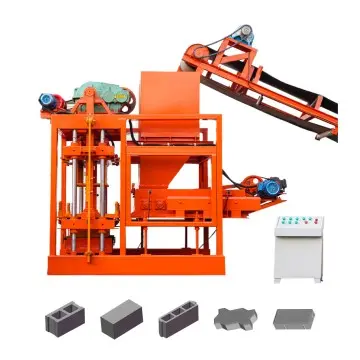
An Electric Block Making Machine uses electric power to operate its production mechanisms. Depending on the design, electric motors may drive vibration systems, conveyors, mixers, hydraulic pumps, or other components. The machine’s specific functions and energy requirements vary, so buyers should review the technical specifications rather than assume all electric models have the same configuration.
How Electric Block-Making Equipment Operates
In a typical production arrangement, raw materials are prepared and mixed before being delivered to the machine. Electric motors power the relevant mechanical systems, while controls allow the operator to manage the forming cycle.
Some machines use electric motors to operate hydraulic pumps, which then provide the movement or pressure required for forming. Others may use different mechanical arrangements. The production method depends on the equipment design.
The electricity supply must be compatible with the machine’s voltage, phase, frequency, and connected load requirements. These details should be checked before installation to avoid electrical problems or unexpected infrastructure costs.
1. Convenient Integration with Factory Power
Where a reliable electrical supply is available, an electric machine can be integrated into an established factory’s power system. This may simplify day-to-day operation compared with equipment that requires a separate fuel supply.
However, the factory must have sufficient electrical capacity. Starting currents, motor loads, control equipment, and other connected machinery should be considered when planning the installation.
A qualified electrician should assess the supply and install suitable protection, earthing, and isolation arrangements according to local electrical requirements and the manufacturer’s instructions.
2. Support for Organized Production
Electric motors can provide controlled operation of the components they drive. When combined with suitable controls, this can help establish repeatable machine movements and production cycles.
A predictable forming process makes it easier to organize material feeding, operator responsibilities, and product handling. It may also help supervisors identify unusual operating behavior, such as a motor running irregularly or a component failing to complete its normal movement.
Consistent operation still depends on maintenance, correct machine settings, and proper material preparation.
3. Considerations for Operating Costs
Electricity is a recurring production expense, so manufacturers should estimate energy consumption before choosing a machine. The calculation should consider motor ratings, operating hours, production cycles, local electricity tariffs, and the energy requirements of supporting equipment.
The machine’s rated power does not necessarily represent continuous consumption throughout the entire shift. Actual use depends on how the equipment operates and how frequently its motors are under load.
Compare the expected energy cost with other available power arrangements where relevant. The lowest initial purchase price may not provide the best long-term operating value.
4. Working Environment and Equipment Placement
Electric machines do not require fuel combustion at the point of use, although the wider electricity supply may have its own environmental impact. Their suitability for indoor or outdoor installation depends on the machine’s electrical protection, environmental rating, and site conditions.
Dust, moisture, vibration, and concrete residue can affect electrical equipment. Control panels, motors, cables, and connections should be protected and maintained as specified by the manufacturer.
The production area should also provide enough space for material movement, operator access, cleaning, and safe maintenance.
5. Maintenance and Electrical Safety
Routine maintenance may include inspecting motor mounts, cable connections, switches, control panels, guards, and moving parts. Where the machine uses a hydraulic system, the hydraulic components also require scheduled inspection.
Electrical faults should be handled by qualified personnel. Before cleaning or servicing, the equipment should be isolated from its power source using the appropriate lockout and safety procedures. Workers should never bypass guards or protective devices to keep production running.
Ask the supplier for maintenance schedules, wiring diagrams, operating instructions, and access to replacement components.
6. Selecting a Suitable Model
The right electric machine depends on the block types required, daily production target, available power supply, factory layout, and workforce. Buyers should compare motor ratings, forming mechanisms, mold compatibility, controls, installation requirements, and supplier support.
Request production estimates for the intended block dimensions and clarify whether the stated capacity assumes continuous operation or specific working conditions.
A Practical Choice for Electrically Equipped Factories
An electric block-making machine can suit manufacturers who have reliable power infrastructure and want equipment that fits an organized production environment. Its overall value depends on energy costs, machine efficiency, maintenance, and the requirements of the complete factory.
A careful review of technical specifications and site conditions helps ensure that the selected equipment can operate safely and support the business’s production goals.