
Cooling towers play an essential role in industrial facilities by removing excess heat from circulating water systems. They are widely used in manufacturing plants, commercial buildings, power generation facilities, and large-scale HVAC installations. Because cooling towers operate with warm water and continuous exposure to air, they can provide conditions that support microbial growth, biofilm formation, and the accumulation of organic and inorganic contaminants. Effective water treatment is therefore necessary to maintain system performance, protect equipment, and support safe operation.
Sodium dichloroisocyanurate (SDIC) is a chlorine-based disinfectant that can be considered for certain industrial water treatment applications. When evaluating Sdic For Cooling Tower, facility managers should examine the product’s available chlorine content, dissolution characteristics, water chemistry compatibility, and suitability for the specific treatment program. Its effectiveness depends on operating conditions and correct application, while careful monitoring is necessary to manage corrosion risks, chemical residues, and water quality.
1. Understanding SDIC in Cooling Tower Water Treatment
SDIC, also known as sodium dichloroisocyanurate, is a chlorine-releasing compound used in disinfection applications. When dissolved in water, it releases available chlorine, which acts as an oxidizing agent against susceptible microorganisms.
In cooling tower systems, microbial contamination can develop in circulating water, distribution lines, basins, and heat exchange surfaces. If microbial growth is not properly managed, deposits and biofilms may interfere with heat transfer, restrict water flow, and contribute to equipment deterioration.
SDIC may be considered as part of an industrial water treatment program where the product is suitable for the system and its use is permitted by the applicable treatment requirements. It should not be selected in isolation because cooling tower water chemistry involves several interacting factors.
2. Why Microbial Control Matters in Cooling Towers
Cooling towers continuously circulate water while exposing it to air. This operating environment can introduce dust, organic particles, airborne microorganisms, and other contaminants.
Without appropriate treatment, microbial populations can increase and contribute to operational problems.
Biofilm Formation
Biofilms develop when microorganisms attach to wet surfaces and form protective layers. These layers can accumulate on pipes, heat exchangers, and cooling tower components.
Biofilms may reduce heat transfer efficiency and make microbial control more difficult because the organisms within them can be less exposed to disinfectants.
Algae and Slime Accumulation
Sunlight, nutrients, and suitable temperatures can encourage algae growth in some cooling tower areas. Microbial slime can also accumulate on surfaces and contribute to deposits.
Routine water treatment, cleaning, and system maintenance help control these problems.
Equipment Fouling and Corrosion
Microbial deposits can contribute to under-deposit corrosion and create conditions that accelerate deterioration in susceptible materials.
Effective water management helps reduce the operational risks associated with biological contamination.
Health and Safety Considerations
Certain microorganisms associated with cooling tower systems can present health risks when contaminated water droplets become airborne. Legionella control is therefore an important part of cooling tower risk management.
Disinfection is only one element of an effective control program. System design, maintenance, monitoring, cleaning, and risk assessment are also essential.
3. Factors Affecting SDIC Performance
The effectiveness of SDIC in cooling tower water depends on several chemical and operational conditions.
Available Chlorine Content
Available chlorine indicates the disinfecting capacity of the product under defined testing conditions. Different SDIC grades may have different available chlorine specifications.
Facility operators should review the product label and Certificate of Analysis to confirm the actual concentration and ensure that the material meets the requirements of the treatment program.
Water pH
Water pH influences the chemical forms of chlorine present in the system and affects disinfection performance.
Changes in pH can alter the balance between different chlorine species. For this reason, cooling tower operators should monitor pH alongside disinfectant residuals rather than relying on chemical addition alone.
Organic Contamination
Dust, oils, organic debris, and other contaminants can consume available chlorine.
A high organic load may increase chlorine demand, reducing the amount available for microbial control. Mechanical cleaning, filtration, and regular basin maintenance can help reduce this demand.
Water Temperature
Cooling tower temperatures influence chemical reaction rates and microbial activity.
Because operating temperatures can vary across the system, treatment performance should be evaluated under actual operating conditions.
Contact Time
Disinfection depends on both the concentration of the active chemical and the time microorganisms remain exposed to it.
Poor circulation, dead zones, and uneven chemical distribution may reduce treatment effectiveness.
Water Circulation and System Design
Cooling tower configuration affects how treatment chemicals move through the system. Areas with limited circulation may experience inconsistent disinfectant exposure.
Proper circulation, equipment maintenance, and suitable chemical feed arrangements are important for consistent treatment.
4. SDIC and Cooling Tower Water Quality Management
Microbial control is closely connected to broader water quality management. A cooling tower treatment program must consider chemical stability, mineral accumulation, corrosion, and system operating conditions.
pH and Alkalinity
pH and alkalinity influence corrosion behavior, scale formation, and disinfectant chemistry.
Operators should maintain these parameters within the ranges established by the cooling tower water treatment program.
Hardness and Scale Formation
Calcium and magnesium in circulating water can contribute to mineral scale, particularly as water evaporates and dissolved minerals become concentrated.
Scale deposits reduce heat transfer efficiency and may create surfaces where microbial deposits can accumulate.
Total Dissolved Solids
Evaporation increases the concentration of dissolved minerals and salts in cooling tower water. Conductivity monitoring can help operators assess concentration levels and determine when blowdown is required.
Corrosion Potential
Chlorine-based oxidizing chemicals may influence corrosion behavior, depending on residual concentration, pH, water composition, temperature, and the materials used in the system.
Treatment programs should therefore coordinate disinfectant management with corrosion inhibitors and other water treatment chemicals.
5. Choosing the Appropriate SDIC Formulation
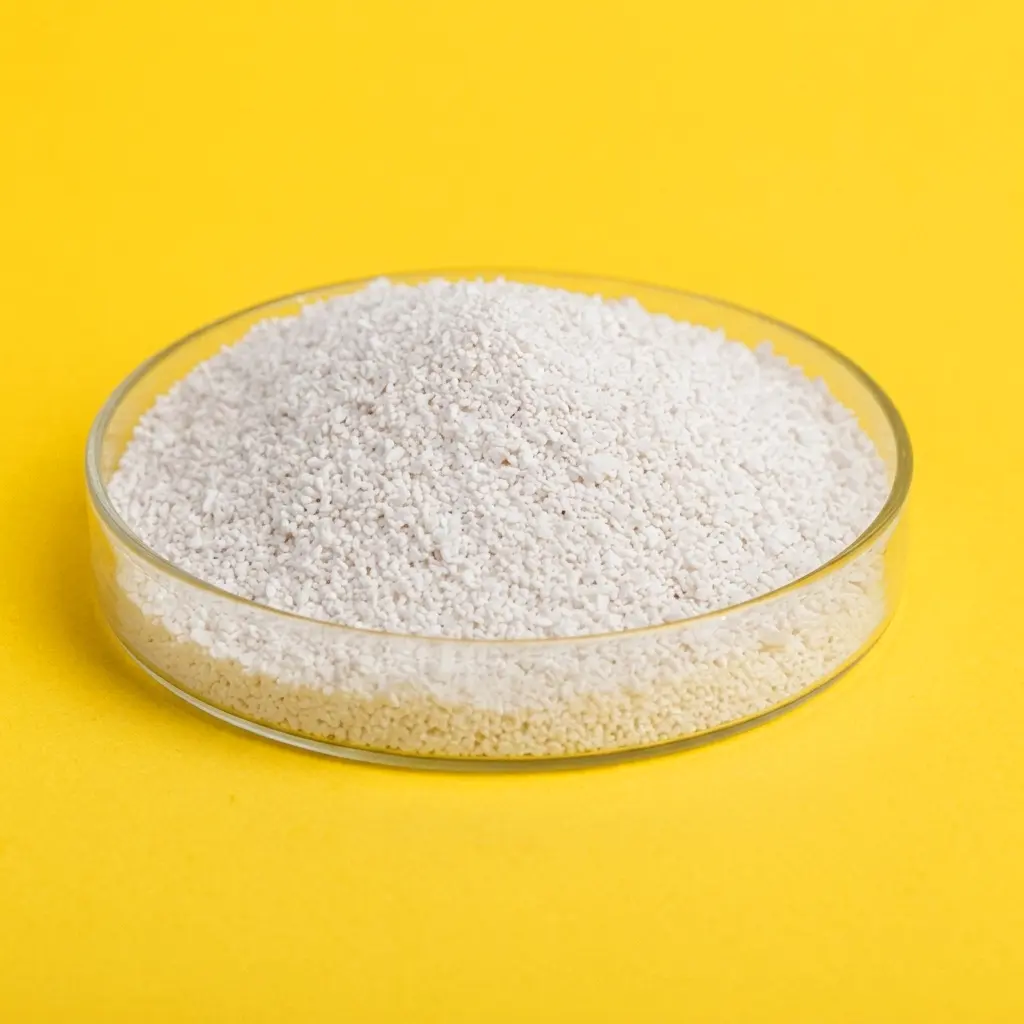
SDIC is available in different physical forms, including powder, granules, and tablets. The most suitable format depends on the treatment system, handling requirements, and product specifications.
SDIC Powder
Powdered SDIC can be suitable for applications where controlled preparation and chemical feeding are available.
Operators should consider dust exposure, dissolution procedures, packaging, and compatibility with dosing equipment.
SDIC Granules
Granular formulations can provide convenient handling and may be suitable for specific industrial dosing arrangements.
Particle size, dissolution behavior, storage stability, and available chlorine content should be reviewed before selection.
SDIC Tablets
Tablet formulations offer a compact format and may be useful in systems designed for controlled tablet-based chemical feeding.
However, dissolution rate and feed equipment compatibility must be assessed to avoid inconsistent treatment or localized high concentrations.
Regardless of formulation, the product should be selected according to the cooling tower’s approved treatment procedure and the manufacturer’s technical guidance.
6. Integrating SDIC into a Cooling Tower Treatment Program
An effective cooling tower program combines disinfection with routine maintenance and water chemistry control.
Establish Treatment Objectives
Operators should identify the primary treatment requirements, such as controlling general microbial growth, managing biofilm development, or maintaining a defined disinfection residual.
Treatment objectives should be based on system conditions and a documented risk assessment.
Assess Existing Water Conditions
Before selecting or adjusting a disinfectant, evaluate relevant parameters such as pH, conductivity, temperature, organic contamination, and current disinfectant residual.
These measurements help determine the system’s treatment requirements.
Use a Suitable Chemical Feed Method
Chemical feeding should provide controlled distribution throughout the circulating water system.
The selected dosing equipment must be compatible with the product formulation and designed to prevent unsafe chemical handling or localized concentrations.
Monitor Disinfectant Residuals
Regular testing helps determine whether the treatment program is maintaining its intended operating conditions.
Monitoring frequency should reflect system risk, operating conditions, applicable regulations, and the recommendations of the water treatment specialist.
Combine Chemical and Mechanical Maintenance
Disinfection alone cannot remove all deposits or eliminate established biofilms.
Basin cleaning, filtration, removal of accumulated debris, and maintenance of heat exchange surfaces remain important parts of the overall program.
7. Safety and Compatibility Considerations
Although SDIC is used in industrial disinfection, it requires careful handling because it is an oxidizing chemical.
Cooling tower operators should observe the following precautions:
- Review the Safety Data Sheet before handling the product.
- Use suitable gloves, eye protection, and other specified personal protective equipment.
- Store SDIC in a cool, dry, and well-ventilated location.
- Keep the product in its original, properly sealed packaging.
- Protect it from moisture and incompatible materials.
- Never mix SDIC with acids, ammonia, or incompatible cleaning chemicals.
- Follow the manufacturer’s instructions for preparation, dosing, and storage.
- Train personnel in chemical handling and emergency response procedures.
Compatibility with other treatment chemicals must also be assessed. Cooling towers often use corrosion inhibitors, scale-control chemicals, dispersants, and other additives. Chemical interactions can affect treatment performance and system safety.
A qualified water treatment professional should evaluate the complete chemical program before introducing or changing a disinfectant.
8. Quality Specifications to Review When Purchasing SDIC
Selecting a reliable product requires more than comparing price or available chlorine claims. Buyers should examine technical documentation and batch consistency.
Important purchasing criteria include:
Available Chlorine
Confirm the product’s specified available chlorine content and verify it through the batch Certificate of Analysis.
Purity and Physical Characteristics
Product appearance, moisture content, particle size, and other relevant specifications can influence handling, storage, and dissolution behavior.
Certificate of Analysis
A COA provides batch-specific quality information and helps buyers confirm that the supplied material meets agreed specifications.
Safety Data Sheet
The SDS provides information about chemical hazards, safe handling, storage, protective equipment, and emergency procedures.
Technical Data Sheet
A technical data sheet explains product characteristics, recommended handling practices, and application limitations.
Packaging and Storage Stability
Suitable packaging helps protect the product from moisture and contamination during transportation and storage.
Industrial buyers should also consider supplier reliability, production consistency, documentation quality, and the availability of technical support.
9. Common Mistakes in Cooling Tower Disinfection
Several treatment errors can reduce microbial control or create unnecessary operational risks.
- Relying only on chemical dosage: A fixed addition rate may not account for changing water quality, chlorine demand, or operating conditions.
- Ignoring pH: Disinfectant behavior can change when water pH shifts.
- Overlooking organic contamination: Organic materials can consume available chlorine and reduce treatment effectiveness.
- Neglecting biofilm removal: Chemical treatment may not adequately address established deposits without mechanical cleaning.
- Failing to monitor residuals: Without regular testing, operators cannot reliably assess treatment performance.
- Ignoring material compatibility: Excessive or unsuitable oxidizing conditions can contribute to corrosion.
- Mixing incompatible chemicals: Improper chemical combinations can create hazardous reactions.
Avoiding these mistakes requires a documented water treatment plan, regular monitoring, and appropriate technical oversight.
10. Best Practices for Long-Term Cooling Tower Performance
A sustainable cooling tower management strategy should combine disinfection, water quality monitoring, equipment maintenance, and health risk management.
Recommended practices include:
- Establish a documented water treatment and microbial control program.
- Monitor pH, conductivity, temperature, and disinfectant residuals regularly.
- Inspect basins, distribution systems, and heat exchange surfaces for deposits.
- Remove accumulated dirt, sediment, and organic debris.
- Maintain appropriate water circulation throughout the system.
- Review chemical compatibility before changing treatment products.
- Keep records of chemical consumption, testing results, maintenance, and corrective actions.
- Follow applicable cooling tower safety standards and Legionella risk management guidance.
These measures help facilities maintain more stable water quality while reducing avoidable operational problems.
Conclusion
SDIC can be considered for selected industrial cooling tower disinfection applications because it releases available chlorine that can help control susceptible microorganisms. Its performance, however, depends on water pH, organic contamination, temperature, contact time, circulation, and the condition of the cooling tower system.
Successful treatment requires more than selecting a disinfectant with a suitable available chlorine specification. Operators must also manage corrosion, scale, dissolved solids, biofilm, and chemical compatibility. By reviewing product documentation, using appropriate dosing arrangements, monitoring water quality, and maintaining equipment regularly, industrial facilities can develop a more reliable cooling tower water treatment program.