
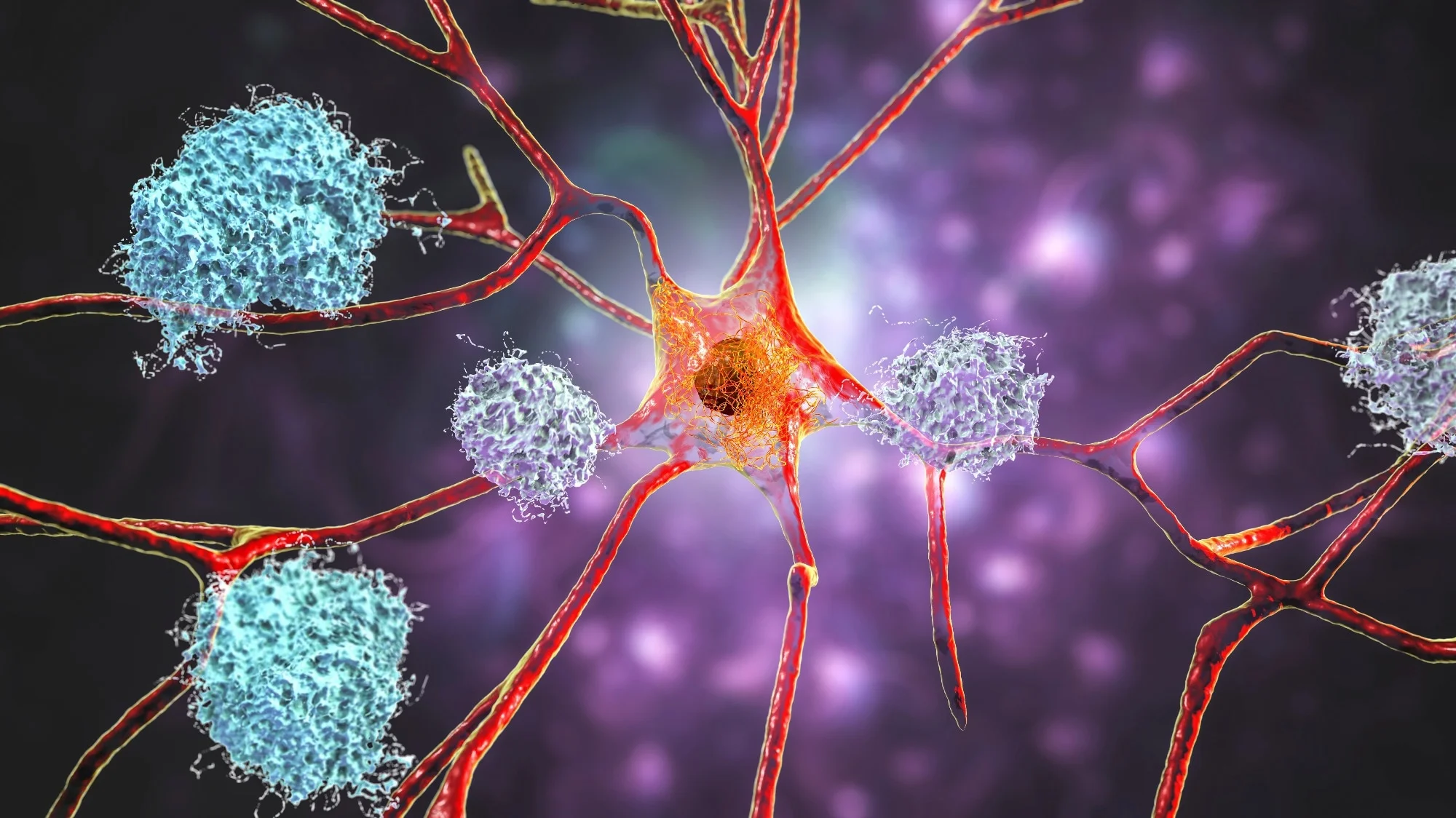
Alzheimer’s disease research increasingly relies on measurable biological indicators to understand changes in the brain and investigate disease-related processes. One important area of study involves tau protein, particularly its phosphorylation at the threonine 181 position. Measuring this modified protein can help researchers examine biological changes associated with Alzheimer’s pathology and explore how tau-related markers relate to other neurological indicators.
A p-tau 181 test measures phosphorylated tau at threonine 181 in a biological sample, such as cerebrospinal fluid or plasma, depending on the assay. The process typically involves sample preparation, antibody-based detection, signal measurement, and quantitative analysis. Understanding each stage helps laboratories select suitable methods, maintain analytical quality, and interpret results within the appropriate research or clinical context.
What Is p-tau 181?
Tau is a protein found mainly in neurons, where it helps stabilize microtubules. These structures support the shape of nerve cells and help transport substances within them.
Tau undergoes phosphorylation as part of normal cellular regulation. This process involves adding phosphate groups to specific positions on the protein. One such position is threonine 181.
When tau is phosphorylated at this position, it is known as phosphorylated tau 181, or p-tau 181. Researchers study this form because changes in its concentration have been associated with Alzheimer’s-related biological processes.
Abnormal tau phosphorylation and aggregation are associated with the development of neurofibrillary tangles, one of the characteristic pathological features of Alzheimer’s disease. P-tau 181 is therefore investigated as a measurable indicator of tau-related changes.
Why Is p-tau 181 Testing Important?
P-tau 181 testing contributes to research into Alzheimer’s disease by providing information about a specific form of modified tau protein.
Its potential research value includes several areas.
Investigating Tau Pathology
Researchers examine p-tau 181 to better understand changes in tau phosphorylation and how these changes relate to abnormal tau accumulation.
Measurements can be compared with other tau markers, amyloid-beta biomarkers, and neurological findings to investigate disease-associated processes.
Supporting Biomarker Studies
Biomarkers help researchers study biological changes that may not be directly observable through clinical assessments.
P-tau 181 is being evaluated as part of broader biomarker strategies for characterizing Alzheimer’s-related biology.
Exploring Blood-Based Testing
Plasma p-tau 181 has attracted research interest because blood collection is generally less invasive than obtaining cerebrospinal fluid.
However, blood-based testing requires suitable analytical sensitivity and careful validation because target concentrations may be low and the sample matrix is complex.
Contributing to Clinical Research
P-tau 181 may be included in clinical research protocols to investigate relationships between tau-related biology and other disease indicators.
Its usefulness for monitoring changes during a study depends on the assay, study design, and validation procedures.
Step 1: Selecting the Appropriate Biological Sample
The first stage of p-tau 181 testing is choosing a suitable biological sample.
The sample type influences collection procedures, preparation requirements, and the analytical characteristics needed from the assay.
Cerebrospinal Fluid
Cerebrospinal fluid (CSF) surrounds the brain and spinal cord. It contains proteins and other substances that can provide information about neurological processes.
CSF p-tau 181 has been extensively studied in Alzheimer’s biomarker research. It is often evaluated alongside amyloid-beta measurements and other tau-related indicators.
Obtaining CSF generally requires a lumbar puncture, making collection more invasive than routine blood sampling.
Plasma
Plasma is the liquid component of blood collected using an anticoagulant.
Plasma p-tau 181 is an important area of ongoing research because blood collection is relatively convenient and can support repeated sampling.
However, the concentration of p-tau 181 in plasma may be low. A method designed for plasma therefore needs appropriate sensitivity, specificity, and validation.
Serum
Serum is obtained after blood has clotted. Its composition differs from plasma, and the two sample types may produce different analytical results.
Researchers should confirm that the selected assay has been validated for serum rather than assuming that a plasma protocol can be used without modification.
Step 2: Sample Collection and Preparation
Consistent sample preparation is essential for reliable p-tau 181 measurement.
Variations in collection, processing, storage, or handling can introduce analytical differences that affect research findings.
Standardized Collection Procedures
Laboratories should establish clear procedures for collecting samples.
These procedures may specify:
- Appropriate collection tubes and containers.
- Required anticoagulants for plasma.
- Sample labeling and identification.
- Processing time after collection.
- Centrifugation requirements, where applicable.
- Storage and transportation conditions.
Following consistent procedures helps reduce avoidable variation between samples.
Sample Processing
Depending on the sample type, processing may involve centrifugation, separation of the liquid component, and transfer into suitable storage containers.
The exact procedure should follow the validated requirements of the assay.
Storage and Stability
Protein stability may be affected by temperature, storage duration, and repeated freeze-thaw cycles.
Researchers should follow the manufacturer’s instructions and use documented stability information when planning sample storage.
Assessing Sample Quality
Potential sample-related problems include hemolysis, lipemia, contamination, and other matrix effects.
These conditions may influence immunoassay performance and should be considered during sample assessment and result interpretation.
Step 3: Understanding the Detection Method
Most p-tau 181 tests use immunoassay principles. These methods rely on antibodies that recognize specific molecular features of the target protein.
The assay must distinguish tau phosphorylated at threonine 181 from other tau forms and potentially interfering substances.
Several detection technologies may be used.
Enzyme-Linked Immunosorbent Assay
Enzyme-linked immunosorbent assay (ELISA) uses antibodies to capture and recognize the target protein.
An enzyme-based reaction generates a measurable signal. The signal intensity is then compared with a calibration curve to estimate the analyte concentration.
ELISA is widely used in research laboratories because it provides a structured approach to protein measurement.
Chemiluminescence Immunoassay
Chemiluminescence immunoassay (CLIA) combines antibody-based recognition with a chemical reaction that produces light.
A compatible analyzer measures the emitted light, and the signal is interpreted using a calibration system.
Depending on the assay design, CLIA can support sensitive quantitative measurement and automated workflows.
Electrochemiluminescence Immunoassay
Electrochemiluminescence immunoassay uses an electrically initiated reaction to generate light.
This technology is used in various laboratory applications and can support sensitive biomarker analysis, depending on the specific assay and instrument.
Step 4: How a CLIA-Based p-tau 181 Test Works
CLIA is an important technology for laboratories evaluating sensitive protein measurements.
Although individual assay designs differ, a typical chemiluminescence immunoassay involves several stages.
Antibody Binding
The assay uses antibodies designed to recognize p-tau 181.
In a sandwich immunoassay, one antibody captures the target while another antibody participates in detection. The precise configuration depends on the reagent system.
Immune Complex Formation
The target protein binds to the relevant antibodies, forming an immune complex.
The assay’s reaction conditions are designed to support appropriate binding and reduce nonspecific interactions.
Signal Generation
A chemical reaction produces light through the assay’s detection system.
The intensity of the signal is related to the amount of target captured, within the validated analytical range.
Signal Measurement
An analyzer detects the emitted light and converts it into a measurable signal.
Concentration Calculation
The measured signal is interpreted using a calibration curve generated from standards with known concentrations.
The resulting value is reported according to the assay’s units, analytical range, and reporting rules.
Step 5: Calibration and Quality Control
Calibration and quality control are essential for ensuring that p-tau 181 measurements remain reliable.
Calibration
Calibration establishes the relationship between the assay signal and the concentration of p-tau 181.
Researchers should review the calibrator information, assigned values, and recommended calibration procedures.
The calibration range should cover the concentrations expected in the intended samples.
Internal Quality Control
Quality-control materials are tested to monitor assay performance.
Where appropriate, controls at different concentration levels can help identify variation across the measurement range.
Unexpected control results may indicate problems with reagents, calibration, instrument performance, or sample processing.
External Quality Assessment
External quality assessment allows laboratories to compare their analytical performance with other participating facilities.
Where suitable programs are available, they can help identify differences between methods and support ongoing improvements.
Documentation and Traceability
Laboratories should maintain records of:
- Reagent lot numbers and expiration dates.
- Calibration results.
- Quality-control measurements.
- Instrument maintenance.
- Sample collection and storage conditions.
- Corrective actions following unexpected results.
Good documentation supports reproducibility and helps researchers investigate unusual measurements.
Step 6: Understanding p-tau 181 Test Results
Once the assay has generated a measurement, the result must be interpreted according to the method’s validated performance and the purpose of the study.
A numerical result alone does not provide a complete understanding of an individual’s neurological condition or the biological processes under investigation.
Quantitative Concentration
Most quantitative immunoassays report p-tau 181 as a concentration.
The result should be interpreted using the assay’s specified units, calibration system, and analytical measurement range.
Reference Intervals and Decision Limits
Some tests provide reference intervals or decision limits based on particular study populations and validation procedures.
These values should not automatically be transferred to another assay or population.
Researchers should consider the evidence supporting the relevant thresholds and whether they apply to the sample type and intended use.
Results Below the Detection or Quantification Limit
A sample may produce a signal below the assay’s limit of detection or limit of quantification.
These situations should be handled according to the assay’s reporting guidance. A result below the quantification limit should not be treated as an exact numerical concentration.
Results Outside the Measurement Range
If a result exceeds the validated analytical range, the laboratory should follow the assay’s approved procedures for dilution or repeat testing, where applicable.
Results should not be extrapolated beyond the validated range without appropriate evidence.
Factors That Can Influence Test Accuracy
Several analytical and biological factors can affect p-tau 181 results.
Antibody Specificity
Antibodies must recognize the intended phosphorylated form of tau.
Cross-reactivity with non-phosphorylated tau, other phosphorylated tau forms, or related proteins can affect measurement accuracy.
Analytical Sensitivity
The assay must be capable of detecting concentrations relevant to the sample type and research question.
This is particularly important in blood-based testing.
Matrix Effects
Biological samples contain many substances that may influence antibody binding or signal generation.
Potential interferents include hemoglobin, lipids, bilirubin, heterophilic antibodies, and other matrix components.
Reagent Stability
Changes in reagent performance during storage or use may affect assay results.
Laboratories should follow storage instructions and monitor performance through quality-control testing.
Instrument Performance
For automated assays, instrument maintenance, calibration, and correct operation are important parts of the analytical process.
The instrument and reagent system should be evaluated together rather than independently.
Comparing p-tau 181 With Other Alzheimer’s Biomarkers
P-tau 181 is often evaluated alongside other biomarkers to investigate different aspects of Alzheimer’s-related biology.
| Biomarker | Main research significance |
|---|---|
| p-tau 181 | Tau phosphorylation associated with Alzheimer’s-related pathology |
| p-tau 217 | Another phosphorylated tau form studied in Alzheimer’s research |
| p-tau 231 | Investigated in relation to early Alzheimer’s-associated changes |
| Total tau | Associated with neuronal injury |
| Amyloid-beta 42 | Related to amyloid plaque pathology |
| Amyloid-beta 40 | Often evaluated alongside amyloid-beta 42 |
| Neurofilament light chain | Associated with axonal injury |
Combining biomarkers can help researchers examine relationships between amyloid accumulation, tau pathology, and neuronal injury.
However, each marker reflects different biological information. No single result should be treated as definitive proof of Alzheimer’s disease.
Choosing Laboratory Equipment for p-tau 181 Testing
Laboratories using automated immunoassay methods should evaluate whether the instrument supports the intended assay and sample workflow.
Chemiluminescence analyzers may automate several testing stages, including reagent dispensing, incubation, washing, and signal measurement.
When considering an analyzer such as the Shine i2910 Chemiluminescence Immunoassay Analyzer, laboratories should confirm the availability and compatibility of a validated p-tau 181 reagent system.
Important considerations include:
- Compatibility with the required assay reagents.
- Supported sample types and processing requirements.
- Analytical performance of the complete assay.
- Calibration and quality-control procedures.
- Testing throughput and laboratory workflow.
- Maintenance and technical support.
An analyzer’s general ability to perform CLIA testing does not automatically demonstrate that it supports a specific p-tau 181 assay.
Common Challenges in p-tau 181 Testing
Even well-designed tests can present practical and analytical challenges.
Low concentrations: Some biological samples contain relatively small amounts of p-tau 181, making sensitivity essential.
Sample variability: Differences in collection and processing can affect measurement consistency.
Platform differences: Assays may use different antibodies, calibrators, and detection systems, so results may not be directly interchangeable.
Interference: Biological substances can affect antibody binding or signal generation.
Interpretation limitations: P-tau 181 is a biomarker under investigation and should not be interpreted independently of other clinical and laboratory information.
Addressing these challenges requires validated methods, standardized procedures, and ongoing quality monitoring.
Future Developments in p-tau 181 Testing
Research into Alzheimer’s biomarkers continues to advance, creating opportunities to improve the measurement and interpretation of p-tau 181.
Improved Analytical Sensitivity
Developments in antibody engineering and signal detection may help laboratories measure low-abundance proteins more reliably.
Expanded Blood-Based Testing
Researchers continue to evaluate plasma biomarkers as potentially accessible tools for large-scale studies and repeated measurements.
Multiplex Biomarker Approaches
Measuring p-tau 181 alongside other tau, amyloid, and neuronal injury markers may provide a broader understanding of Alzheimer’s-related biology.
Greater Standardization
Improved calibration materials, reference procedures, and quality-assessment approaches may help laboratories compare results more consistently.
These developments will require continued validation across different sample types, populations, and analytical platforms.
Conclusion
A p-tau 181 test involves several connected stages, from sample collection and preparation to antibody-based detection, signal measurement, calibration, and result interpretation. Each stage contributes to the reliability of the final measurement.
CLIA and other immunoassay technologies can support quantitative p-tau 181 analysis when the complete assay system is appropriately validated. Consistent sample handling, suitable analytical sensitivity, antibody specificity, and regular quality control are essential for dependable research results.
By understanding how the testing process works and recognizing its limitations, laboratories and researchers can make better-informed decisions about assay selection and use p-tau 181 measurements more effectively in studies of Alzheimer’s-related biological changes.