


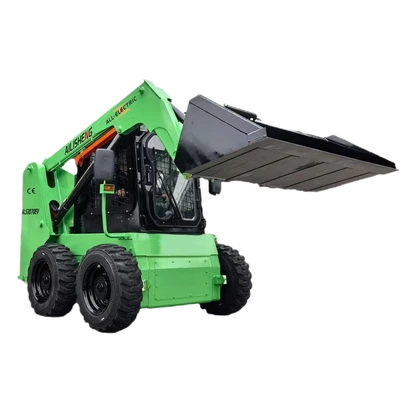
Choosing the right construction equipment is essential for maintaining productivity, controlling operating costs, and completing projects efficiently. As more contractors explore battery-powered machinery, electric skid steer loaders are becoming an attractive option for construction sites, warehouses, landscaping projects, and indoor applications. However, selecting the right model requires more than comparing prices or exterior designs.
Before investing in an electric skid steer, buyers should carefully evaluate its technical specifications, battery performance, lifting capacity, operating efficiency, and maintenance requirements. Understanding these features can help businesses choose equipment that meets their daily demands and delivers long-term value.
1. Battery Capacity and Operating Runtime
Battery capacity is one of the most important features to consider when purchasing an electric skid steer loader. It directly affects how long the machine can operate before requiring another charge.
A machine with sufficient battery capacity can support longer working periods and reduce interruptions during demanding projects. However, actual runtime depends on several factors, including workload, operating conditions, attachment usage, and travel frequency.
When comparing models, consider:
- Battery capacity and energy specifications.
- Estimated operating hours per charge.
- Battery management system features.
- Performance under different workloads.
- Battery warranty and expected service life.
Choose a battery configuration that matches your typical work schedule rather than relying solely on advertised runtime figures.
2. Charging Time and Charging Infrastructure
Charging requirements can have a significant impact on construction schedules. Unlike diesel-powered machines, electric skid steers need access to suitable charging facilities.
Before purchasing, check how long the battery takes to recharge and whether the machine supports different charging options.
Important considerations include charger compatibility, electrical supply requirements, charging efficiency, and the availability of charging points at your worksite.
For businesses operating multiple shifts, charging arrangements should be planned carefully to minimize downtime.
A suitable charging setup can make electric equipment more practical for regular construction operations.
3. Rated Operating Capacity and Lifting Performance
Lifting capacity determines how much material a skid steer loader can safely handle.
Different construction projects require different levels of lifting performance. A landscaping contractor may need a smaller machine for soil and debris, while a construction company may require greater capacity for heavier materials.
Review the following specifications:
- Rated operating capacity.
- Tipping load.
- Maximum lifting height.
- Dumping height and reach.
- Hydraulic lifting performance.
Make sure the selected machine can handle your expected loads without exceeding manufacturer safety limits.
Choosing the appropriate capacity helps improve productivity while supporting safe operation.
4. Motor Power and Driving Performance
Electric motors play an important role in determining how efficiently a skid steer loader performs.
Buyers should evaluate motor power, torque delivery, travel speed, and the machine’s ability to operate under different working conditions.
A suitable electric drive system should provide responsive movement and sufficient power for common construction tasks.
It is also useful to understand how the machine manages power consumption during heavy lifting, pushing, turning, and continuous operation.
Rather than focusing on one power rating, compare the complete performance specifications with your actual application requirements.
5. Hydraulic System Performance
The hydraulic system controls many important machine functions, including lifting, tilting, and operating attachments.
A powerful and reliable hydraulic system can improve productivity when handling materials or using specialized equipment.
Before selecting a model, review its hydraulic flow rate, operating pressure, and compatibility with the attachments you intend to use.
Some specialized attachments require higher hydraulic flow than standard buckets or forks.
Confirming these specifications in advance helps prevent compatibility issues and ensures that the machine can perform the tasks required on your site.
6. Machine Dimensions and Maneuverability
One of the main advantages of skid steer loaders is their ability to operate in restricted spaces.
However, machine dimensions vary between models, so buyers should check overall width, height, length, turning characteristics, and operating weight.
These specifications are especially important for indoor construction, warehouse operations, residential developments, and urban renovation projects.
A compact machine may provide better access through narrow doorways and pathways, while a larger model may offer greater lifting capacity.
The right choice depends on balancing maneuverability with the performance required for your work.
7. Attachment Compatibility and Versatility
Skid steer loaders are valued for their ability to perform different tasks using interchangeable attachments.
Depending on the model, compatible attachments may include:
- General-purpose buckets.
- Pallet forks.
- Sweepers.
- Augers.
- Grapples.
- Specialized material-handling tools.
This versatility allows one machine to support multiple construction activities.
However, not every electric skid steer supports every attachment. Buyers should check hydraulic flow requirements, electrical compatibility, attachment weight limits, and manufacturer recommendations.
Selecting a machine with suitable attachment options can increase equipment utilization and reduce the need for additional machinery.
8. Noise Levels and Indoor Operating Suitability
Electric skid steer loaders generally produce less operating noise than comparable diesel-powered machines because they do not use conventional combustion engines.
This makes them attractive for indoor environments and urban construction sites where noise restrictions may apply.
When evaluating a machine, consider its operating noise, warning systems, hydraulic sound, and suitability for enclosed spaces.
Although reduced engine noise can improve working conditions, operators should still follow site safety procedures and maintain awareness of surrounding workers and equipment.
9. Safety Features and Operator Protection
Safety should be a priority when selecting any construction machine.
A well-designed electric skid steer should include features that support stable operation, operator protection, and safe material handling.
Important features to review include:
- Roll-over protective structure (ROPS).
- Falling-object protective structure (FOPS), where applicable.
- Emergency stop systems.
- Seat belts and operator restraint systems.
- Clear visibility and lighting.
- Reliable braking and stability systems.
- Battery protection and electrical safety features.
Buyers should also review the manufacturer’s operating instructions and recommended safety procedures.
Proper operator training and routine inspections remain essential regardless of the machine’s power source.
10. Battery Management and Thermal Protection
Battery management systems help monitor important battery functions, including charging, temperature, voltage, and operating conditions.
A well-designed system can help protect the battery against unsuitable operating conditions and support consistent performance.
Thermal management is also important because battery temperature can influence charging efficiency, performance, and service life.
Ask the manufacturer about battery protection features, cooling arrangements, operating temperature limits, and recommended charging practices.
Understanding these details can help businesses maintain battery health and avoid unnecessary equipment problems.
11. Maintenance Requirements and Service Accessibility
Maintenance affects equipment availability and long-term ownership costs.
Electric skid steers generally require fewer engine-related servicing tasks than diesel models. However, they still contain components that need regular inspection and maintenance.
Buyers should understand the maintenance requirements for:
- Battery systems and electrical connections.
- Hydraulic components and hoses.
- Tires and wheels.
- Cooling systems.
- Safety controls and braking components.
- Attachments and moving parts.
It is also important to check whether replacement parts are readily available and whether qualified technicians can provide support.
A machine that is easy to maintain can help reduce unnecessary downtime.
12. Durability and Build Quality
Construction equipment must withstand demanding working conditions, including uneven surfaces, heavy loads, dust, and repeated operation.
Before purchasing an electric skid steer, examine the frame, lifting arms, hydraulic connections, protective components, and overall construction quality.
Ask about the materials used, manufacturing standards, and testing procedures.
A durable machine can provide more dependable service and help reduce repair expenses over its working life.
It is also worth reviewing warranty coverage for the battery, electric motors, hydraulic system, and major structural components.
13. Control System and Operator Comfort
An intuitive control system can make equipment easier to operate and improve working efficiency.
Modern skid steer loaders may feature joystick controls, digital displays, adjustable operating settings, and clear system indicators.
Consider whether the controls are easy to understand and whether operators can access important information such as battery level, operating status, and warning alerts.
Operator comfort also matters. Check seating, visibility, entry and exit access, and the layout of frequently used controls.
A comfortable and well-designed operating environment can support more consistent performance during long work periods.
14. Total Cost of Ownership
The purchase price is only one part of the overall investment.
To determine whether an electric skid steer offers good value, consider the total cost of ownership over its expected working life.
This may include:
- Initial equipment price.
- Electricity and charging expenses.
- Battery replacement costs.
- Routine maintenance.
- Repairs and spare parts.
- Charging infrastructure.
- Warranty and service coverage.
- Expected resale value.
Electric models may reduce certain operating expenses, but actual savings depend on electricity prices, equipment usage, battery lifespan, and local service availability.
Comparing these costs with those of conventional equipment can provide a more realistic picture of long-term value.
15. Manufacturer Reputation and After-Sales Support
The quality of the manufacturer and its support network can influence the overall ownership experience.
A reliable supplier should provide clear technical specifications, warranty information, maintenance guidance, and access to replacement parts.
Before making a purchase, research the manufacturer’s background and ask about its after-sales service arrangements.
Important questions include:
- What warranty coverage is provided?
- Are replacement batteries and components available?
- Is technical assistance available when needed?
- Are operator manuals and maintenance instructions provided?
- How are service requests and equipment problems handled?
Strong after-sales support can help protect your investment and keep machinery operating efficiently.
Conclusion
Choosing the right electric skid steer loader requires a careful evaluation of battery capacity, charging time, lifting performance, hydraulic capabilities, machine dimensions, safety features, and maintenance requirements. Buyers should also consider attachment compatibility, operator comfort, manufacturer reputation, and total ownership costs.
By matching these features with the actual demands of a construction project, businesses can select equipment that delivers reliable performance and practical long-term value. Taking time to compare specifications and confirm after-sales support can make the purchasing process more effective and help ensure that the chosen machine meets future operational needs.