


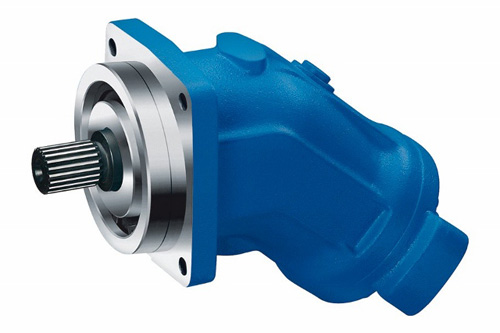
Hydraulic drive technology continues to evolve as industrial equipment becomes more demanding in terms of efficiency, control, reliability, and energy consumption. Hydraulic motors remain important because they can provide high torque and power density in applications where compact and robust drive systems are required.
For equipment designers and industrial buyers, understanding current developments in hydraulic motor technology can help with better component selection. A hydraulic motor manufacturer increasingly focuses on improvements in efficiency, control, materials, manufacturing precision, and system integration rather than simply increasing motor output.
The Evolution of Hydraulic Drive Technology
Traditional hydraulic drives were often selected primarily for their ability to deliver high power and withstand demanding loads. Modern systems place greater emphasis on controlling energy losses and adapting output to changing operating conditions.
Advances in motor design, electronic controls, sensors, manufacturing methods, and hydraulic system architecture are creating new opportunities to improve overall drive performance.
Higher-Efficiency Hydraulic Motors
One major area of development is reducing energy losses inside hydraulic motors. Internal leakage and mechanical friction can reduce the amount of hydraulic energy converted into useful mechanical output.
Manufacturers can address these losses through improved component geometry, tighter manufacturing control, optimized clearances, better surface finishes, and more effective sealing systems.
Improved efficiency can also reduce heat generation, which may benefit the performance of the wider hydraulic system.
Variable-Displacement Technology
Variable-displacement motors provide flexibility by allowing displacement to change according to operating requirements.
This can help equipment balance torque and speed under different loads. For example, a machine may require high torque during startup and higher speed during lighter-load operation.
Variable displacement can therefore contribute to more adaptable drive systems when appropriately integrated with pump and control technologies.
Improved Low-Speed Performance
Some industrial applications require substantial torque at low rotational speeds. Traditional motor designs may experience challenges involving smooth operation or efficiency at very low speeds.
Advances in motor geometry, internal component design, and control methods can improve low-speed characteristics.
Better low-speed performance is valuable for equipment such as winches, conveyors, mixers, and heavy-duty mobile machinery.
Electronic-Hydraulic Integration
Modern hydraulic systems increasingly combine mechanical hydraulic components with electronic control technologies.
Sensors can provide information about pressure, speed, temperature, position, or load. Electronic controllers can then adjust valves, pumps, or motor displacement according to changing operating conditions.
This integration can improve controllability and allow hydraulic drives to respond more precisely to machine demands.
Sensor-Based Condition Monitoring
Condition monitoring is another developing area in hydraulic drive technology. Sensors can help operators track operating parameters and identify changes from normal conditions.
Monitoring variables such as temperature, pressure, vibration, and speed can provide useful information about component condition.
Early detection of abnormal behavior may allow maintenance teams to investigate problems before a major failure occurs.
Smart Maintenance Strategies
Traditional maintenance often relies on fixed schedules. Increasingly, hydraulic equipment can use condition-based or predictive maintenance approaches.
Instead of replacing components solely according to operating hours, maintenance teams can use actual performance information to determine when inspection or service is needed.
This can potentially reduce unnecessary maintenance while helping prevent unexpected failures.
Advanced Manufacturing Techniques
Improvements in machining and manufacturing technology are supporting more precise hydraulic motor designs.
Modern production methods can improve control over component dimensions, surface finishes, and internal clearances. Greater manufacturing consistency can help reduce variation between individual motors.
Precision manufacturing is particularly important as designs become more compact and internal tolerances become more closely controlled.
New Approaches to Materials
Material engineering continues to influence hydraulic motor development. Components need to balance strength, wear resistance, weight, corrosion resistance, and manufacturing cost.
Improved materials and surface treatments can help components withstand demanding loads while maintaining performance.
The most appropriate material depends on the motor design and operating environment rather than simply selecting the strongest available material.
Compact Motor Designs
Equipment manufacturers increasingly seek smaller and lighter components without sacrificing performance.
Compact hydraulic motors can help reduce overall machine size and weight, which may be particularly valuable in mobile equipment.
However, reducing dimensions requires careful thermal, structural, and manufacturing engineering to ensure that compact designs remain reliable under their intended loads.
Improved Sealing Technology
Sealing systems play an important role in hydraulic motor efficiency and reliability. Poor sealing can cause external leakage, while inappropriate internal sealing can increase friction or reduce operating efficiency.
Modern seal designs and materials can be selected according to pressure, temperature, hydraulic fluid, shaft speed, and environmental conditions.
Improved sealing can contribute to longer service intervals and more stable motor performance.
Noise and Vibration Reduction
Noise and vibration are important considerations in many modern machines, particularly in industrial facilities where operating conditions affect workers and surrounding equipment.
Manufacturers can address these issues through improved gear geometry, rotor balance, bearing selection, component alignment, and hydraulic flow management.
Reducing unnecessary vibration can also help limit mechanical stress on connected equipment.
Digital Monitoring and Data
The growing use of digital technologies is creating opportunities for hydraulic systems to generate and analyze operating data.
Data from sensors can be used to monitor pressure, temperature, speed, load, and other variables. When combined with appropriate software, this information can support maintenance planning and performance analysis.
Digital monitoring does not replace mechanical engineering, but it can provide additional insight into how hydraulic drives operate in real conditions.
Energy Efficiency at the System Level
Motor efficiency is important, but improving the motor alone does not guarantee an efficient hydraulic system.
Pump efficiency, valve selection, piping, filtration, cooling, pressure settings, and control strategies all contribute to overall energy consumption.
Modern hydraulic drive development therefore increasingly focuses on optimizing the complete hydraulic circuit rather than treating the motor as an isolated component.
Electro-Hydraulic and Hybrid Systems
Some applications combine hydraulic power with electrical drive technology. These hybrid architectures can use hydraulic components where high force or power density is advantageous while using electrical systems for control or other functions.
The appropriate architecture depends on the machine’s requirements, operating cycle, available power sources, and control objectives.
Application-Specific Engineering
Innovation does not always mean creating an entirely new motor design. In many cases, improvements involve adapting existing technologies to specific applications.
Manufacturers may optimize motor specifications for construction equipment, agricultural machinery, material handling, marine equipment, industrial production, or other specialized uses.
Application-specific engineering can help achieve a practical balance between performance, cost, reliability, and serviceability.
What Buyers Should Ask About New Technology
Industrial buyers considering newer hydraulic drive technologies should ask suppliers:
- What efficiency improvements does the motor provide?
- Is variable displacement available?
- What low-speed and starting torque performance can be expected?
- What sensors or monitoring options are supported?
- How has the design been tested?
- What materials and surface treatments are used?
- What operating data is available?
- How does the motor integrate with electronic controls?
- What maintenance requirements should be expected?
- Is technical support available for system integration?
These questions help distinguish practical technology improvements from features that may have limited relevance to the application.
Balancing Innovation With Reliability
New technology should always be evaluated in relation to reliability and service requirements. A sophisticated feature may not provide meaningful value if the application does not require it.
Industrial buyers should consider proven performance, testing, spare-parts availability, maintenance requirements, and supplier support alongside new capabilities.
The best innovation is often the technology that solves a specific operating problem without introducing unnecessary complexity.
The Future of Hydraulic Drive Systems
Future hydraulic drive systems are likely to place continued emphasis on efficiency, electronic control, condition monitoring, compact construction, and improved integration with digital equipment.
At the same time, fundamental hydraulic principles such as pressure, flow, displacement, torque, and speed will remain central to motor design.
The most useful developments will combine these established principles with improved engineering and control technologies.
Conclusion
Innovations in hydraulic drive technology are changing how hydraulic motors are designed, manufactured, monitored, and integrated into modern machinery. Improvements in efficiency, variable displacement, low-speed performance, materials, sealing, electronic control, and condition monitoring can help equipment operate more effectively.
For industrial buyers, the key is to evaluate innovation according to actual application requirements. Understanding both emerging technologies and established hydraulic principles allows buyers to select motors that provide practical improvements in efficiency, control, reliability, and long-term operating value.