


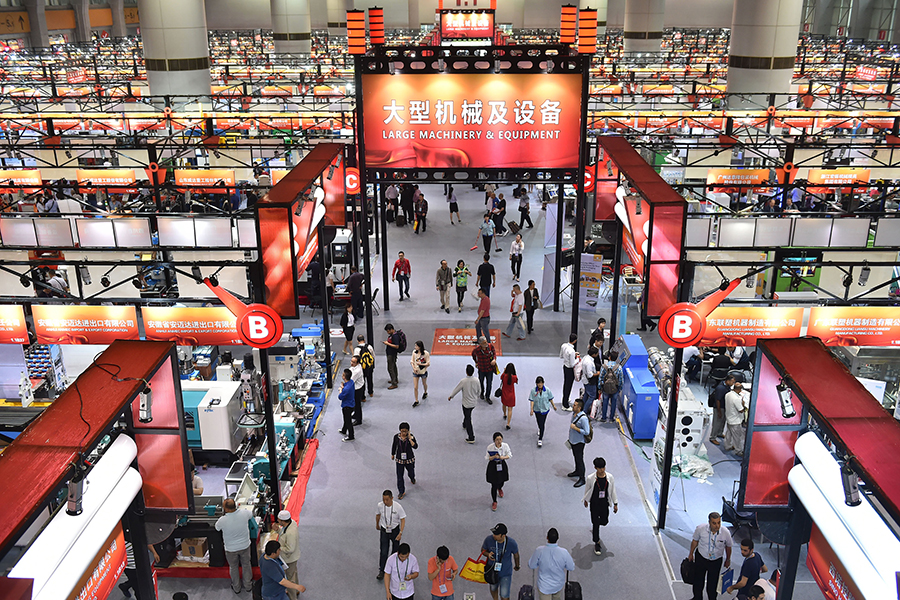
For Indian importers, the hardest part of sourcing from China is rarely finding supplier names online; it is deciding which companies are credible enough to trust with samples, deposits, production schedules and repeat orders.
China trade fairs for Indian businesses reduce that uncertainty by bringing buyers, manufacturers and competing products together in one place. Travel preparation also matters, especially for first-time visitors researching Canton Fair visa and invitation guidance.
This article explains how to use fairs for international supplier networking, what evidence to collect before committing, and how to turn a short sourcing trip into a dependable supplier pipeline.
Why China trade fairs for Indian businesses reduce supplier uncertainty
The main benefits of attending trade fairs come from comparison and context. Buyers can question several suppliers in the same category, inspect samples and assess how clearly exhibitors explain production, quality control, lead times and export capability. A fair does not remove sourcing risk, but it creates better evidence for early decisions than catalogues and messaging threads alone.
For companies trying to find overseas suppliers, the goal should not be to collect the most contacts. It should be to create a shortlist based on comparable information. Here, a professional China visa consultant can help with broader China visa guidance for applications, documentation and invitation review.
Use the fair as a structured screening exercise
A disciplined visit can combine several sourcing tasks:
- Supplier discovery: identify companies matching the required product, material, specification and price range.
- Face-to-face meetings: test how clearly suppliers answer questions about capacity, customisation, packaging and delivery.
- Product comparison: inspect competing samples side by side instead of relying on edited photographs.
- Manufacturer verification: collect legal names, factory locations, licences, certifications and contact details for later checking.
This is why China trade fairs for Indian businesses work best when buyers arrive with a sourcing brief, target specifications and questions prepared in advance.
Know what a booth cannot prove
A professional exhibition booth is not proof of a reliable factory. An exhibitor may be a manufacturer, trading company, distributor or representative. Before placing a meaningful order, confirm the legal entity receiving payment, where production will occur, and whether samples match written specifications. For higher-risk orders, an independent factory audit or pre-shipment inspection may also be appropriate.
Turn exhibition conversations into a supplier-validation process
The biggest fair-day mistake is collecting dozens of catalogues without recording comparable information. Ask every serious prospect a common set of questions:
- Manufacturer, trading company or both?
- Standard minimum order quantity and custom-order minimum?
- Production lead time after sample approval?
- Quality-control process and available test reports?
- Payment terms, warranty terms and defect-handling procedure?
- Experience exporting to similar markets?
The objective is to leave with a ranked list: a preferred supplier, a credible backup and one or two alternatives worth further testing. China trade fairs for Indian businesses become far more valuable when contacts are converted into a decision-ready shortlist rather than an unfiltered database.
Evaluate suppliers on evidence, not the lowest quotation
A low unit price can become expensive if it hides inconsistent materials, poor tolerances, weak packaging or missed deadlines. Compare sample quality, communication, production capability, tooling, lead times, payment structure and willingness to document specifications before focusing on price.
Negotiation is more productive once those factors are understood, because price can be discussed alongside quantity, materials, packaging, delivery terms and quality expectations.
Also ask what happens when something goes wrong. A supplier that can explain defect handling, corrective action and replacement procedures is easier to assess than one offering only sales assurances. Those answers can reveal more about the potential for a long-term business relationship than a polished booth presentation.
Choose the fair that matches the sourcing decision
The Canton Fair for Indian importers can be useful when the sourcing requirement spans multiple product categories or when a buyer wants access to a broad supplier base. The Canton Fair’s official systems provide overseas-buyer registration and invitation-related functions, so preparation matters for visitors planning to attend.
Smaller, category-focused business sourcing exhibitions may be more efficient when the buyer already knows the exact sector, component or manufacturing cluster required.
- Choose a broad fair for category exploration and alternative supplier options.
- Choose a specialist fair when technical depth matters more than scale.
- Add factory visits when a supplier reaches the final shortlist.
The right event depends on the decision required: exploratory buyers need breadth, while buyers close to ordering need deeper validation.
Visa, invitation and documentation planning should support the business purpose
For Indian buyers travelling to China for exhibitions, factory visits or supplier meetings, visa preparation should begin once the business itinerary is reasonably clear. China’s M visa is generally used for commercial and trade activities, while supporting documents may include a trade invitation or documentation from a Chinese business counterpart. The invitation, employer or company letter, itinerary and application should tell the same story about the purpose and dates of the commercial travel.
The difficulty often arises when a traveller is unsure whether the invitation they have received is suitable, whether additional supporting documents are needed, or how the documentation should be presented. In such cases, reviewing the requirements before submission can prevent avoidable inconsistencies. Indian applicants researching these questions may consult official Chinese visa sources or specialist guidance from a China visa consultant in India such as FlyTouch Overseas, particularly for clarification on business visa applications, invitation documentation and supporting paperwork.
Build the network before placing the first large order
A productive fair visit is measured by how many suppliers survive structured follow-up, not by how many contacts enter a phone. After the trip, request formal quotations, verify company details, compare samples and confirm landed-cost assumptions before selecting a preferred supplier.
Where commercially sensible, begin with a test order, define specifications in writing and build quality checkpoints into the purchasing process. Keep at least one credible backup supplier for important products so a capacity or delivery problem does not stop the entire supply chain.
Used this way, China trade fairs for Indian businesses are not simply buying events. They are a controlled environment for reducing uncertainty and building supplier networks on evidence. Define what you need to source, which risks must be verified and what proof a supplier must provide before earning a significant order.