


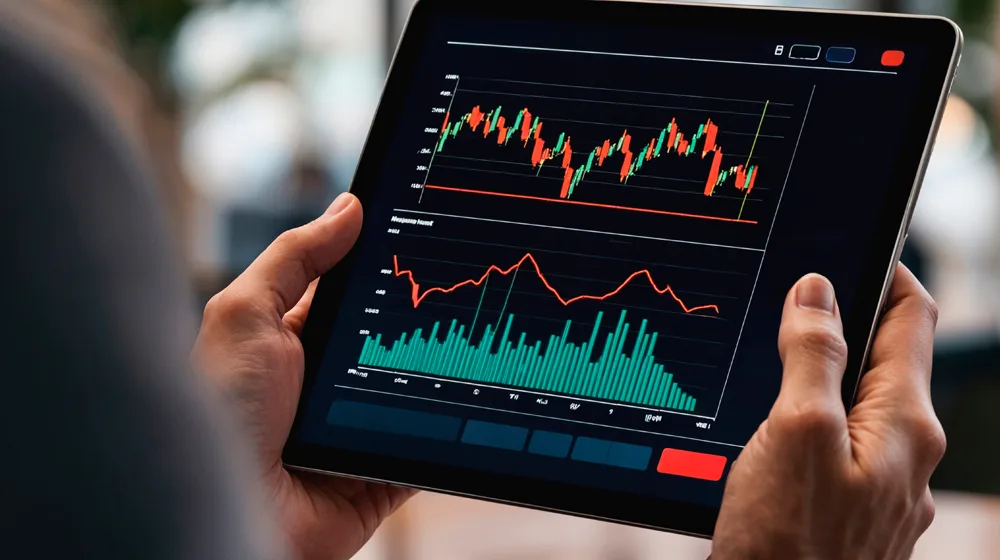
When people first come across CFDs trading, they often focus on the wrong thing.
Some become fascinated by the possibility of market opportunities. Others immediately focus on leverage, price movements, or stories they have heard from other traders. While these topics are certainly connected to CFDs, they are not usually where the biggest misunderstanding begins.
The most common misconception is surprisingly simple.
Many people assume that success in CFDs trading is mainly about predicting whether a market will go up or down.
At first glance, that sounds logical. Markets move, traders make decisions, and profits or losses follow. However, once people spend more time around financial markets, they often realise that the process is much more complex than simply guessing direction correctly.
Being Right Is Not Always Enough
Imagine two traders looking at the same market.
Both believe a particular asset is likely to rise in value. A few days later, the market does exactly that.
On paper, both traders were correct.
Yet one trader makes money while the other struggles.
How is that possible?
The answer is that trading involves more than market direction. Timing, risk management, position sizing, and decision-making all influence the final outcome.
This is where many beginners become surprised.
They assume correct predictions automatically lead to successful results. In reality, a trader can be right about market direction and still produce a poor outcome because of how the trade was managed.
Markets Rarely Move in Straight Lines
Another reason this misunderstanding develops is because people tend to focus on the final destination rather than the journey.
Looking at a chart after the event often makes market movement appear straightforward.
A price rises.
A price falls.
The result seems obvious.
The reality is usually much messier.
Markets often move through periods of uncertainty, temporary reversals, and unexpected fluctuations before reaching a larger destination. These movements can influence trader behaviour in significant ways.
Someone involved in CFDs trading may identify the correct direction but become uncomfortable during a temporary pullback and close the trade early. Another trader may hold a losing position for too long because they hope the market will eventually recover.
In both cases, the challenge is not prediction.
The challenge is execution.
Trading Is Not Just About Finding Opportunities
Beginners often spend most of their time searching for opportunities.
They look for market setups, analyse charts, and try to identify the next potential move.
While these activities are important, they represent only part of the process.
Experienced traders frequently spend just as much time thinking about protection.
Questions such as:
How much risk should be taken?
Where should a trade be closed if it goes wrong?
How much capital should be committed?
These considerations may not seem as exciting as finding opportunities, but they often play a major role in long-term performance.
This is one reason many traders eventually view CFDs trading differently from when they first started.
The focus shifts from prediction toward management.
Confidence Can Create Its Own Problems
An interesting side effect of this misunderstanding is that it can encourage overconfidence.
If someone believes trading is purely about predicting direction, they may become convinced that a strong market opinion justifies taking excessive risk.
After all, if they are certain they are right, why not increase exposure?
Markets have a way of challenging that type of thinking.
Even well-researched ideas can produce unexpected results. News events, economic developments, and shifts in sentiment can all influence market behaviour in ways that are difficult to predict perfectly.
This uncertainty is one of the reasons risk management remains important regardless of how confident a trader feels.
Understanding the Bigger Picture
The biggest misunderstanding surrounding CFDs trading is not related to charts, indicators, or market analysis.
It is the belief that successful trading is simply about predicting whether prices will rise or fall.
Direction matters, but it is only one piece of a much larger puzzle.
Successful traders often spend less time trying to be right all the time and more time learning how to manage risk, control emotions, and make consistent decisions. Over time, many discover that trading is not really about perfect predictions.
It is about what happens after the prediction is made.