


When it comes to borrowing money, understanding interest rates is crucial. They significantly affect the amount you’ll pay back over time. For salaried individuals seeking a salary advance loan, two primary types of interest rates will usually come into play: fixed interest and floating interest. This article will explore the differences between these two types of interest rates, helping you make an informed decision.
What is Fixed Interest?
Fixed interest refers to an interest rate that remains unchanged throughout the loan tenure. Once the loan agreement is finalized, the rate is set in stone, providing borrowers with predictability in their monthly payments. This means that no matter what happens in the broader economic landscape—be it changes in the central bank’s interest rates or fluctuating market conditions—your interest rate will remain the same.
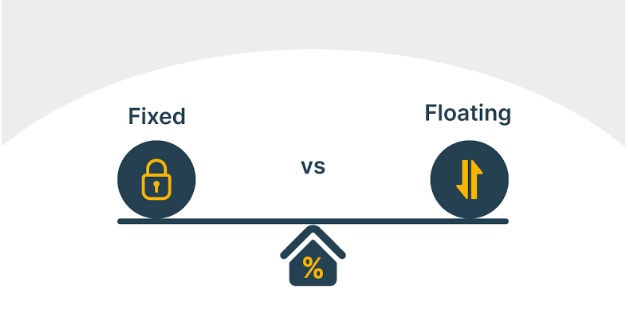
Fixed interest and floating interest are two common types of loan interest rates. A fixed interest rate remains the same throughout the loan tenure, while a floating interest rate can increase or decrease based on market conditions and benchmark rates.
Advantages of Fixed Interest
- Predictability: With fixed interest rates, budgeting becomes easier since monthly payments are consistent.
- Protection from Rate Hikes: In scenarios where market rates rise, your fixed rate protects you from these increases.
- Long-Term Stability: Ideal for long-term loans, allowing you to secure a rate that may be advantageous compared to market rates in the future.
Disadvantages of Fixed Interest
- Higher Initial Rates: Fixed interest rates are usually higher compared to floating rates at the outset.
- Limited Flexibility: When market rates drop, borrowers with fixed rates miss out on the benefits of lower payments.
What is Floating Interest?
Floating interest, also known as variable interest, is an interest rate that can change based on a benchmark rate or index, such as the RBI repo rate, which fluctuates according to monetary policy. This means that your monthly payments could vary across the loan tenor depending on these shifts.
Advantages of Floating Interest
- Lower Initial Rates: Floating interest rates are often lower than fixed rates when you initially take out the loan.
- Benefiting from Rate Reductions: If market rates go down, your interest payments correspondingly decrease, leading to potential savings.
- More Attractive for Short-Term Loans: If you plan to pay off your loan quickly, a floating interest rate might offer you lower costs.
Disadvantages of Floating Interest
- Uncertainty: Since the interest rate can fluctuate at any time, budgeting becomes more challenging.
- Potential for Higher Payments: In economic turmoil or rising interest scenarios, your payments can increase significantly.
- Difficulty in Financial Planning: If you’re not comfortable with fluctuating payments, this type of interest can create stress and uncertainty.
How to Choose Between Fixed and Floating Interest for Your Salary Advance Loan?
Choosing between fixed and floating interest types ultimately depends on your financial situation and future expectations. Here are some key factors to consider:
Financial Stability
If you have a stable job and income, you might be more comfortable with a floating interest rate, allowing you to take advantage of potential savings. However, if you prefer peace of mind and the ability to budget with consistent figures, a fixed rate might be more appropriate.
Loan Tenure
Consider the duration of the loan. For longer tenures, as in home loans, fixed rates may be more beneficial. However, for shorter loans, floating rates may provide considerable advantages.
Market Trends
Keep an eye on interest rate trends. If you expect the rates to rise, locking in a fixed rate may protect you from future hikes; conversely, if rates are expected to fall, a floating option may be preferable.
Risk Tolerance
Evaluate your comfort level with risk. If you can handle fluctuations in payments, a floating rate might be suitable. If you prefer a straightforward, predictable expense, a fixed rate will be more reassuring.
Examples of Salary Advance Loans with Fixed and Floating Interest
When you’re considering a salary advance loan, different lenders may frame their offerings differently. Here’s how both fixed and floating interest rates may manifest:
Fixed Interest Salary Advance Loan Example
Suppose you take a salary advance loan of $10,000 with a fixed interest rate of 7% over three years. Your monthly payment would be calculated based on this rate, and you’d know upfront how much each month would cost, which remains unchanged for the entire tenure.
Floating Interest Salary Advance Loan Example
In another scenario, suppose you secure a salary advance loan of $10,000 with a floating interest rate that starts at 6% but is subject to change. If the benchmark index rises and your rate adjusts to 8% within the first year, your monthly payment will increase, impacting your budgeting and financial planning.
Conclusion
Understanding the differences between fixed and floating interest is essential for any salaried employee considering a salary advance loan. Each option comes with its unique advantages and disadvantages, which can fit different financial circumstances, risk appetites, and loan requirements. Evaluating your job security, the loan term you need, market conditions, and how comfortable you are with financial fluctuations will guide you to the right choice. Always perform thorough research and possibly consult financial advisors to make the most informed decision. In the end, the right loan structure may offer you the financial relief that aligns well with your salary and overall financial goals.