


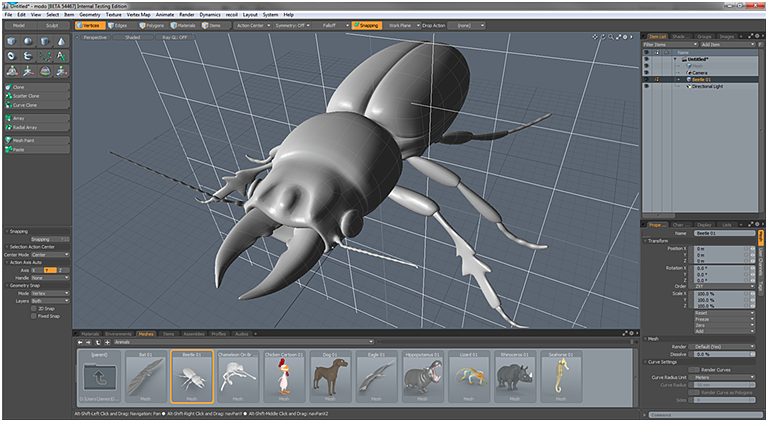
If you are searching for powerful 3D design tools without spending money, 2025 offers impressive free options for beginners, students, engineers, game developers, and fashion designers. Modern free 3D modeling software includes advanced sculpting tools, real-time rendering, parametric modeling, and even virtual garment simulation. Whether you want to create product prototypes, animated characters, architectural layouts, or digital clothing, today’s free tools provide professional-level capabilities without expensive licenses.
The Best free 3D modelling software in 2025 delivers high-performance features that support creative industries ranging from gaming and engineering to digital fashion. These tools allow users to design, refine, and visualize complex 3D assets efficiently while integrating with modern technologies such as virtual prototyping and garment simulation platforms.
Why Free 3D Modeling Software Is Thriving in 2025
Open-source innovation and cloud computing have transformed the 3D design landscape. Developers continuously enhance free software with professional-grade capabilities that were once exclusive to premium platforms.
In 2025, free modeling software typically includes:
- Real-time rendering engines
- Advanced sculpting and mesh editing tools
- Animation and rigging systems
- Simulation for physics and materials
- Cross-platform support
These advancements empower creators at every skill level to build sophisticated models without financial barriers.
Blender: The Industry-Ready Open-Source Powerhouse
Blender remains one of the most versatile free 3D creation tools available. It is widely used across industries for animation, visual effects, game asset creation, and product visualization.
Key Features of Blender
- Polygonal modeling and sculpting
- High-quality rendering with Cycles
- Real-time preview using Eevee
- Full animation and rigging system
- Extensive plugin ecosystem
Blender’s flexibility makes it suitable for both hobbyists and professionals. Its large online community ensures continuous support, tutorials, and updates.
Tinkercad: Ideal for Beginners and Education
Tinkercad offers a web-based, beginner-friendly platform designed for simplicity. Users can build 3D models using basic geometric shapes and intuitive controls.
Best Use Cases
- Students learning 3D basics
- Teachers introducing digital design
- Hobbyists exploring 3D printing
- Simple mechanical prototypes
Because it runs in a browser, Tinkercad requires no installation, making it accessible on various devices.
Fusion 360 (Personal Use Version): Engineering Precision
Fusion 360 provides a free version for personal users and students, offering powerful parametric modeling tools.
Core Advantages
- Mechanical design capabilities
- Simulation and testing features
- Cloud-based project storage
- Assembly modeling tools
Fusion 360 is particularly useful for product designers, engineers, and makers who require precision and detailed control over measurements.
SketchUp Free: Architecture and Interior Visualization
SketchUp Free is another browser-based modeling solution that excels in architectural and spatial design.
Notable Strengths
- Easy-to-use interface
- Extensive 3D model library
- Fast conceptual modeling
- Web accessibility
Architects, interior designers, and real estate professionals often use SketchUp for layout visualization and structural planning.
OpenSCAD: Coding-Based 3D Modeling
OpenSCAD takes a different approach by allowing users to build 3D models using script-based commands. This method ensures mathematical precision and repeatability.
Ideal For
- Engineers
- Programmers
- Technical designers
- Custom mechanical components
While it requires familiarity with scripting, OpenSCAD offers unmatched accuracy for technical projects.
Comparing Tools by Skill Level
Beginners
- Tinkercad
- SketchUp Free
These tools provide intuitive interfaces and simplified workflows.
Intermediate Users
- Blender
- Fusion 360 Personal Use
They offer advanced features while remaining accessible with practice.
Advanced Professionals
- Blender with custom plugins
- OpenSCAD for complex parametric designs
Many professionals combine multiple tools depending on project needs.
Integration with Fashion Technology and Virtual Prototyping
3D modeling has become increasingly important in the fashion industry. Designers now create digital garments, simulate fabric behavior, and build virtual collections before manufacturing physical samples.
Tools like Blender can be used to create garment structures and export them to fashion-focused platforms such as Style3D for fabric simulation and realistic draping. This integration enables designers to test fits, adjust patterns, and visualize collections digitally.
Virtual prototyping reduces material waste, shortens development cycles, and improves sustainability in fashion production. By combining general 3D modeling software with specialized fashion tech platforms, creators can bring digital clothing concepts to life with impressive accuracy.
How to Choose the Right Free 3D Software
When selecting a modeling tool, consider the following:
- Your skill level
- Hardware capabilities
- Intended industry application
- Community support and tutorials
- File compatibility
For example, game developers may prioritize animation tools, while product designers focus on parametric precision. Fashion designers may prioritize compatibility with garment simulation platforms.
The Growing Impact of 3D Modeling in Digital Fashion
The rise of digital fashion, gaming avatars, and virtual environments has increased demand for accessible modeling tools. Designers exploring the Best free 3D modelling software in 2025 often discover that mastering modeling fundamentals enhances creativity in both physical and digital garment design.
Understanding form, proportion, and texture mapping helps bridge traditional fashion design with virtual garment innovation. As digital identity becomes more prominent, 3D modeling plays a central role in shaping how fashion is experienced online.
Future Trends in Free 3D Modeling
Looking ahead, free 3D modeling software is expected to include:
- AI-assisted geometry generation
- Enhanced real-time rendering
- Improved cloth and material simulation
- Cloud-based collaborative editing
- Seamless AR and VR integration
These developments will make 3D creation even more accessible and efficient across industries.
Final Thoughts
Free 3D modeling software in 2025 provides powerful tools for creators across diverse fields. From Blender’s comprehensive creative suite to Tinkercad’s beginner-friendly simplicity and Fusion 360’s engineering precision, there is a solution for every type of user.
The ability to integrate with fashion technology platforms further expands the potential of these tools, enabling digital garment creation and sustainable virtual prototyping. Whether you are building game assets, architectural designs, mechanical parts, or digital fashion collections, free 3D modeling software offers a cost-effective gateway into professional-quality design.
Choosing the right platform depends on your project goals, technical expertise, and creative vision. With dedication and the right tools, you can transform ideas into detailed three-dimensional creations without financial limitations.