
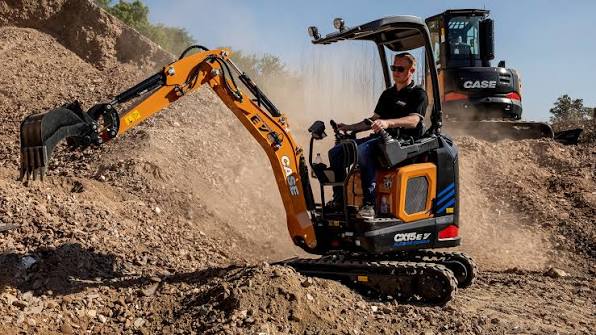
Landscaping projects often involve reshaping outdoor spaces, preparing planting areas, creating pathways, improving drainage, and installing features that require controlled excavation. These activities may take place in residential gardens, commercial grounds, parks, or properties where access is restricted. Contractors need equipment that can handle the required digging while allowing them to work around existing trees, structures, pathways, and finished surfaces.
A landscaping business evaluating an electric mini excavator for sale should consider how the machine’s dimensions, digging capability, battery operation, and attachment compatibility relate to its projects. Electric mini excavators may be suitable for selected landscaping applications, but their performance depends on ground conditions, task requirements, operating duration, charging facilities, and the available working space.
Preparing Ground for Landscape Improvements
Landscape preparation can involve removing unwanted soil, shaping terrain, preparing planting beds, excavating small areas, and establishing levels for future installation work.
A mini excavator may help perform these activities where manual excavation would require substantial time or labour. The machine’s digging capability and bucket size should be appropriate for the type of soil and the amount of material being moved.
Landscapers should also consider how the excavator will affect the ground surface. Track movement may disturb lawns, soft soil, or finished areas. Planning machine routes and protecting vulnerable surfaces can help reduce unnecessary damage.
Working Around Existing Features
Landscaping frequently takes place in areas containing trees, shrubs, walls, fences, irrigation systems, pathways, and other features that must remain undisturbed.
Equipment selection should account for the space available and the level of control required. Contractors may need to work carefully around roots, buried services, existing installations, or delicate surfaces.
The machine’s dimensions, reach, visibility, and manoeuvrability should be evaluated against the layout of the property. Compact equipment may improve access, but it does not eliminate the need for careful site planning and safe excavation practices.
Considering Drainage and Ground Shaping
Drainage improvements are a common landscaping activity. Contractors may excavate channels, prepare areas for drainage components, or reshape ground to influence water movement.
These tasks can require particular digging depths, trench dimensions, and working positions. The excavator should have sufficient capability for the planned work while remaining suitable for the site.
Contractors should review drawings, ground conditions, and relevant utility information before excavation. Where drainage work involves existing infrastructure, appropriate planning and precautions are necessary.
Assessing Electric Operation for Landscaping
Electric mini excavators may be attractive for landscaping work where direct exhaust emissions or noise are relevant considerations. Battery-powered operation does not produce direct exhaust emissions during normal electric use, which may be useful when working near occupied properties or selected enclosed environments.
Machine noise may also be lower than that of some comparable conventional equipment, although tracks, digging, hydraulic functions, and attachments still produce sound.
Landscaping contractors should evaluate the specific machine and operating conditions rather than assume that all electric models provide the same benefits.
Choosing Suitable Attachments
Different landscaping tasks may require different buckets or compatible attachments. Contractors should identify the tools needed for soil removal, trenching, shaping, or other recurring activities.
Attachment compatibility should be confirmed with the manufacturer or supplier. Buyers should consider mounting arrangements, machine capacity, relevant hydraulic or electrical requirements, and operating limitations.
A machine with appropriate attachment options may be useful across several types of landscaping work, but contractors should prioritise the tools they will actually use.
Planning Battery Use and Charging
Landscaping projects may involve several work areas or properties in a single day. Contractors should consider how the machine will be transported, where charging will take place, and whether the battery capacity supports their planned work schedule.
Charging arrangements may be easier when equipment returns to a depot regularly. Projects involving extended work at remote locations may require additional planning to ensure suitable charging access.
The contractor should understand charging duration, connection requirements, expected operating time, and manufacturer recommendations before purchase.
Managing Transport and Site Access
Landscape equipment may need to travel between properties or project locations. Contractors should consider the machine’s operating weight, transport dimensions, loading arrangements, and the suitability of their existing transport equipment.
Access routes should be checked at each site. Gates, pathways, slopes, overhead obstructions, and ground conditions may affect machine movement.
Planning transport and access in advance can help reduce delays and avoid equipment arriving at a location where it cannot be used effectively.
Conclusion
Electric mini excavators may support landscaping businesses performing ground preparation, drainage work, planting-area excavation, and selected outdoor improvements. Their value depends on compactness, digging performance, attachment options, battery arrangements, and suitability for the property’s conditions. Landscapers who evaluate these factors carefully can determine whether electric compact equipment is a practical addition to their machinery and how it can support their work more effectively.