


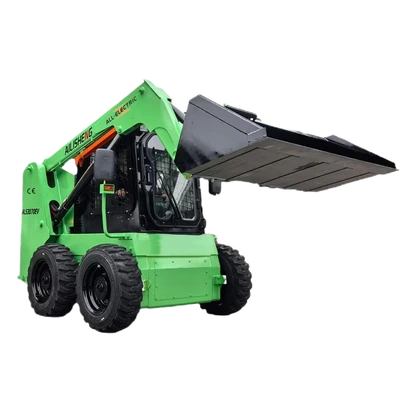
Skid steer loaders are widely used in construction, agriculture, landscaping, material handling, and other industries that require compact and versatile equipment. When choosing a machine, buyers often compare electric and diesel models to determine which option best suits their operational needs, working environment, and budget.
An Electric Skid Steer Loader uses battery-powered electric motors instead of a conventional diesel engine, offering a different approach to equipment performance and energy consumption. Although both types are designed for demanding tasks in confined spaces, they differ in operating costs, maintenance requirements, noise levels, emissions, and charging or refueling needs.
What Is an Electric Skid Steer Loader?
An electric skid steer loader is a compact machine powered by rechargeable batteries. Electric motors drive the machine and operate its hydraulic or other working systems, depending on the design. This eliminates the need for a diesel engine and its associated fuel system.
These machines are particularly useful in indoor facilities, warehouses, agricultural buildings, and construction sites where noise and exhaust emissions are important considerations. Their suitability depends on battery capacity, available charging infrastructure, attachment requirements, and the intensity of the workload.
What Is a Diesel Skid Steer Loader?
A diesel skid steer loader uses a diesel-powered internal combustion engine to generate the power required for driving, lifting, and operating attachments. Diesel models have been widely adopted because of their established technology, broad application range, and ability to operate for extended periods with refueling.
They are commonly used on construction sites, road projects, farms, demolition sites, and outdoor material-handling operations. Their performance depends on engine power, hydraulic capacity, machine configuration, and the type of work being performed.
Key Differences Between Electric and Diesel Skid Steer Loaders
Understanding the main differences between these machines helps businesses select equipment that meets their productivity targets without creating unnecessary operating expenses.
1. Power Source and Energy Supply
The most obvious difference is how each machine receives its energy. Electric skid steer loaders rely on rechargeable battery packs, while diesel models burn diesel fuel to produce mechanical power.
Electric machines require suitable charging facilities and sufficient time for battery replenishment. Diesel loaders can generally return to work quickly after refueling, making them practical for operations with limited downtime between shifts.
2. Operating Costs
Energy expenses can significantly influence the total cost of owning heavy equipment. Electric loaders may have lower energy costs per operating hour when electricity prices are favorable and the machine is used efficiently.
Diesel loaders incur ongoing fuel expenses, which vary with engine load, fuel prices, and working conditions. However, the actual cost difference depends on local energy rates, machine efficiency, utilization, and the cost of installing charging equipment.
Businesses should compare the total cost of ownership rather than evaluating energy costs alone.
3. Maintenance Requirements
Electric skid steer loaders generally have fewer engine-related maintenance requirements because they do not use engine oil, fuel injectors, exhaust after-treatment systems, or conventional engine filters in the same way as diesel models.
Diesel machines require routine engine servicing, including oil and filter changes, fuel-system maintenance, and inspections of exhaust components where fitted. Both machine types still need regular checks of tires or tracks, hydraulics, electrical systems, attachments, and safety equipment.
Battery condition and long-term replacement costs are important considerations when evaluating electric equipment.
4. Noise and Operator Comfort
Noise levels can affect operator comfort, workplace communication, and suitability for noise-sensitive environments. Electric loaders typically operate more quietly because they lack the noise generated by a running diesel engine.
Diesel models usually produce more engine noise and vibration, especially under heavy loads. This may make electric machines preferable for indoor work, residential projects, and facilities operating near occupied buildings.
Actual noise levels vary by model, attachment, surface conditions, and workload.
5. Emissions and Environmental Impact
Electric skid steer loaders produce no exhaust emissions at the point of operation. This can make them suitable for enclosed or poorly ventilated work areas when the equipment is approved for the application and all relevant safety requirements are met.
Diesel loaders emit exhaust gases during operation and may require additional ventilation when used indoors. Electric equipment can reduce local air pollution, although its overall environmental impact also depends on electricity generation, battery production, and battery disposal.
For companies pursuing lower-emission operations, these factors should be considered alongside productivity and energy consumption.
6. Runtime and Productivity
Diesel skid steer loaders are often advantageous for long shifts because operators can refuel quickly and resume work. Their operating duration depends on fuel capacity, engine efficiency, and workload.
Electric models have a more limited operating window determined by battery capacity, energy consumption, and the availability of charging facilities. Heavy lifting, continuous hydraulic use, and demanding attachments can increase battery consumption.
For electric equipment, buyers should evaluate expected working hours per charge and whether opportunity charging or battery replacement options are available.
7. Initial Purchase Price
The initial cost of a skid steer loader varies according to its size, rated operating capacity, brand, attachments, and technical specifications.
Electric models may have a higher upfront price because of their battery systems and electric drivetrain technology. Diesel models may offer a more familiar purchasing option in markets with established dealer networks and readily available service support.
However, purchase price alone does not determine which machine provides better value. Expected operating hours, maintenance expenses, energy costs, and equipment lifespan should all be included in the financial assessment.
8. Performance and Attachment Compatibility
Both electric and diesel skid steer loaders can perform tasks such as lifting materials, moving soil, clearing debris, and handling pallets. Their capabilities depend on rated operating capacity, hydraulic flow, lifting geometry, and attachment compatibility.
Some attachments require substantial hydraulic power, which can affect the suitability of a particular electric model. Buyers should confirm that the machine can support the required attachment and maintain adequate performance throughout the intended work cycle.
Diesel models may be easier to source for certain demanding applications, while electric options can be effective when their specifications match the workload.
Electric vs. Diesel Skid Steer Loader Comparison
The following table summarizes the main differences between the two machine types.
| Feature | Electric Skid Steer Loader | Diesel Skid Steer Loader |
|---|---|---|
| Energy source | Rechargeable battery | Diesel fuel |
| Local exhaust emissions | None during operation | Present during operation |
| Noise levels | Generally lower | Generally higher |
| Engine maintenance | No conventional diesel engine servicing | Regular engine servicing required |
| Energy replenishment | Battery charging | Fuel refueling |
| Continuous operation | Depends on battery capacity and charging access | Supports extended operation with refueling |
| Indoor applications | Often suitable, subject to site requirements | Requires appropriate exhaust ventilation |
| Initial purchase cost | May be higher | Varies by model and market |
| Best-fit conditions | Noise-sensitive and emission-sensitive sites | Long outdoor shifts and operations with easy fuel access |
These comparisons are general guidelines. Individual models can differ considerably in power, efficiency, charging time, maintenance needs, and purchase price.
Which Skid Steer Loader Is Better for Your Business?
The right choice depends on where the machine will operate, how many hours it must work each day, and the resources available to support it.
Choose an Electric Model When:
- Your work takes place indoors or in areas where exhaust emissions are a concern.
- Lower operating noise is important for workers, customers, or nearby residents.
- You have reliable charging facilities and can plan work around battery capacity.
- Your operating schedule allows charging during breaks, overnight, or between shifts.
- Reducing local emissions and engine-related maintenance is a business priority.
Choose a Diesel Model When:
- Your equipment must work for long periods with minimal interruption.
- Refueling facilities are readily available at the job site.
- Your applications involve demanding outdoor construction or material handling.
- Charging infrastructure is unavailable or impractical.
- Local service providers and replacement parts for diesel equipment are easier to access.
Neither option is universally better. The most suitable machine is the one that meets the required performance standards while remaining practical to operate and maintain.
Factors to Consider Before Buying
Before investing in an electric or diesel skid steer loader, assess the following factors:
Daily operating hours: Estimate how long the machine must run each shift and whether downtime for charging is acceptable.
Workload and attachments: Check rated operating capacity, hydraulic flow, lifting height, and compatibility with the tools required for your applications.
Energy availability: Compare local electricity and diesel prices, charging access, and refueling arrangements.
Maintenance support: Investigate the availability of qualified technicians, replacement components, battery service, and warranty coverage.
Total cost of ownership: Consider purchase price, energy consumption, routine maintenance, charging infrastructure, expected service life, and resale value.
Working environment: Evaluate ventilation, noise restrictions, weather exposure, available space, and any site-specific operating requirements.
A practical assessment of these factors can help prevent costly equipment mismatches and improve long-term productivity.
Final Thoughts
Electric and diesel skid steer loaders serve similar purposes, but their advantages differ according to the working environment and operational demands. Electric models offer quieter operation, zero exhaust emissions at the point of use, and fewer conventional engine-maintenance requirements. Diesel models provide convenient refueling and can be particularly practical for extended outdoor shifts and demanding applications.
Before making a decision, compare machine specifications, expected energy costs, service availability, and daily productivity requirements. By evaluating the complete operating picture instead of focusing on a single feature, businesses can choose a skid steer loader that delivers reliable performance and appropriate long-term value.


