


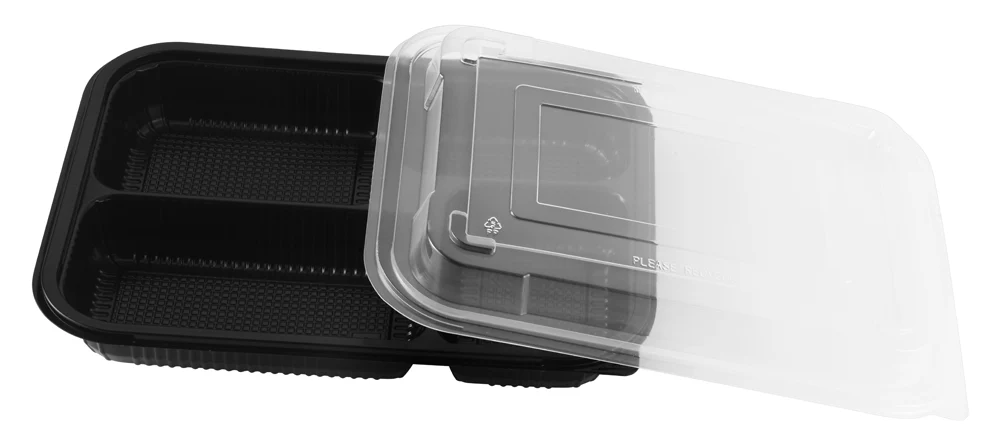
Buying disposable food containers in bulk can help businesses maintain a steady packaging supply, but large orders also make product quality especially important. A minor issue in a small purchase can become a significant operational problem when thousands of containers are involved.
For restaurants, catering companies, takeaway businesses, food manufacturers, and other foodservice operations, evaluating quality before placing a bulk order can help reduce waste, packaging failures, and supply interruptions.
1. Check the Container Material
Material quality is one of the first factors to examine.
Disposable containers should be manufactured from materials appropriate for their intended food-contact application. Depending on the product, businesses may need containers with specific characteristics for hot foods, chilled products, liquids, oily meals, or other applications.
When comparing Wholesale Disposable Food Containers, ask about the material used and whether it is suitable for the foods and conditions in which the containers will be used.
2. Examine the Container’s Structure
A good-quality container should have a structure that matches its intended application.
Inspect the walls, corners, base, and rim for obvious weaknesses. The container should maintain its shape during normal handling rather than bending excessively under the expected load.
Structural consistency is particularly important for businesses that stack filled containers or transport meals for delivery.
3. Evaluate Wall Thickness
Wall thickness can affect strength, rigidity, weight, and overall performance.
Containers with inconsistent thickness may have areas that are weaker than others. Excessively thin sections can make packaging more vulnerable to deformation, while unnecessarily heavy construction may increase material usage and purchasing costs.
For bulk purchases, businesses should look for consistent construction across samples and production batches.
4. Test the Container With Real Food
An empty container does not always reveal potential problems.
Before ordering in large quantities, place the actual types of food inside the container. Check how it performs when filled to the normal portion level.
Pay attention to whether the container bends, leaks, becomes unstable, or is difficult for employees to handle. Real-world testing provides more useful information than visual inspection alone.
5. Inspect Lid Fit and Sealing
A container and lid should work together as a complete packaging system.
Check whether the lid fits securely around the entire rim. If the container is intended for foods containing sauces or liquids, conduct a practical leakage test under normal handling conditions.
A reliable lid should also be reasonably easy for employees to attach without requiring excessive force.
6. Look for Consistent Dimensions
Consistency matters when businesses rely on standardized packaging.
Containers from the same product line should have consistent dimensions so that lids fit properly and stacking remains predictable.
Dimensional variation can cause difficulties in packing operations, particularly when a business uses large quantities every day.
7. Check Weight Consistency
Weight can provide another indication of manufacturing consistency.
Significant differences between individual containers may suggest variations in material usage or production conditions. While minor differences may occur, businesses purchasing large quantities should ask suppliers how they maintain consistency during manufacturing.
This is especially relevant when packaging specifications are important to operational or logistics planning.
8. Assess Resistance to Normal Handling
Disposable containers need to withstand the conditions they encounter between filling and final use.
Consider common handling situations such as:
- Filling on a production or kitchen line
- Stacking during preparation
- Carrying between work areas
- Transporting filled meals
- Storing packaged food
- Customer handling
The container should remain functional throughout these normal stages without cracking or losing its shape.
9. Consider Temperature Suitability
Temperature can significantly affect packaging performance.
If containers will hold hot food, refrigerated products, or other temperature-sensitive applications, confirm that the selected product is intended for those conditions.
Do not assume that a container suitable for room-temperature food will automatically be appropriate for heating, freezing, or other temperature conditions. Always follow the supplier’s stated specifications.
10. Review Food-Contact Requirements
Food packaging needs to be appropriate for direct contact with the intended food products.
Depending on the destination market and application, businesses may require documentation related to material composition, food-contact suitability, testing, or applicable regulatory requirements.
Ask suppliers what documentation they can provide before committing to a large order.
11. Examine the Surface and Finish
Visual quality is also worth checking.
Inspect samples for issues such as:
- Uneven surfaces
- Warping
- Cracks
- Sharp or irregular edges
- Visible contamination
- Inconsistent appearance
- Poorly formed sections
A clean and consistent finish can also make packaging easier to handle and present to customers.
12. Evaluate Production Consistency
Quality should not depend solely on the first sample received.
When purchasing in bulk, businesses need confidence that future production will maintain the agreed specifications. Ask suppliers about their quality-control procedures, inspection processes, and methods for identifying defective products.
For recurring orders, consistency from batch to batch can be just as important as the quality of the original sample.
13. Test Before Placing a Large Order
Samples should be treated as a practical testing stage rather than simply a formality.
Use the samples in the same environment where the final products will be used. Test filling, closing, stacking, transportation, storage, and customer handling as appropriate.
If a business has several container options under consideration, testing them under identical conditions makes the comparison more useful.
14. Consider Manufacturing Quality Control
Ask potential suppliers how quality is monitored throughout production.
Depending on the manufacturing process, quality checks may cover raw materials, dimensions, weight, appearance, forming conditions, lid fit, packaging, and finished-product inspection.
A supplier with clearly defined inspection procedures can provide greater visibility into how bulk orders are controlled.
15. Check Packaging and Shipment Protection
Even a well-manufactured container can arrive damaged if the outer packaging does not provide adequate protection.
Review how containers are packed for transportation. Consider whether cartons are suitable for stacking and whether products are protected against crushing, moisture, dust, or other foreseeable shipping conditions.
This becomes particularly important for large shipments traveling long distances.
16. Compare Quality With Total Cost
The cheapest container is not necessarily the lowest-cost option for a business.
If poor-quality packaging leads to leaks, damaged meals, rejected orders, excessive waste, or frequent replacements, the actual cost can become much higher.
Instead of comparing unit prices alone, consider the relationship between product quality, expected performance, waste, shipping, and purchasing frequency.
17. Ask the Supplier the Right Questions
Before confirming a bulk order, businesses can ask:
- What material is used?
- What food-contact applications is the container designed for?
- What temperature conditions can it handle?
- Are samples available for testing?
- How is dimensional consistency maintained?
- What quality checks are performed during production?
- Can relevant product documentation be provided?
- What are the minimum order quantities?
- What is the expected production lead time?
- How are finished products packaged for shipment?
Clear answers can make it easier to identify whether a supplier’s capabilities match the requirements of the order.
Why Quality Matters More With Bulk Orders
The larger the purchase, the greater the impact of quality problems.
If a restaurant receives a small number of defective containers, replacement may be relatively simple. If an entire bulk shipment has a recurring issue, the business may face wasted inventory, disrupted operations, and additional purchasing costs.
That is why quality evaluation should happen before, rather than after, a major order.
Businesses such as restaurants, caterers, and food manufacturers can use suppliers such as LRpacking as part of their broader supplier evaluation process, while still testing products against their own specifications and operating requirements.
Final Thoughts
Quality evaluation is an essential part of buying disposable food containers in bulk. Material suitability, structural strength, wall thickness, dimensions, lid fit, temperature performance, food-contact requirements, manufacturing consistency, and shipment protection all deserve attention.
A careful purchasing process starts with clear specifications, continues with practical sample testing, and ends with a supplier that can consistently meet the agreed requirements. Taking these steps before placing a large order can help businesses make more informed packaging decisions and maintain reliable day-to-day operations.