


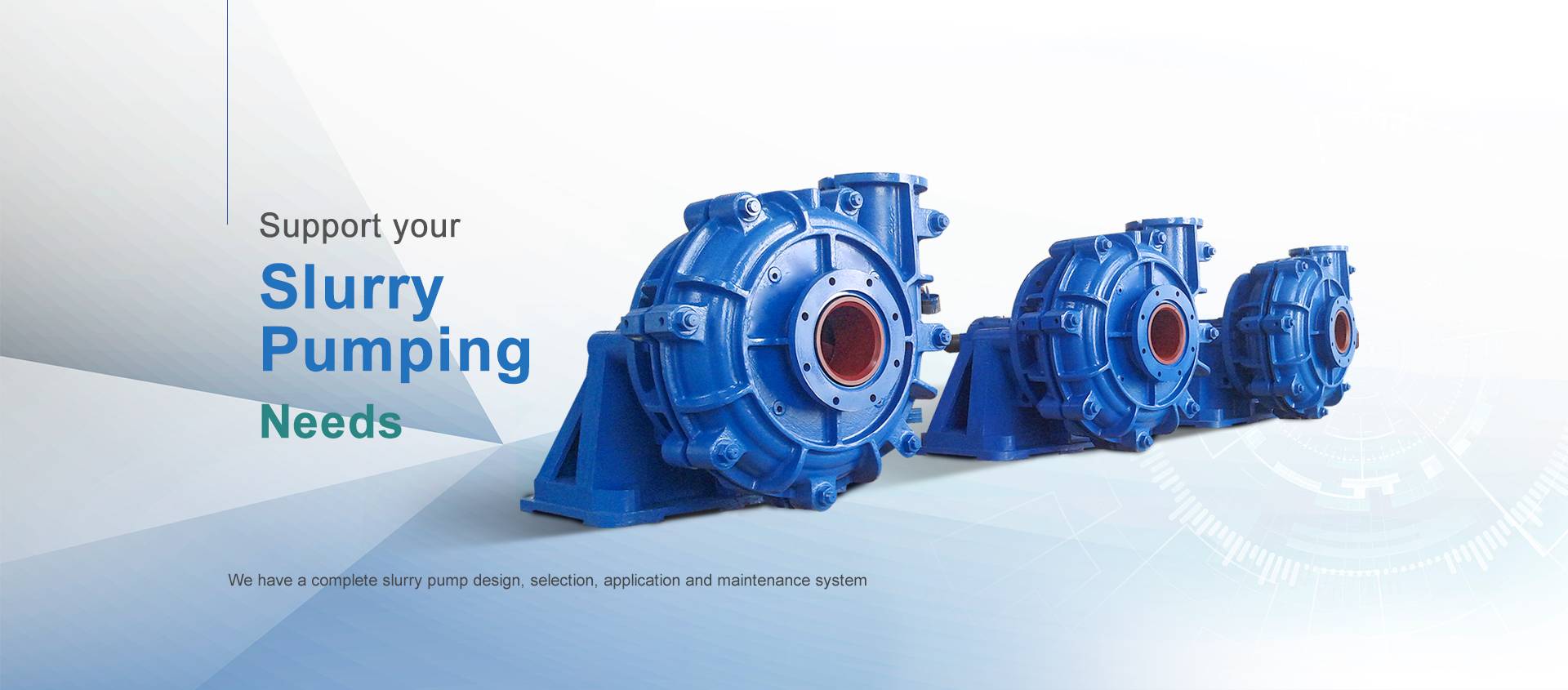
Highly abrasive slurry can place severe demands on pumping equipment. Hard mineral particles, high solids concentrations, and continuous operation can accelerate wear on impellers, casings, liners, and other wetted components.
Choosing a centrifugal slurry pump for this type of application requires more than checking flow and head. Slurry properties, material selection, pump speed, hydraulic conditions, maintenance requirements, and total operating costs should all be considered before making a final decision.
Understand the Slurry Characteristics
The first step is to determine what the pump will actually handle. Highly abrasive slurry can vary considerably in density, particle size, concentration, and hardness.
Important characteristics to identify include:
- Solids concentration
- Particle size distribution
- Particle hardness
- Particle shape
- Slurry density
- Liquid properties
- Temperature
- Corrosive characteristics
Hard, sharp particles generally create more severe wear than small, rounded particles. Higher solids concentrations can also increase the amount of abrasive material passing through the pump.
Choose Suitable Wear-Resistant Materials
Material selection is one of the most important considerations for abrasive slurry service. Pump components exposed directly to the slurry should be made from materials appropriate for the expected wear conditions.
Hard metal components can provide strong resistance to erosion in applications involving hard and abrasive particles. Elastomer components may be suitable for certain applications involving finer particles or specific chemical conditions.
The correct choice depends on the complete slurry composition rather than abrasion alone.
Select the Correct Pump Size
Pump size should be determined by the required flow rate and total dynamic head. However, these hydraulic requirements need to be evaluated together with slurry properties.
An undersized pump may struggle to meet process requirements, while an oversized pump can consume unnecessary energy and operate outside its preferred range.
The normal operating point should be compared with the pump’s performance curve to ensure that the equipment is suitable for the expected duty.
Consider Particle Size
Particle size can have a major effect on pump selection. Large solids require sufficient internal passage size to move through the pump without creating blockages or excessive hydraulic losses.
Before selecting a pump, determine the maximum particle size and compare it with the pump’s solids-handling capability. The shape and distribution of the particles should also be considered.
Evaluate Pump Speed
Pump speed affects both hydraulic performance and abrasive wear. Increasing speed can increase flow and head, but it also increases particle velocity through the pump.
For highly abrasive slurry, unnecessarily high speed can accelerate erosion. The pump should therefore operate at a speed that satisfies process requirements without creating excessive wear.
Where practical, variable-speed operation can help match pump output to changing process demands.
Consider the Best Efficiency Point
Operating near the pump’s best efficiency point can help maintain stable hydraulic conditions. Running significantly away from this point may increase internal recirculation, vibration, and uneven wear.
When selecting the pump, consider the normal, minimum, and maximum expected flow rates. The pump should have a practical operating range that accommodates normal process variations.
Check Suction Conditions
Highly abrasive slurry still requires stable suction conditions. Poor inlet conditions can contribute to cavitation, vibration, and reduced performance.
Review available NPSH, suction lift, liquid level, pipe diameter, and suction-line restrictions. The suction pipe should be appropriately sized and designed to minimize unnecessary pressure losses.
Design the Pipeline Carefully
The pump and pipeline should be evaluated as one system. A poorly designed pipeline can increase head requirements and cause solids to settle or accelerate wear.
Consider pipe length, diameter, bends, valves, elevation changes, and the settling characteristics of the slurry. Maintaining an appropriate transport velocity is important for keeping solids suspended without creating unnecessary friction and abrasion.
Plan for Wear and Maintenance
Even the best pump for abrasive slurry will experience wear. The goal is to make that wear predictable and manageable.
Choose a design that allows practical inspection and replacement of wear components. Establish inspection intervals based on actual operating hours and historical wear rates rather than relying only on generic schedules.
Keeping accurate records can help determine when components should be replaced before performance deteriorates significantly.
Monitor Pump Performance
Performance monitoring can provide early indications of wear or changing slurry conditions. Operators should track key parameters and compare them with normal baseline values.
Useful measurements include:
- Flow rate
- Suction pressure
- Discharge pressure
- Motor current
- Vibration
- Bearing temperature
- Pump speed
- Slurry density
A gradual decline in flow or pressure combined with increased power consumption may indicate internal wear or changes in the slurry.
Consider Total Cost of Ownership
The lowest initial purchase price is not necessarily the most economical option for highly abrasive service. Frequent wear-component replacement, energy consumption, maintenance labor, and production downtime can have a significant effect on long-term costs.
Evaluate expected component life, maintenance requirements, energy use, and spare-part needs when comparing pump options.
A pump with a higher initial cost may provide better overall value if it delivers longer service intervals and more stable performance.
Avoid Common Selection Mistakes
Several mistakes can reduce pump life in highly abrasive applications:
- Selecting based only on flow rate
- Ignoring particle hardness
- Underestimating solids concentration
- Choosing unsuitable wetted materials
- Operating at unnecessarily high speed
- Failing to consider suction conditions
- Oversizing or undersizing the pump
- Ignoring wear history and maintenance data
A complete application assessment helps avoid these problems.
Match the Pump to the Entire Process
A pump should not be selected independently from the rest of the process. Changes in upstream equipment, slurry composition, production rates, or pipeline layout can affect the pump’s actual operating conditions.
Review the complete system before finalizing the selection. This includes the pump, motor, suction system, discharge pipeline, valves, control method, and maintenance strategy.
Final Thoughts
Choosing the best centrifugal slurry pump for highly abrasive slurry requires a careful balance between hydraulic performance, wear resistance, efficiency, and maintainability. Slurry density, solids concentration, particle characteristics, flow, head, speed, and suction conditions all influence the final selection.
The most suitable pump is not necessarily the largest or most heavily constructed option. It is the one that matches the actual application while providing reliable performance, manageable wear, and reasonable long-term operating costs.